
A brief update before I describe this lovely walk. I see my last post was in January. Where has the time gone? Well, I can tell you, actually. For most of the time, I have been harbouring a spinal problem which has created unimaginable pain down my right leg on walking, and surprisingly severe pain across the top of the foot. You wouldn’t believe how incapacitating that kind of foot problem is. So, for several months I have been developing an exercise programme for myself, which has been very successful and I am pleased to say, I walked over 6 miles yesterday and another 3+ miles today, with barely a hint of symptoms.
On top of this, 3 weeks ago I broke a rib – ok, I’ve broken ribs before, but this time, a few days later, I developed a nasty chest infection which is being very persistent. I feel as if I should be well, even with the remnants of this chest infection, but out walking yesterday I began to feel quite ill and I overheated and had to take unusual but effective remedial action to get me back to my car. So, I’m clearly not quite out of the woods yet. One day, I shall have to accept that I am getting older! I hope I am now back on my feet and once I have moved in 4 weeks time, I shall be able to get out and about and share more of the lovely Derbyshire countryside with you.

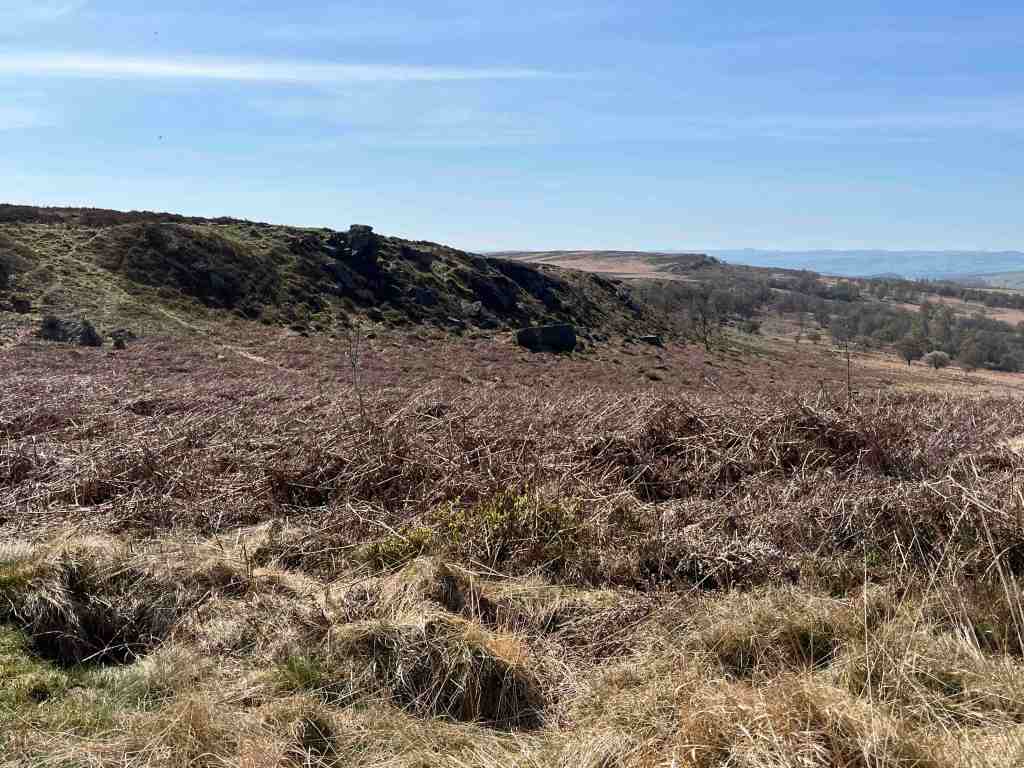
The ‘Edges’ in Derbyshire are magnificent. They protrude from the valley up to a majestic height of 340 metres (1112 ft), although Curbar village is already 118 metres (387ft) high. It doesn’t seem quite so impressive now until you see them, as they are sheer blocks of grey gritstone creating quite a drama against the sky. These are perfect for rock climbing and abseiling, which I remember doing many years ago on these very rocks.

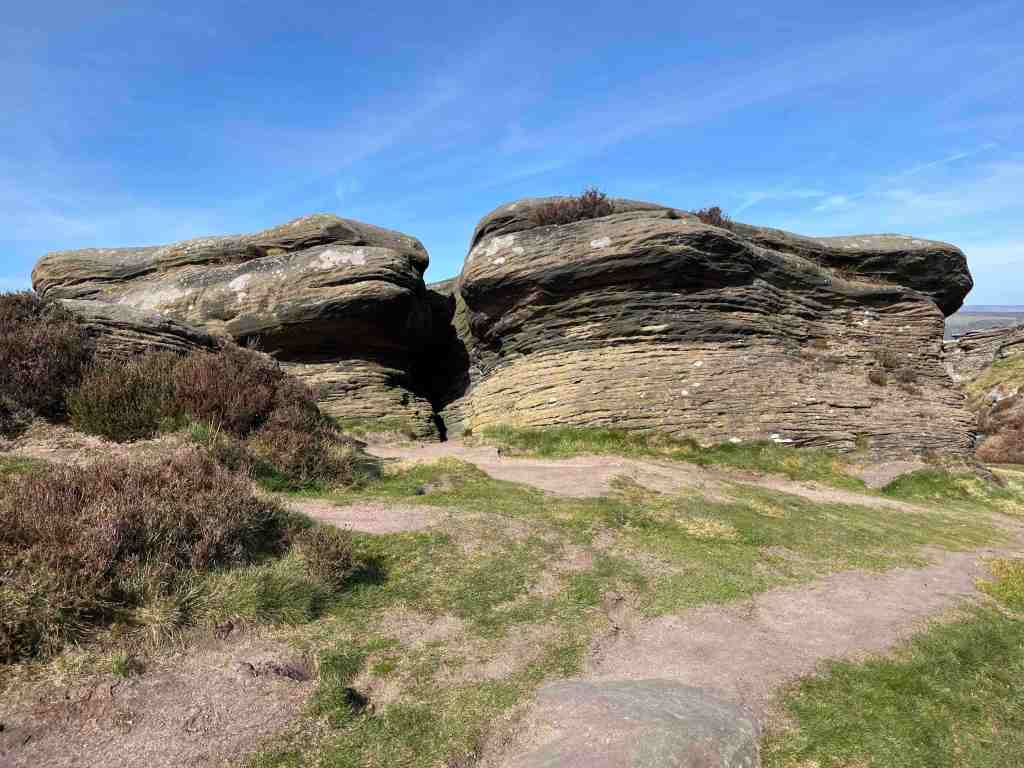
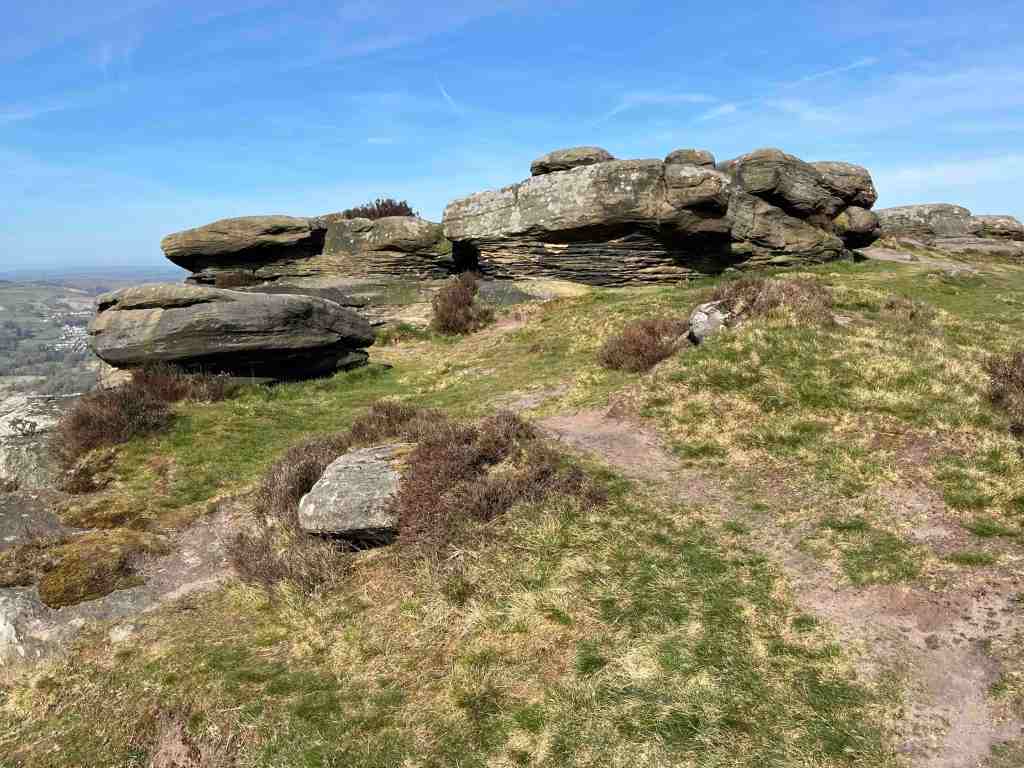

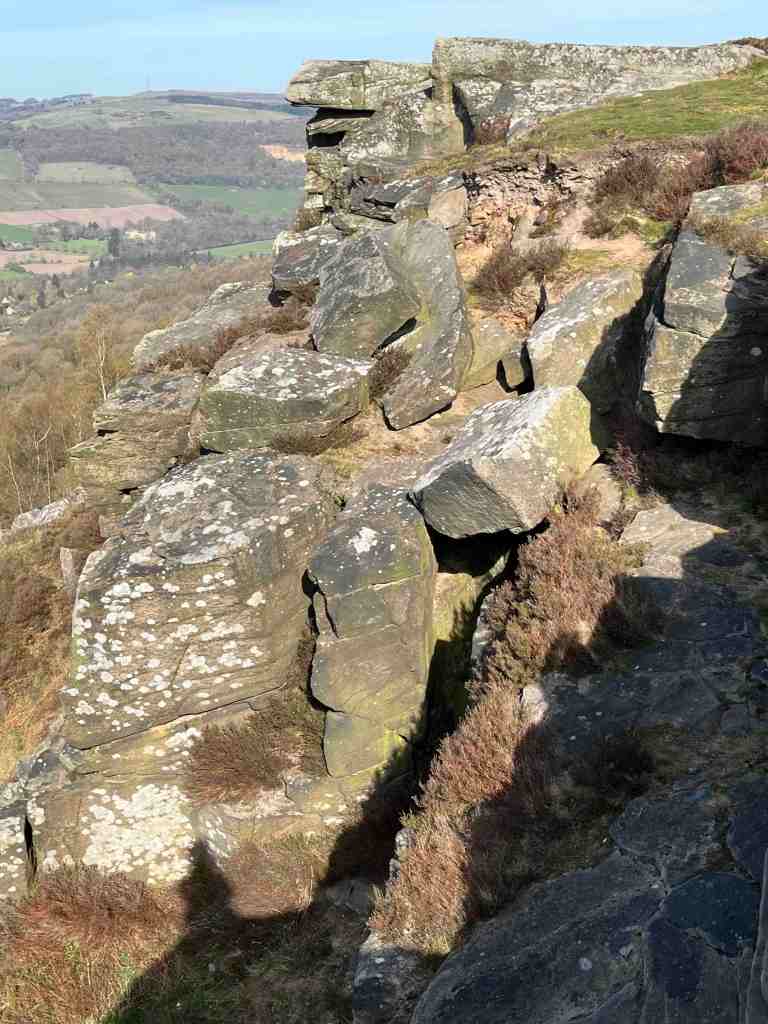
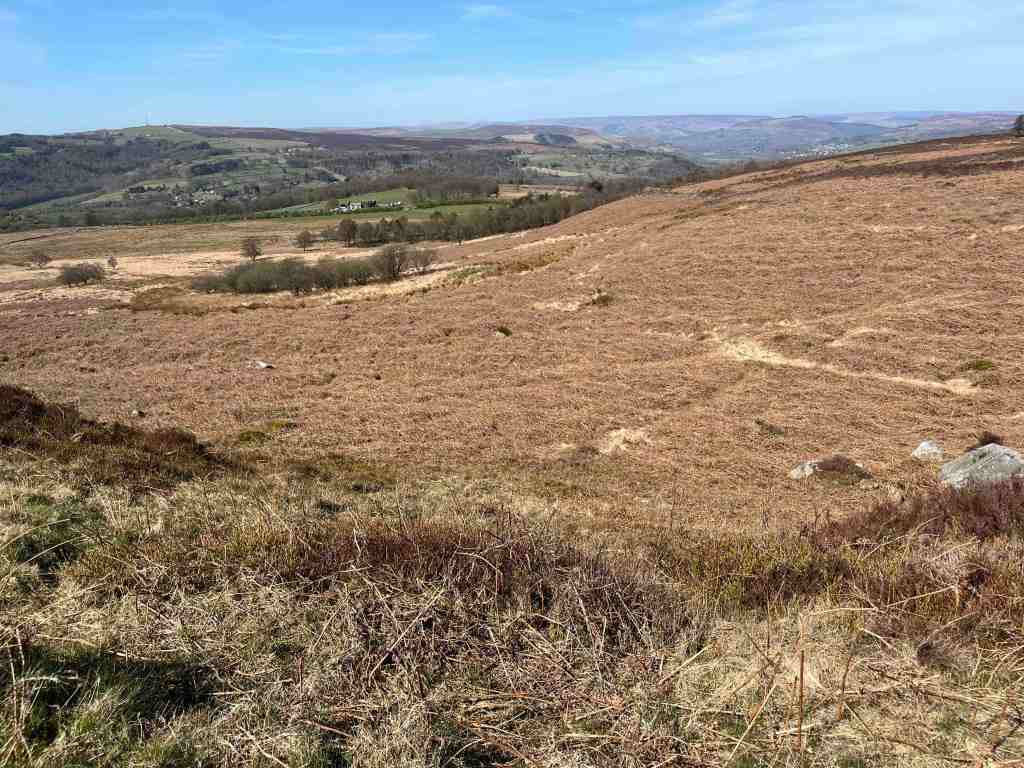
This walk starts at the top at Curbar Gap (what three words – windows. fountain. precluded). The car park isn’t huge and this is a very popular area, so plan an early start. There is a fee to pay, which is free to NT members. One of my aims was to look for suitable vistas for our Painting for Pleasure group to replicate. Straight away, not far at all from the car park, is a seating area providing wonderful views across the valley and towards Baslow Edge to the south. The paths thereafter are easy, though you will still have to negotiate a few boulders from time to time; the main path is wide and sandy/soily and you can also walk on the grass and boulders parallel to the main path, which is more interesting but does require nimble footwork from time to time. Every few feet along the way, you are treated to wonderful rock formations, and your eyes stretch out into the distance as you gaze at the Dark Peaks in the north. These rocks have plenty of flat sitting stones where you can stop and paint, or simply admire the views.
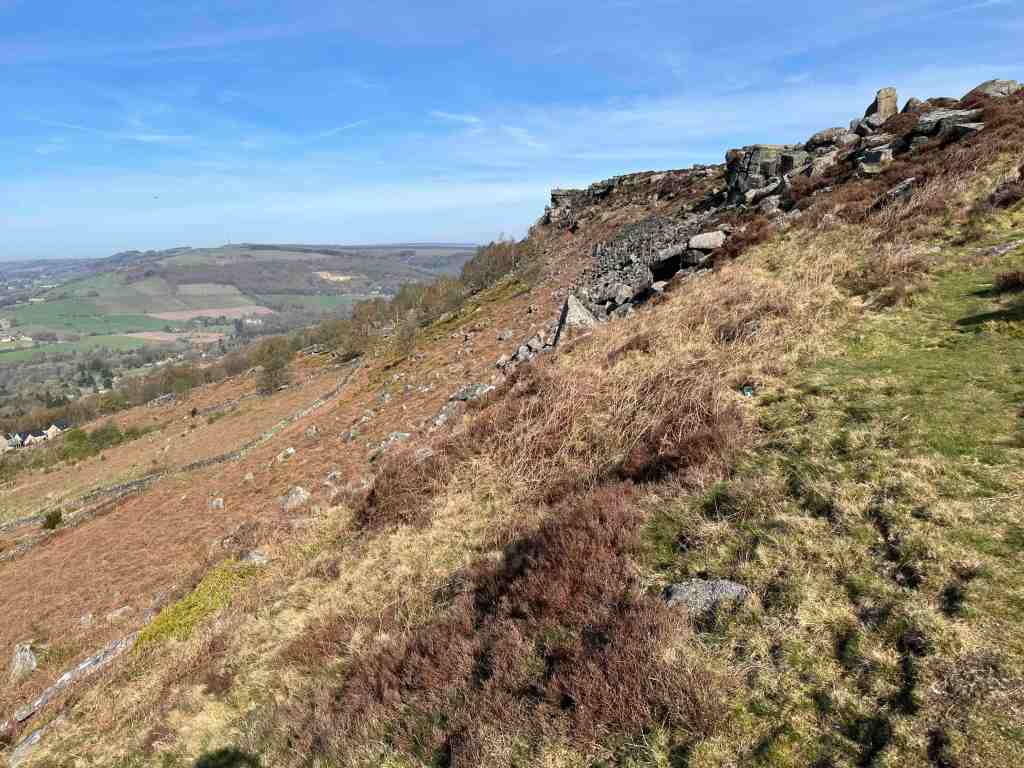
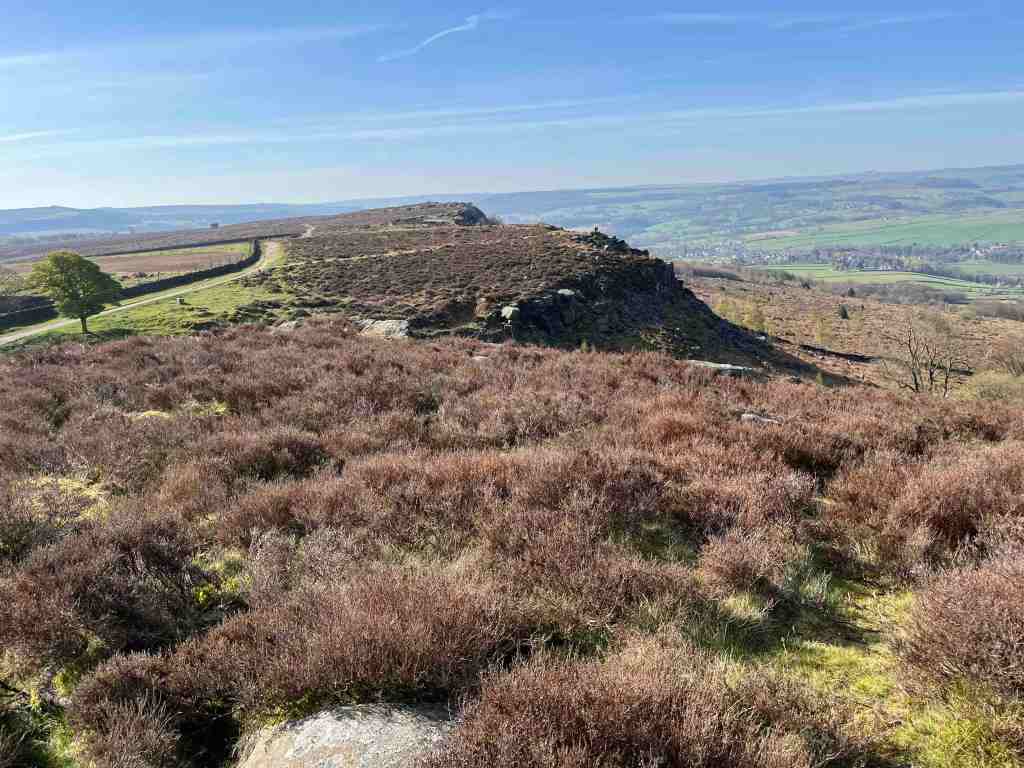
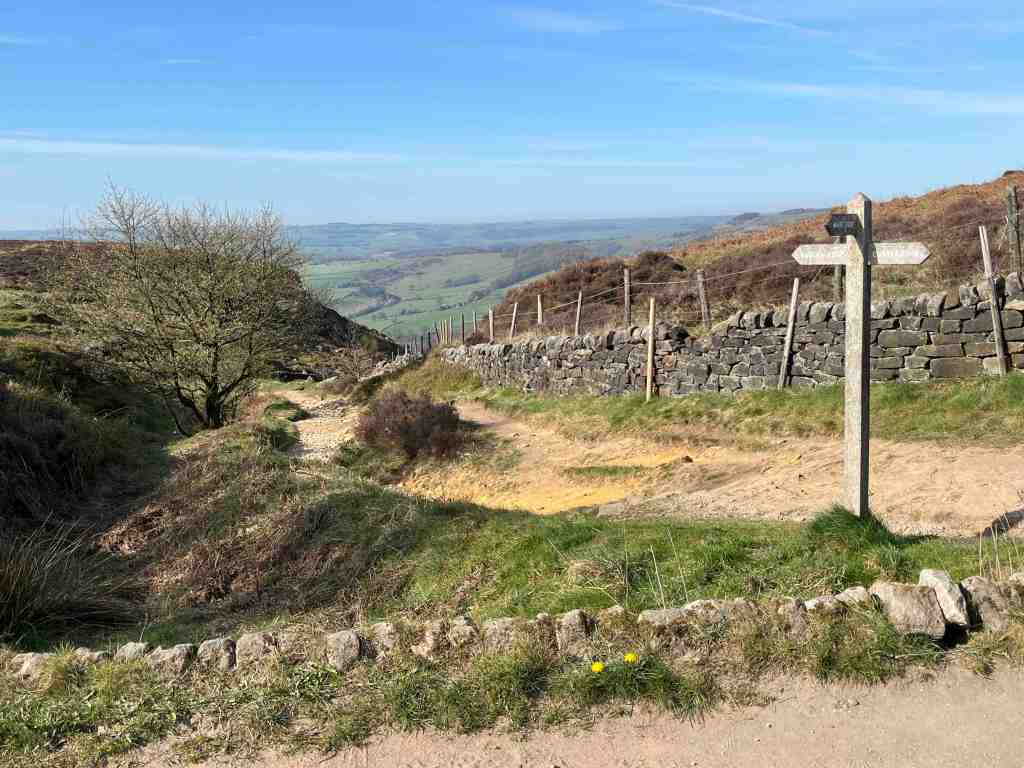

This Edge continues for some distance, gradually descending, with a couple of steeper awkward sections, and it eventually turns into Froggatt Edge, which I guess is where the birch trees have taken hold. Continuing along, the birch trees become more numerous, but just before this, I discovered something I had never noticed before – an ancient burial mound, dating back to 3500 BCE. There is a notice alongside with a QR code, which I accessed and this tells you all about the excavations. I will leave you to investigate this further yourself when you visit.
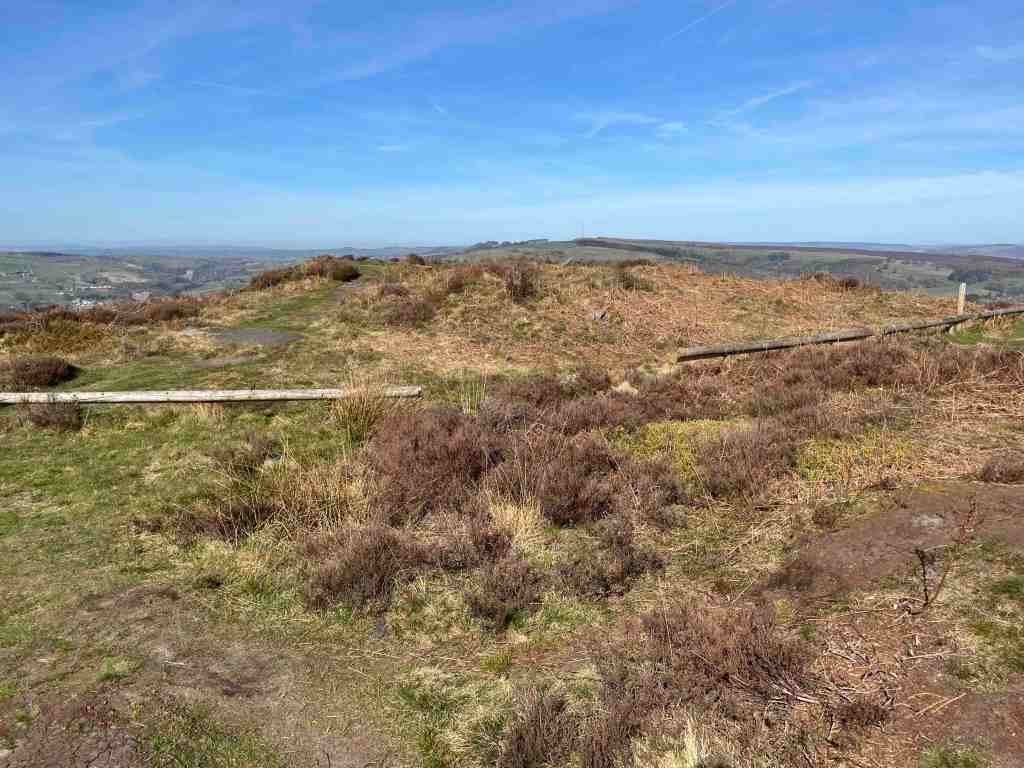
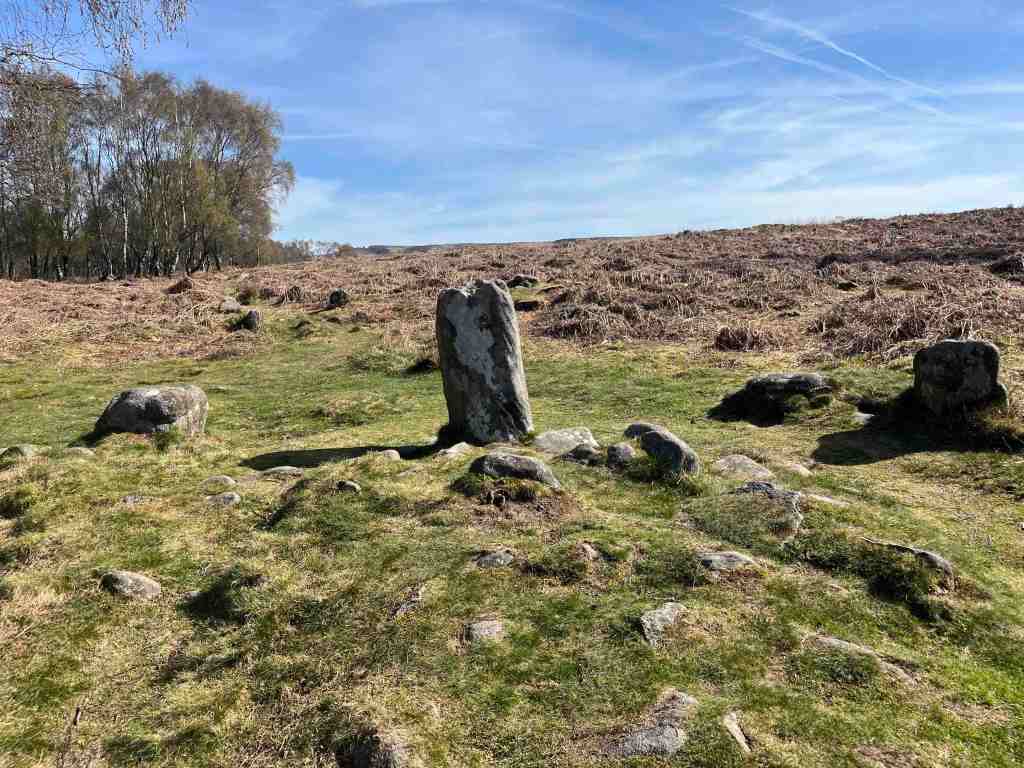
The path becomes more even as we enter Froggatt Edge wood, where the willow warblers were having a field day. In a fairly exposed area, you come across a stone circle, now called Stoke Flat, also from the Bronze Age. It has been damaged, but it is clearly there in the landscape and a reminder, along with the former cairn, that this area has a very long history. I will direct you here to a very informative web page that is very well written: http://www.stone-circles.org.uk/stone/froggatt.htm
Once through the woods you meet the road taking you to the Longshaw Estate. The walk is about 2.5 miles to this point. The footpath guide I was using goes a slightly different way than I took. I stayed on the same side of the road and cut a trail, through the hummocky grasses and moorland to White Edge. You could also walk along the road up to the Grouse Inn and take a rather easier, but less interesting route, to the same destination. There is a small amount of uphill to get right on the top of White Edge, and now, as you are higher than on Curbar /Froggatt, you see all the way across the moors to Sheffield as well as the panoramic views to the east and north. The walk along the ridge has fewer boulders and is very easy and attractive walking. The descent is relatively steep and the footpath management team have created a series of steps down. From here, it is only a short distance back to the car park where there is kiosk with a lady selling teas, coffees and cakes. This is not a walk to be rushed. It is a walk to stop and stare. Incidentally, if you are short of time there is a shorter circular walk, just around Curbar Edge and coming back to the car park along the moor between Curbar Edge and White Edge.




Total distance: 6 miles (10km), 643 ft (196m) of ascent, and 679 ft (201m) of descent; highest point 1236ft (376m).

 Walking with Gill
I am a bit crocked too at the moment. Bursitis in my knee. It is so frustrating not being able to get out at the moment. It came on very suddenly as I was kneeling on a hard surface 😞. I know the Peak District Edges very well and what great views you get for comparatively little effort.
LikeLike
Bursitis sound painful. I hope you recover soon. Thank you for looking at my blog.
LikeLike