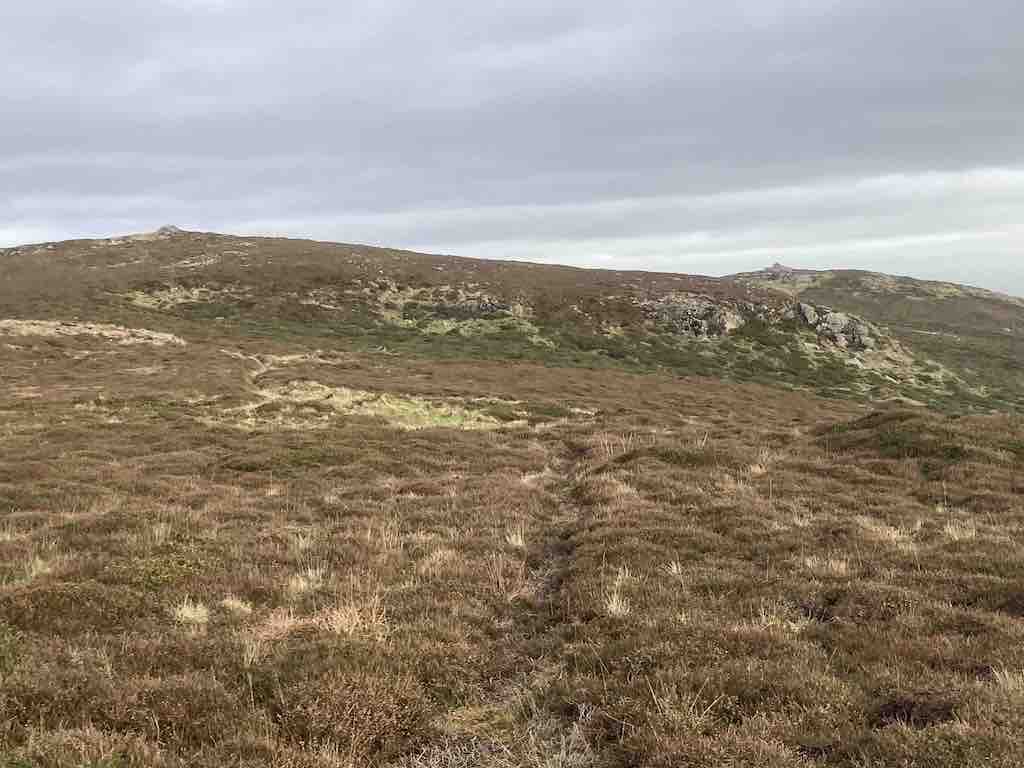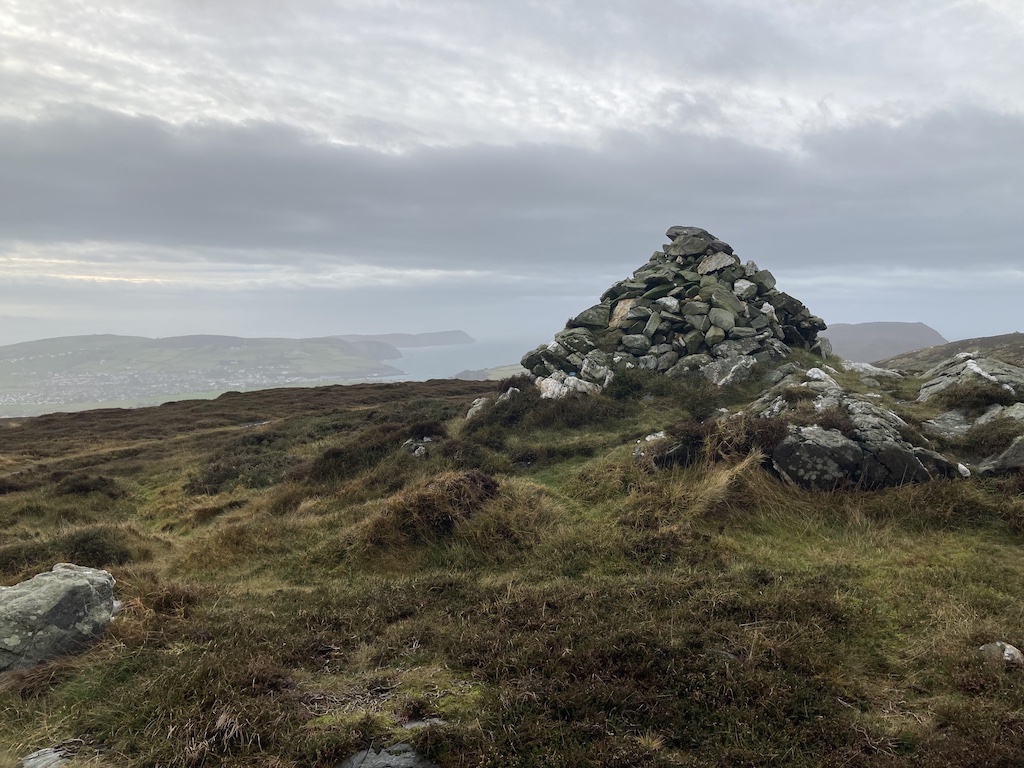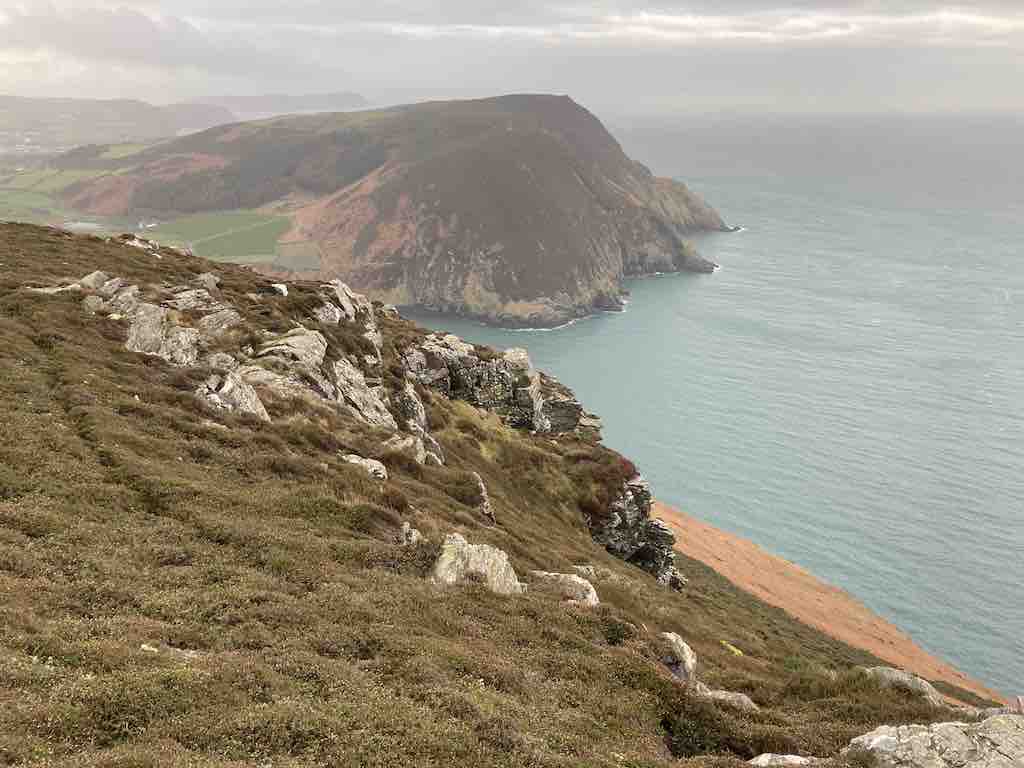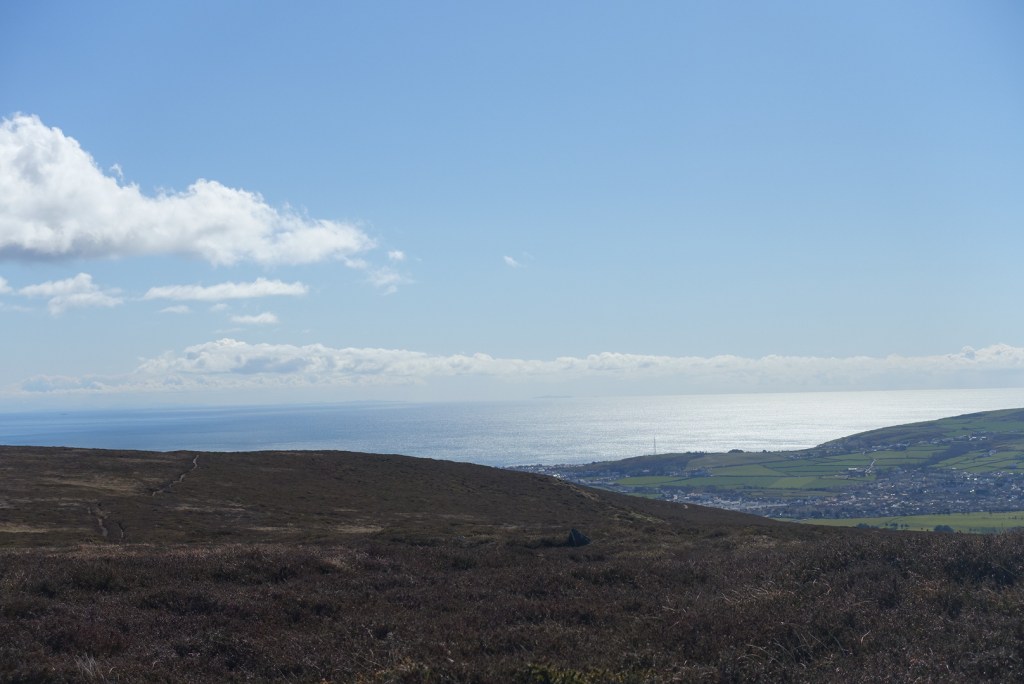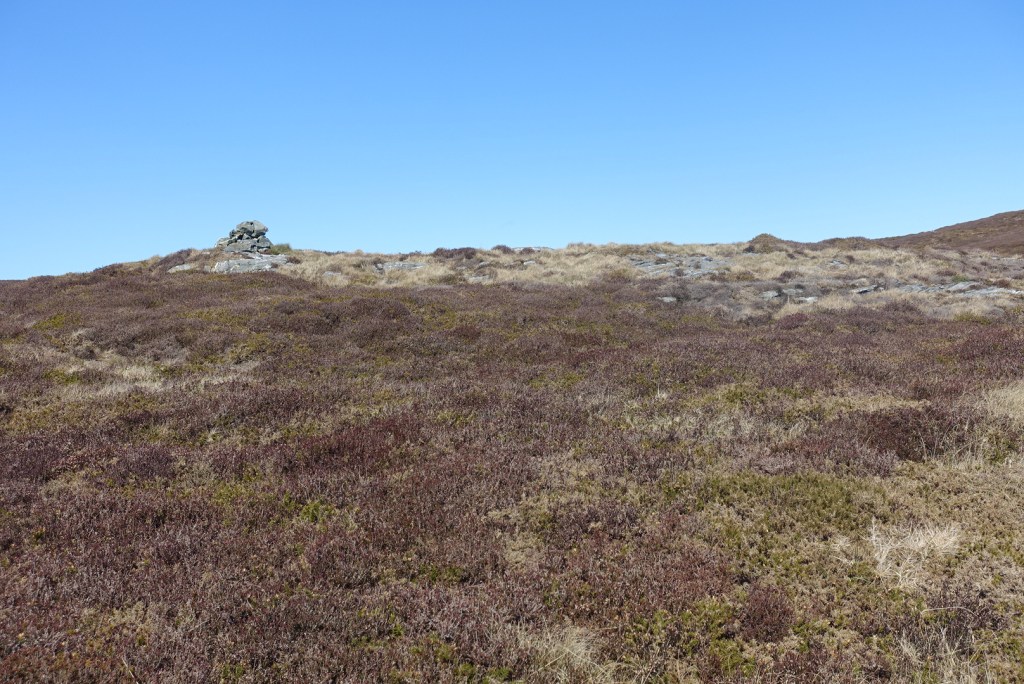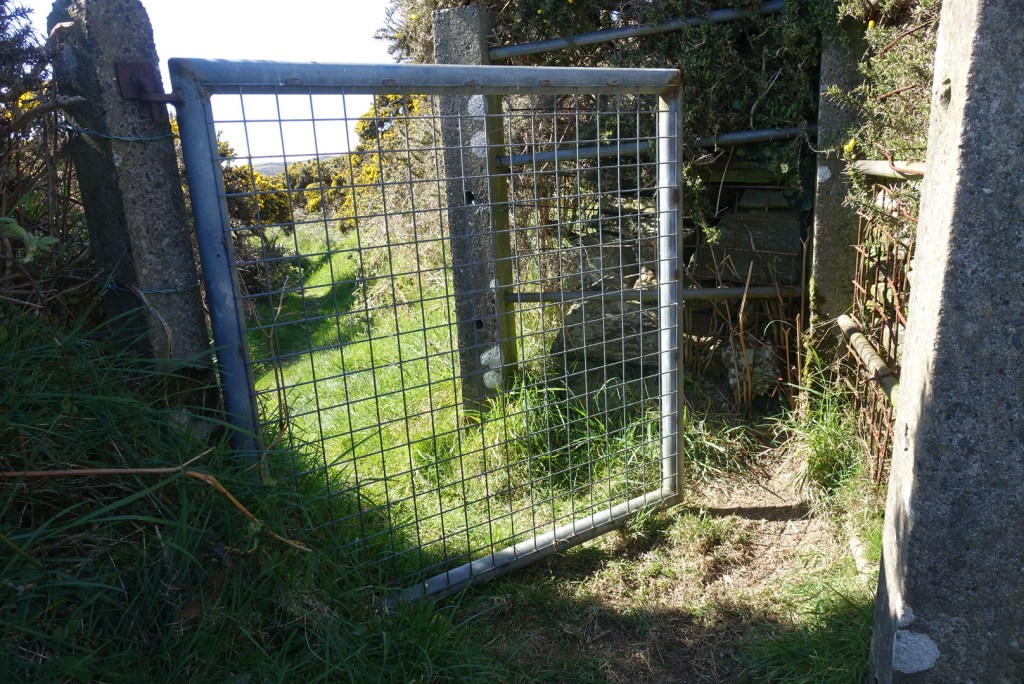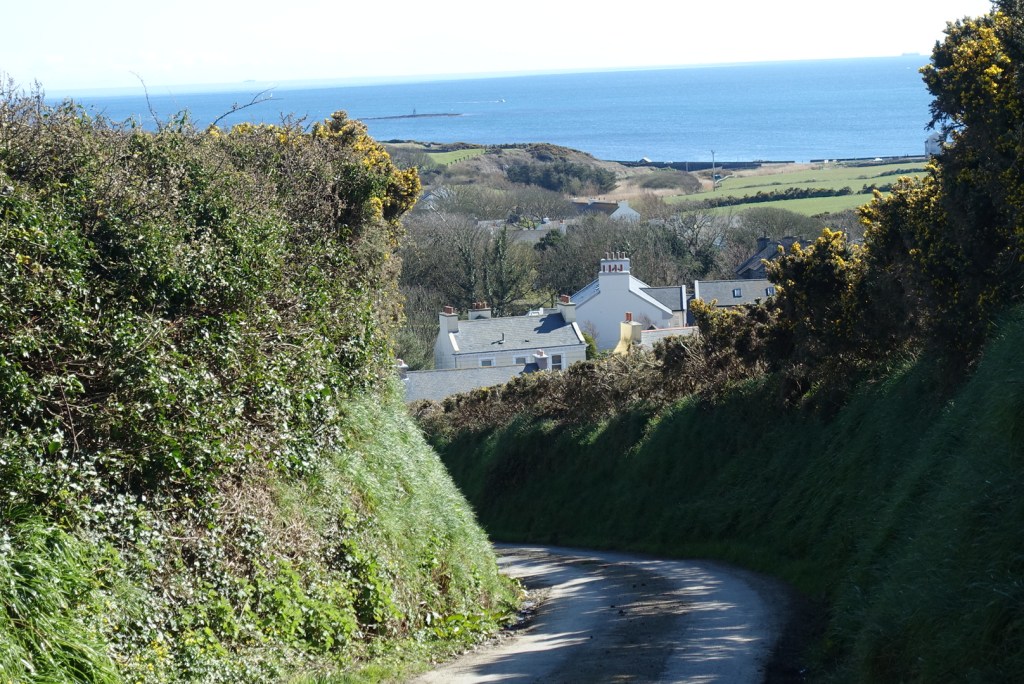
Port Erin Circular

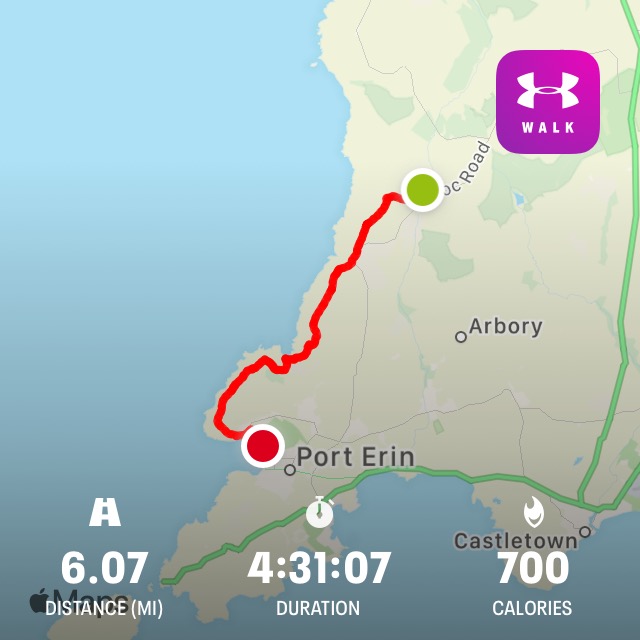
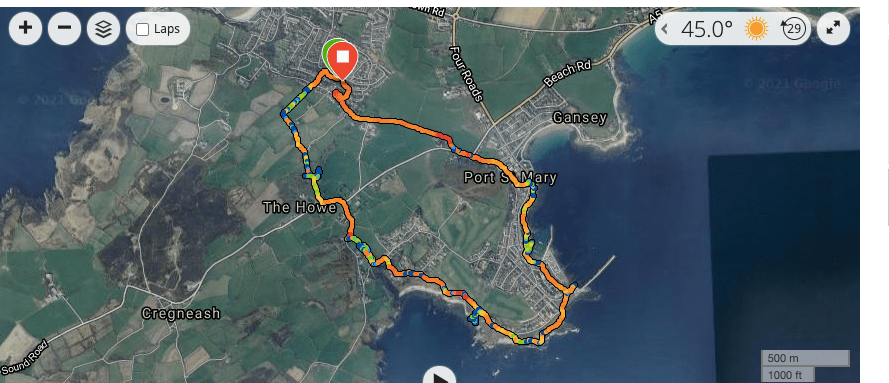
This was intended to be Port Erin to Castletown, but I really hadn’t thought it through; not only for the distance, which would have been 12 miles, but for the difficulty of the task. Hold on, you say, I’ve walked that many a time without any difficulty. True, I would reply, but not in winter when we have had weeks of rain. I hadn’t given this latter thought any consideration as I set out yesterday morning, to do the first walk in well over a year that I have been able to do entirely for myself with no hidden agenda.

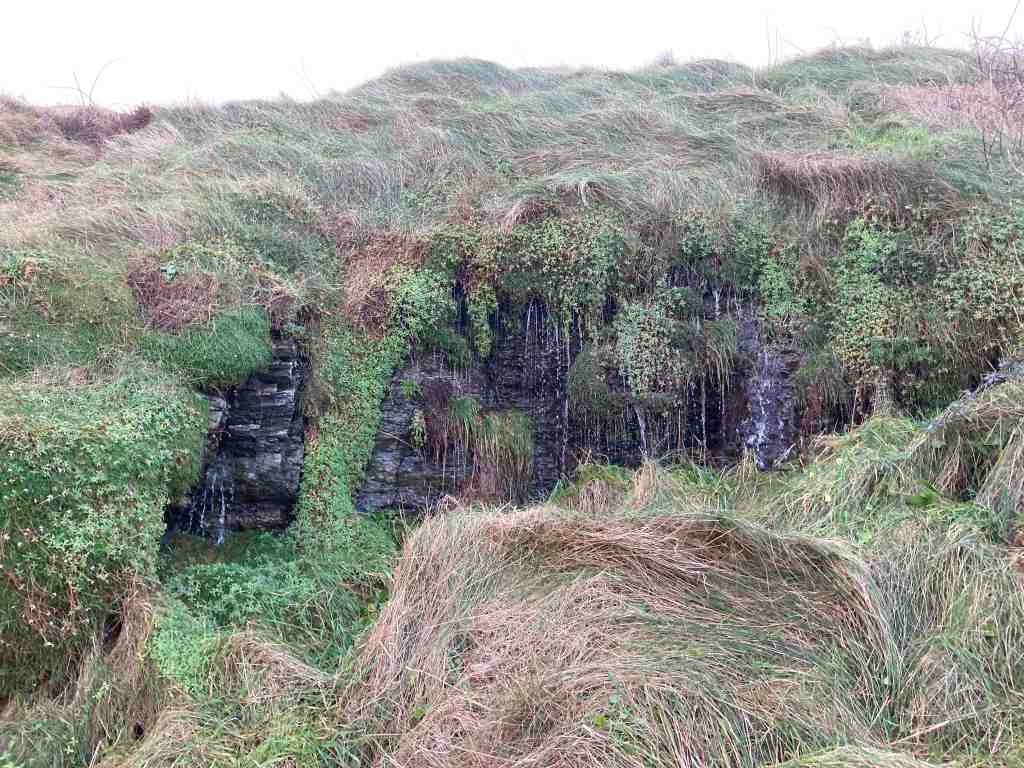
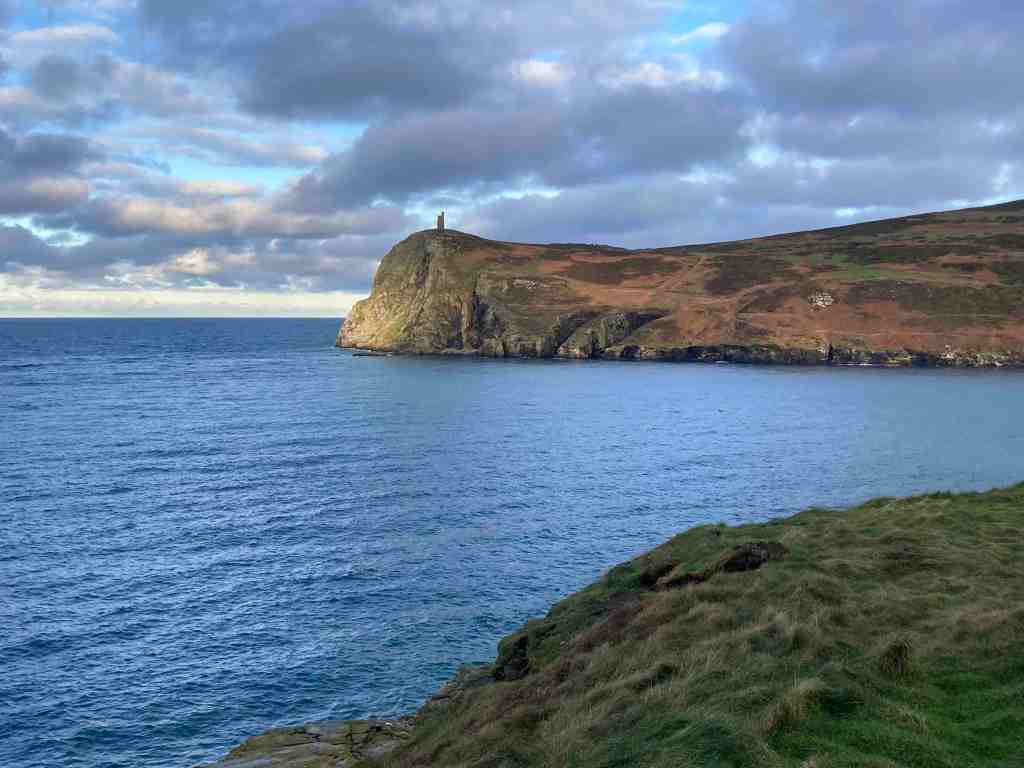
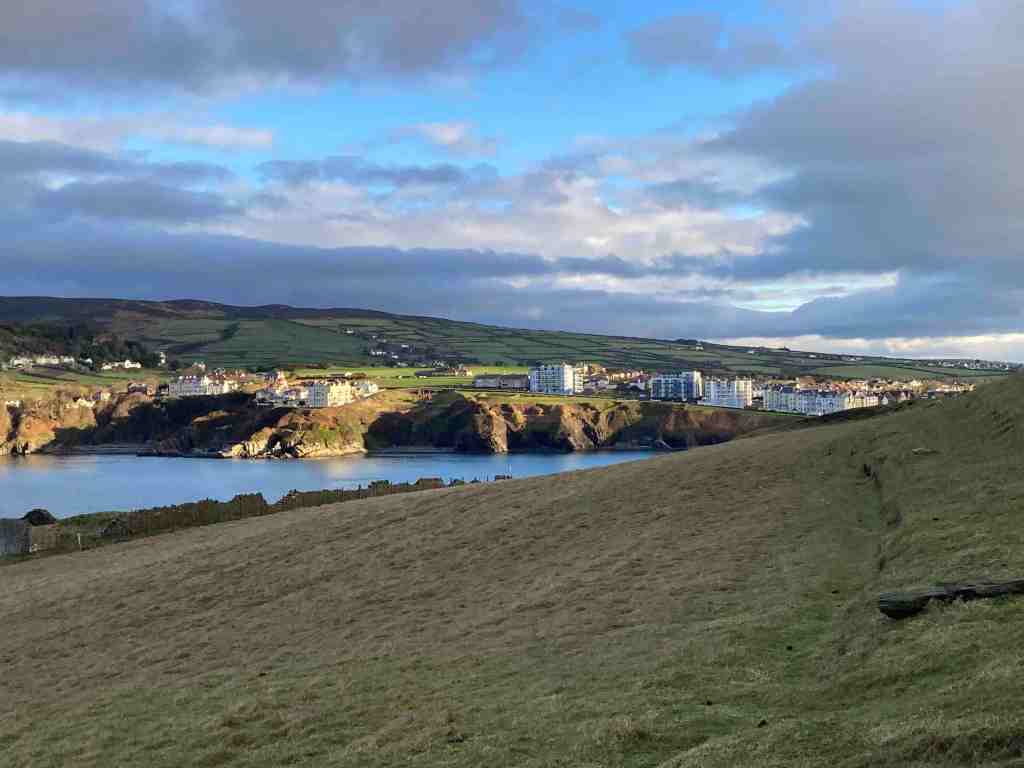
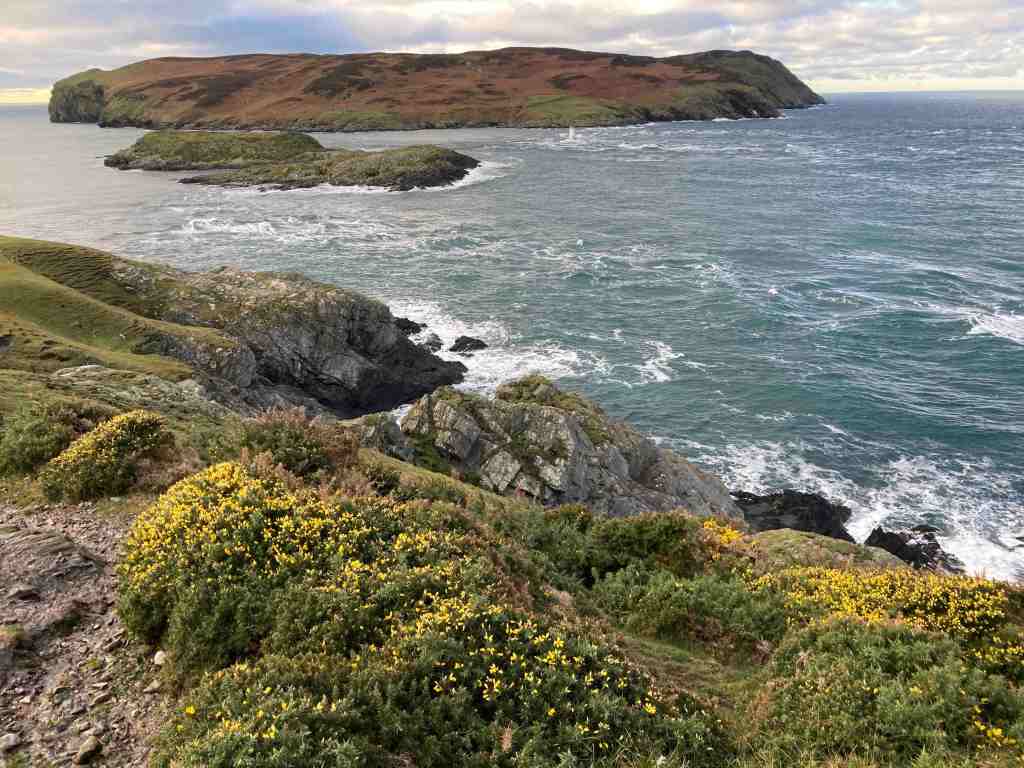
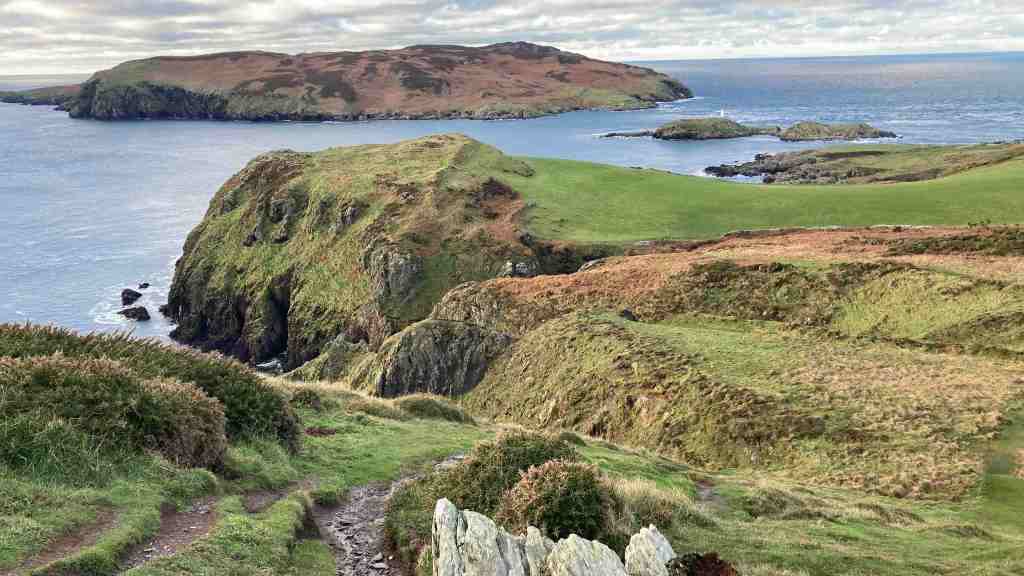
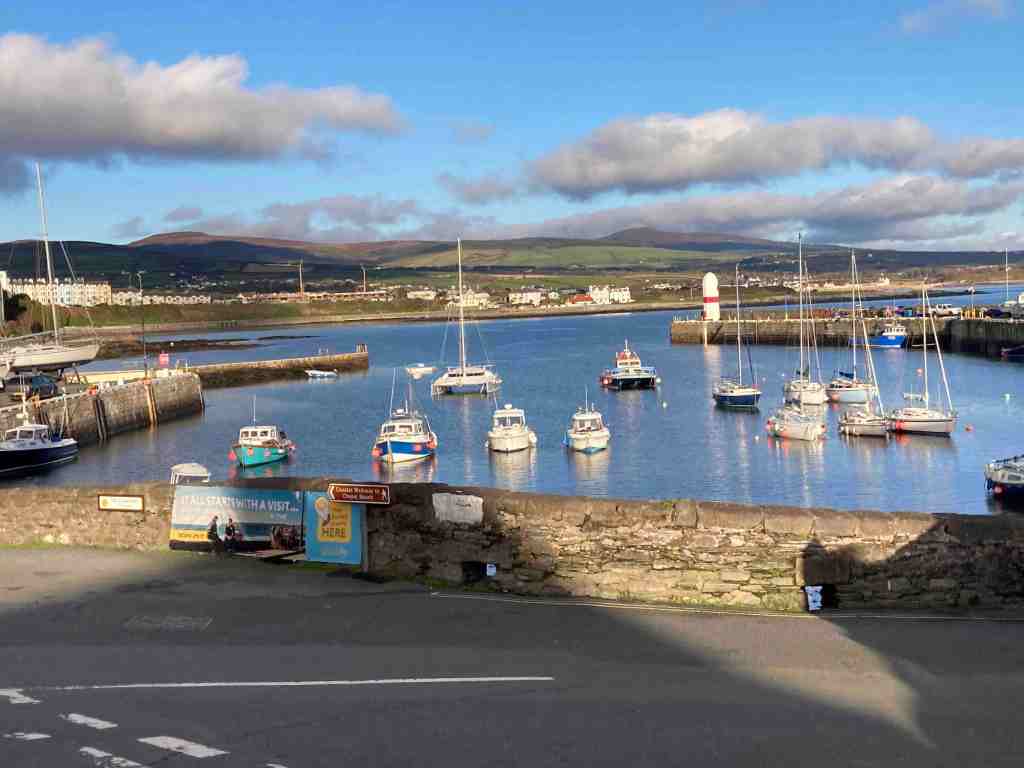
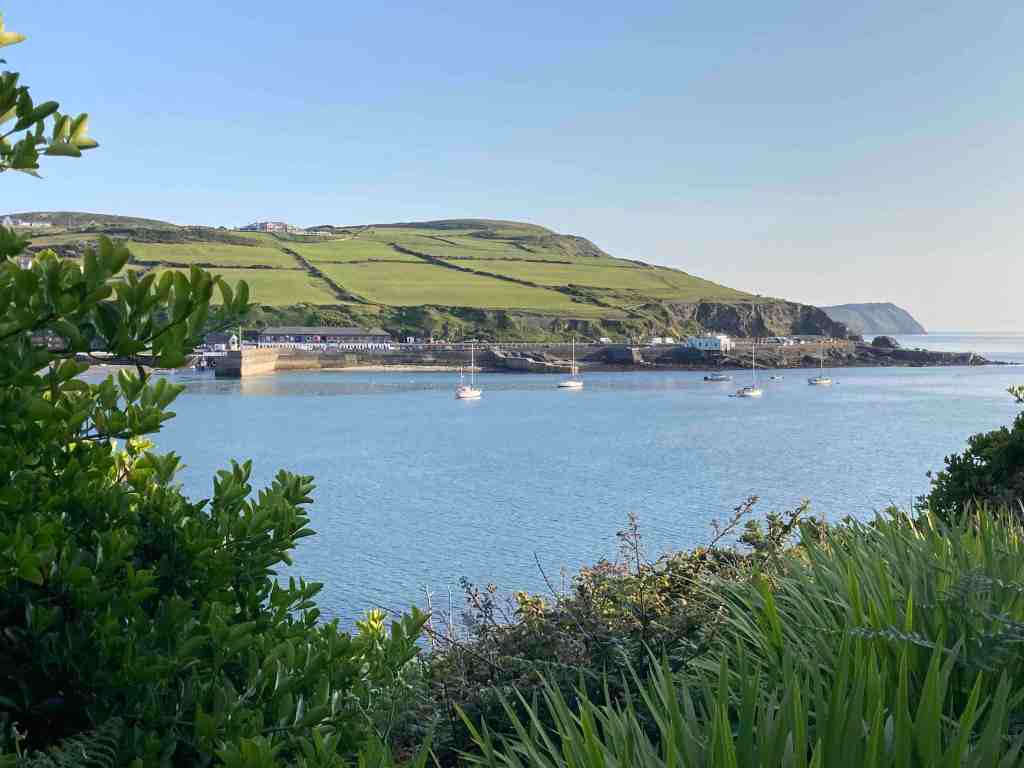
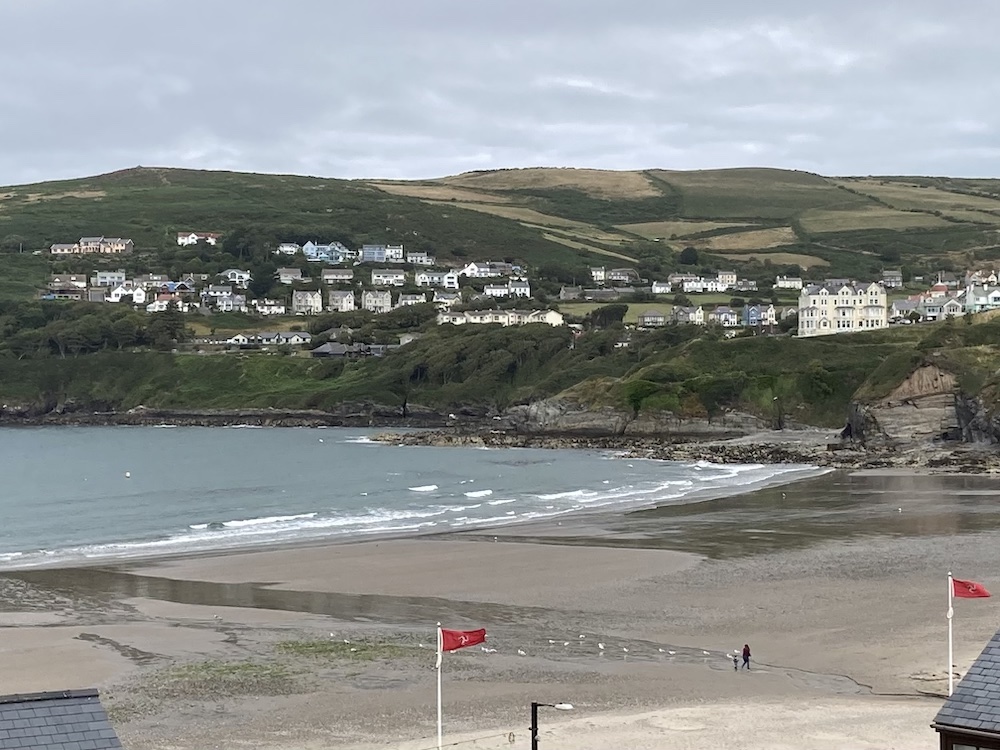
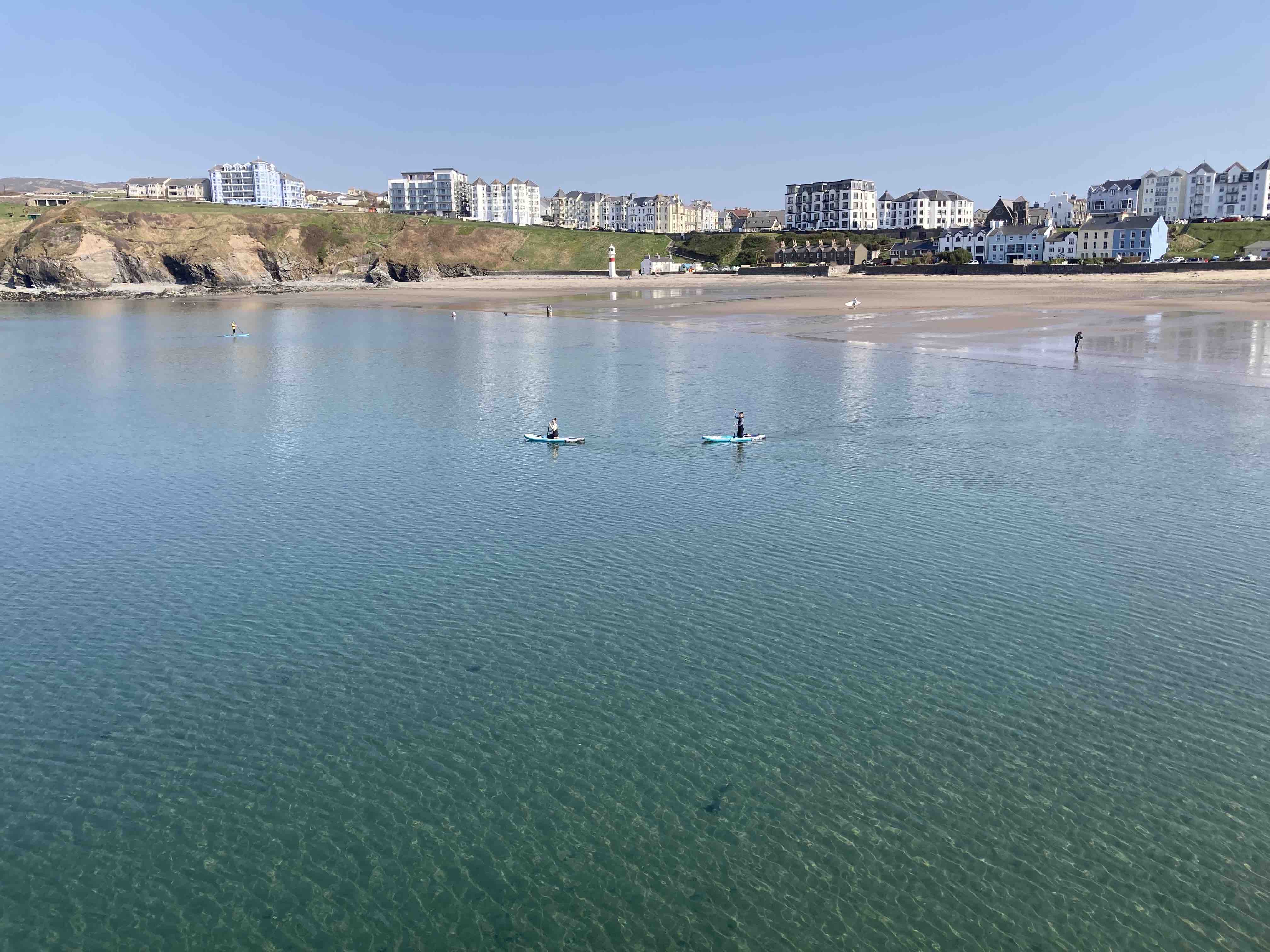
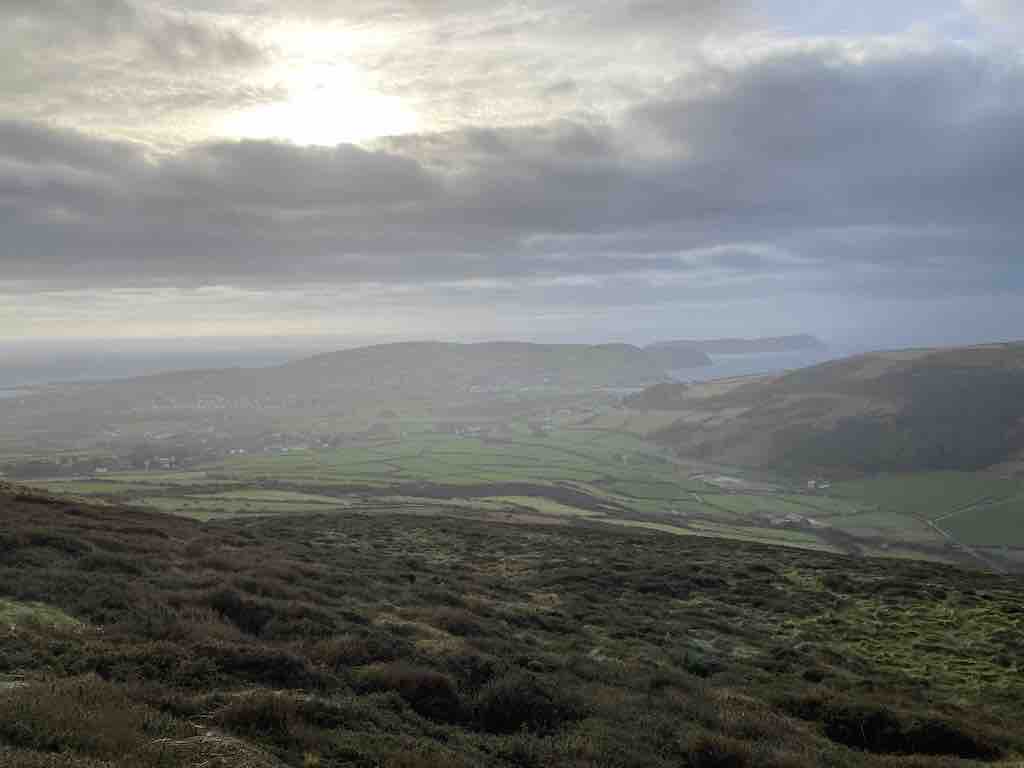
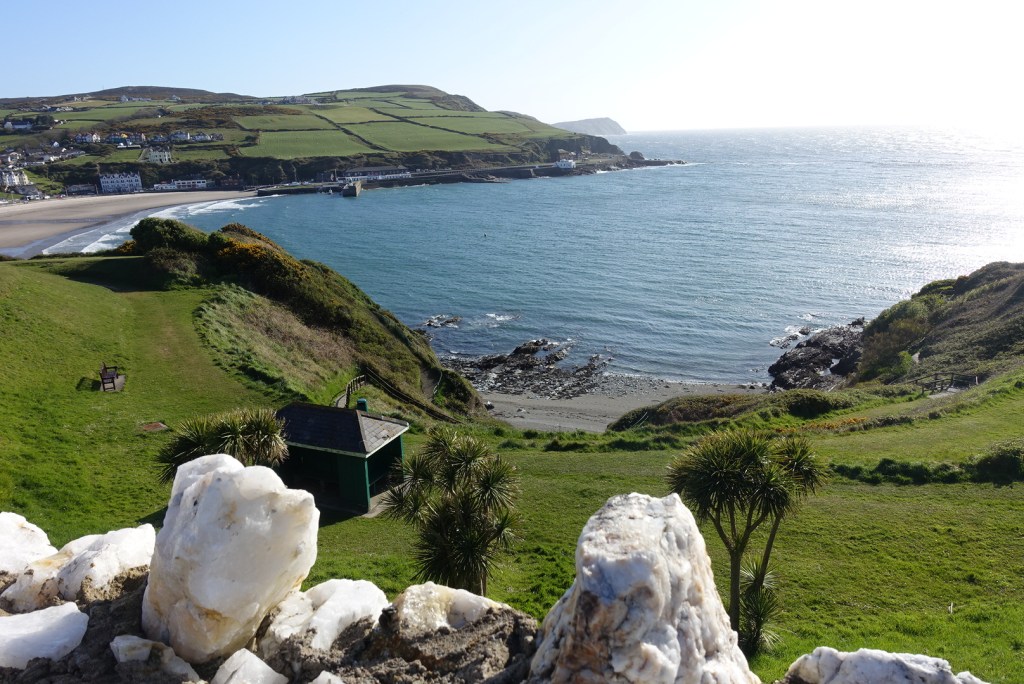
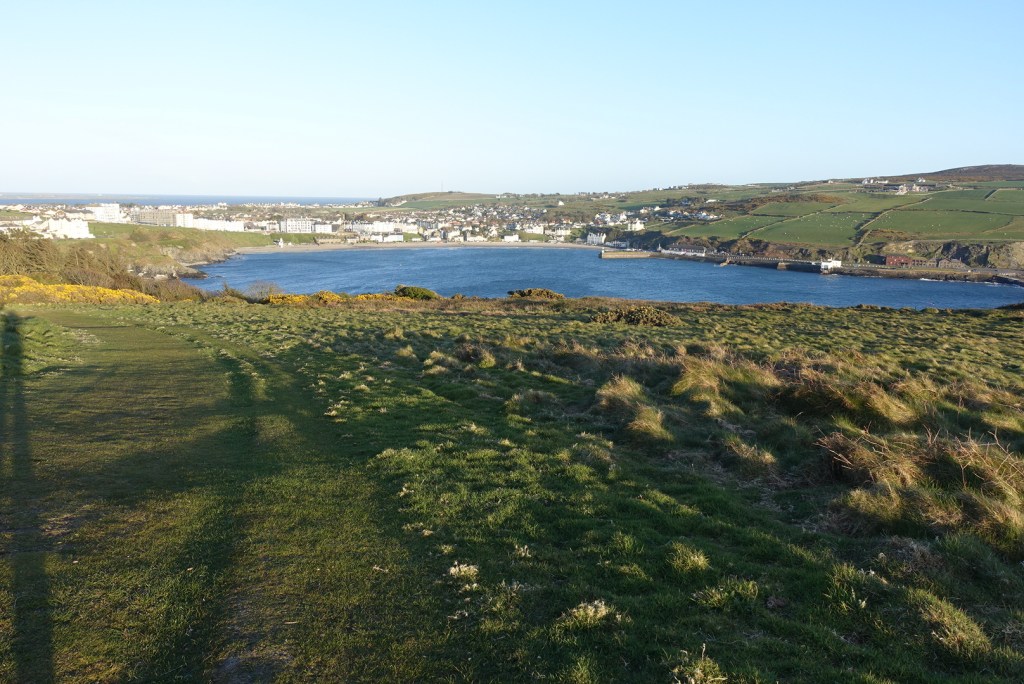
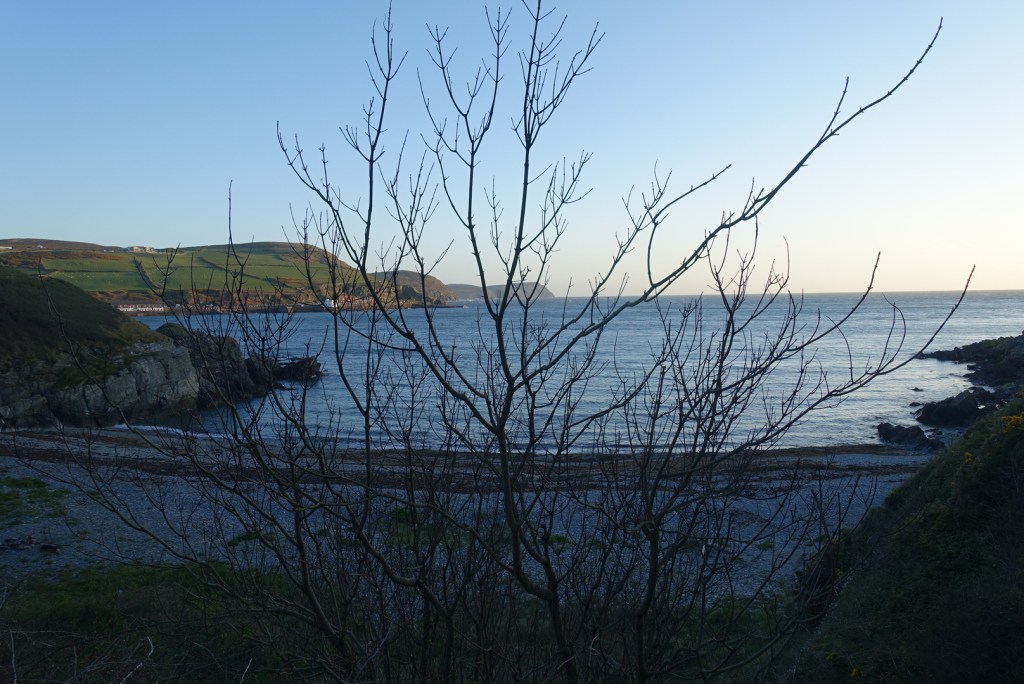
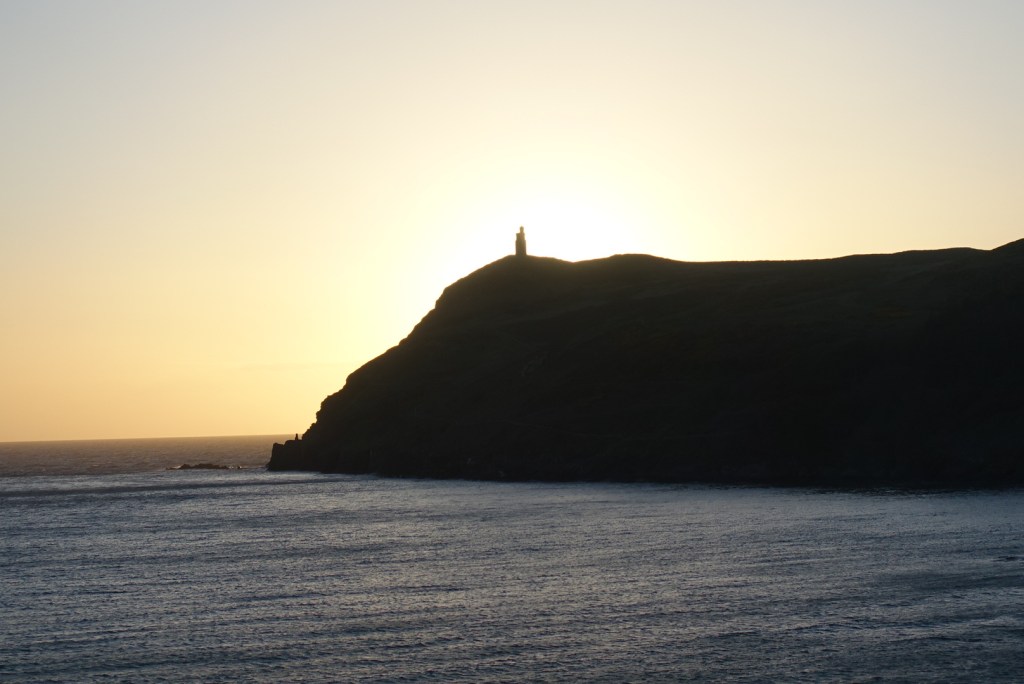
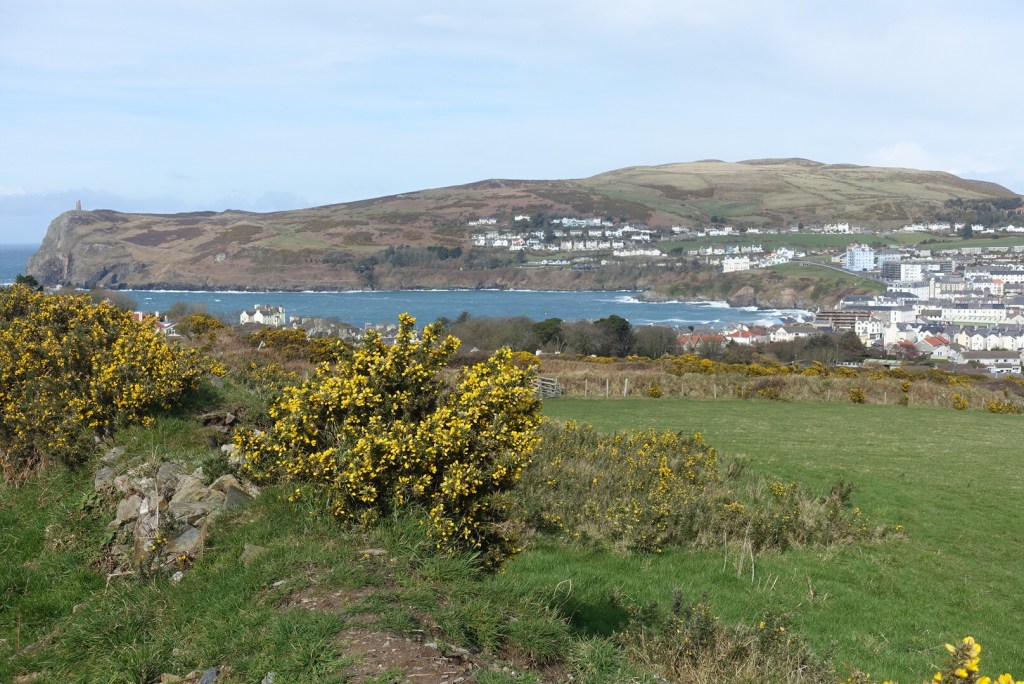
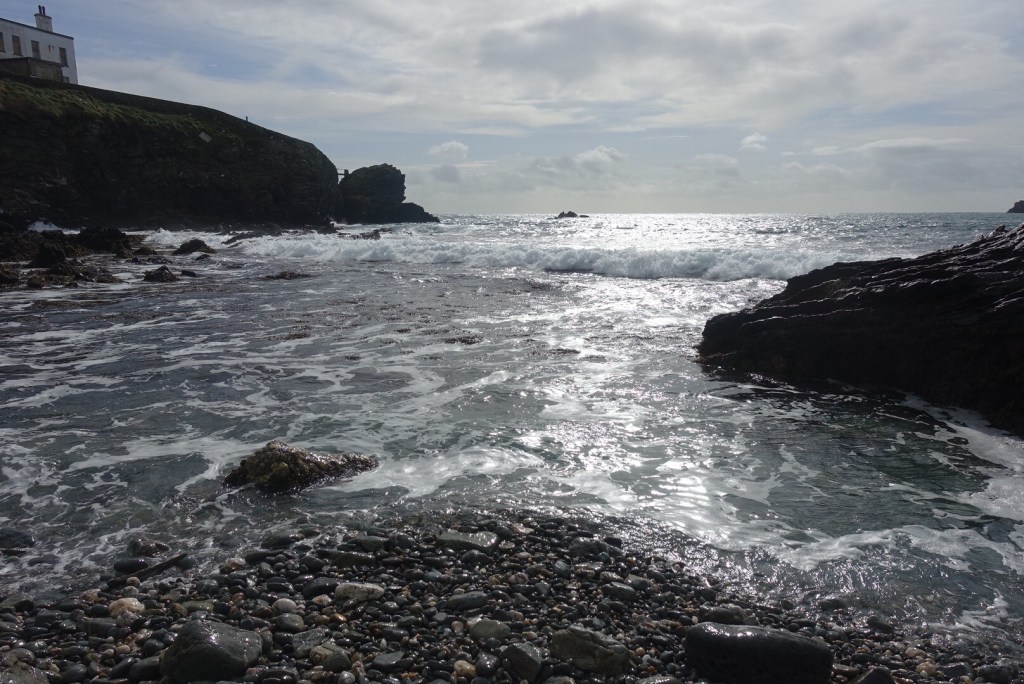
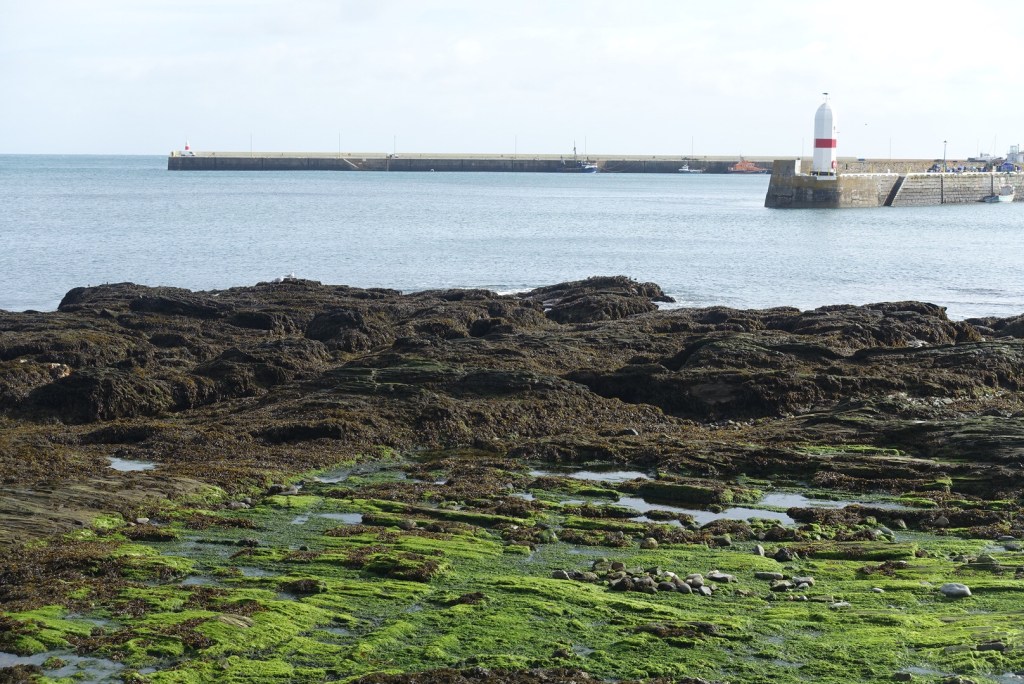
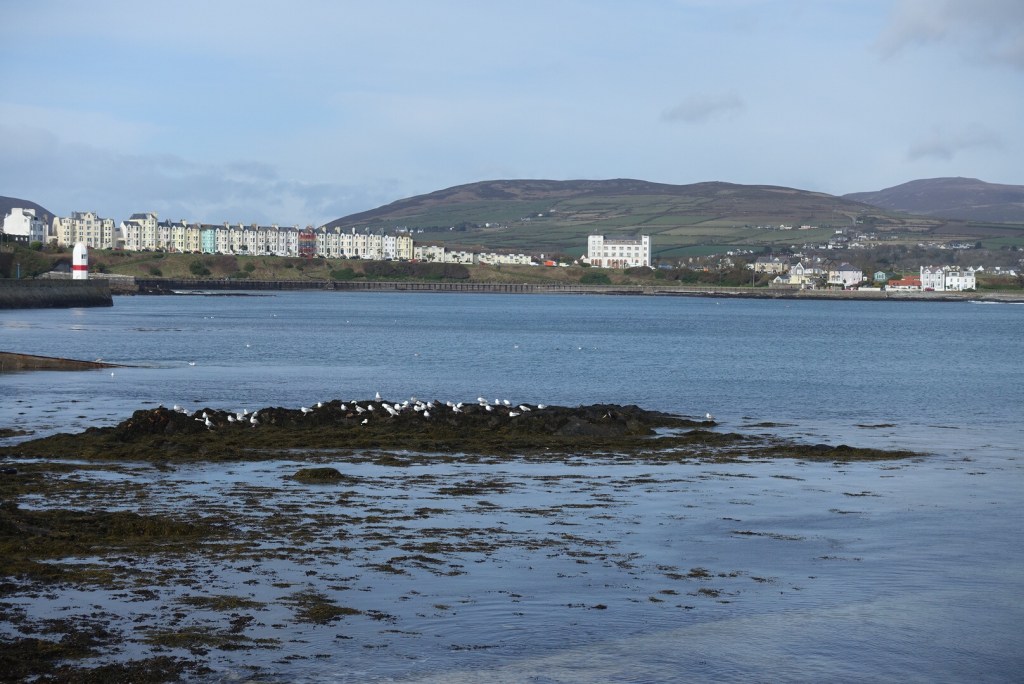
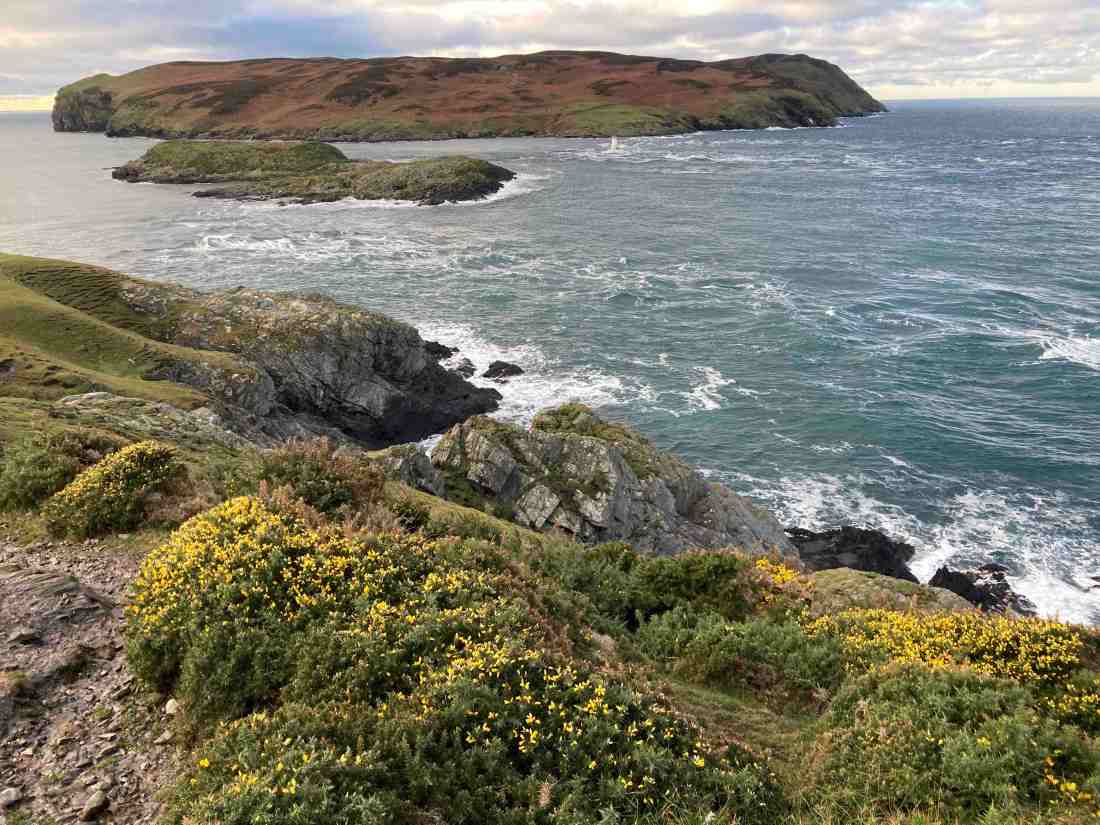
It was slightly warmer that it had been, with no rain forecast and not particularly windy, so I was expecting great things. My first photo shows Port Erin looking its glorious self as I headed down Dandy Lane. The light was lovely, with the sun peeping out from the clouds, highlighting different parts of the cliffs, and in my first photograph the tiny lighthouse. My expectations were dampened as soon as I reached the coastal footpath. There was literally a torrent of water hurtling down the footpath and surrounding cliff as if there was no tomorrow. I just stood and stared it for a while; in all my times of walking this route, I have never seen anything like it. Don’t get me wrong, it was never going to prevent me carrying on, but what a sight. I could see a lady on the road below thinking I was absolutely nuts! It’s a good job none of my friends had been able to join me on this occasion, as I imagine some at least would have turned back.

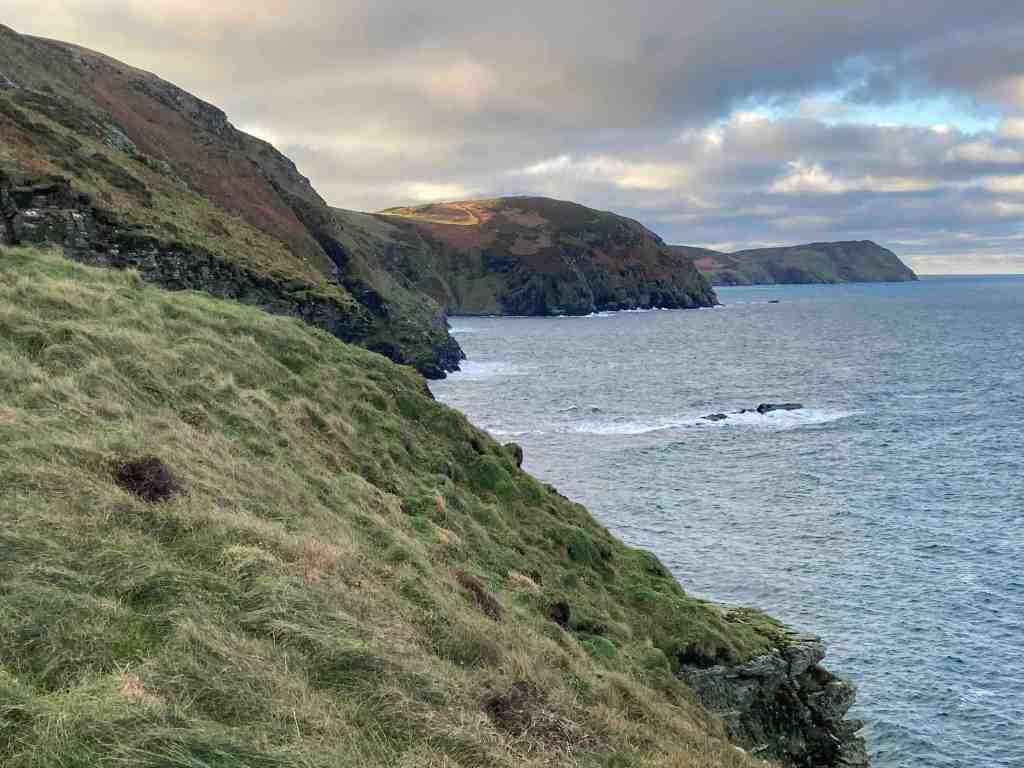
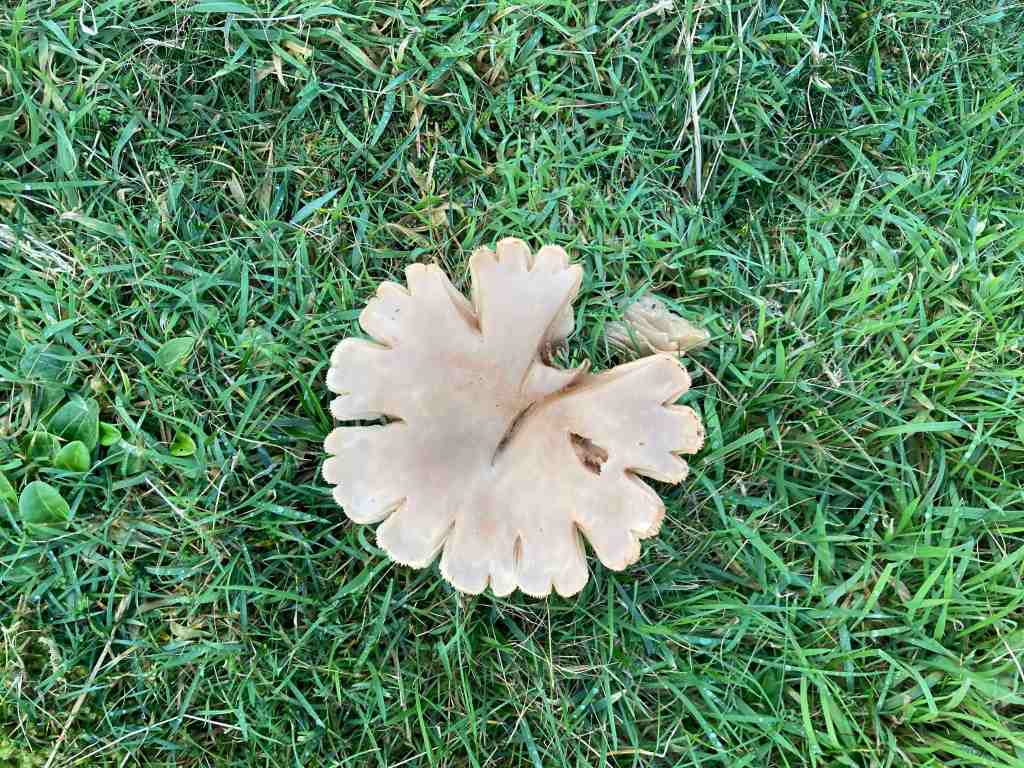
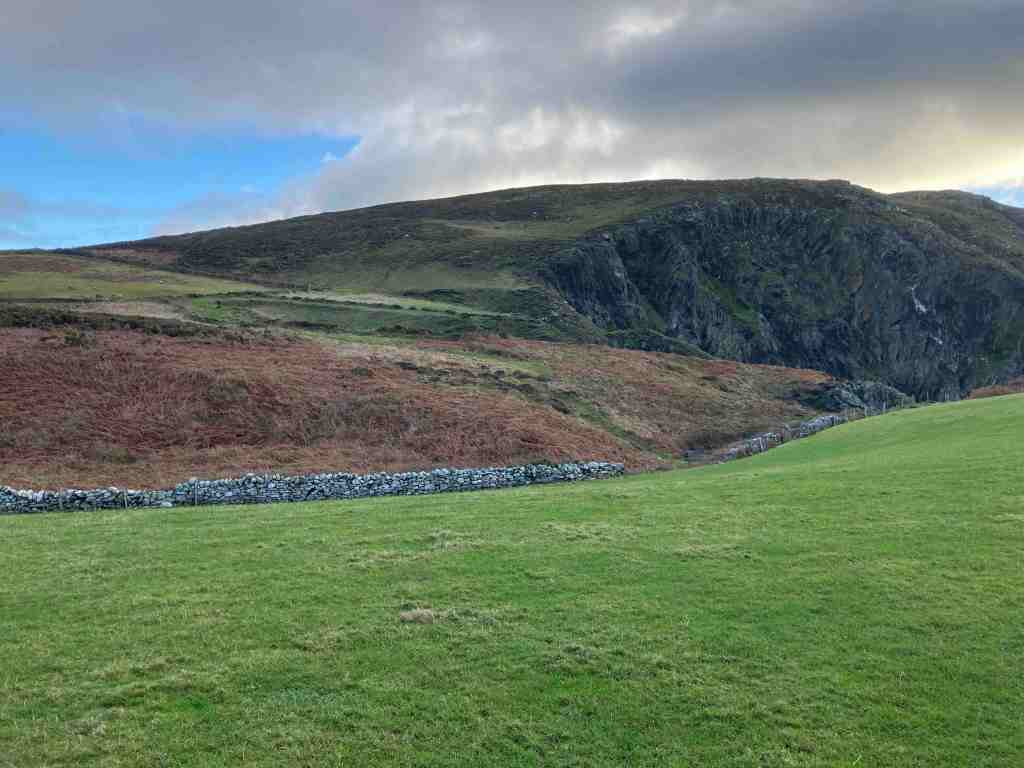
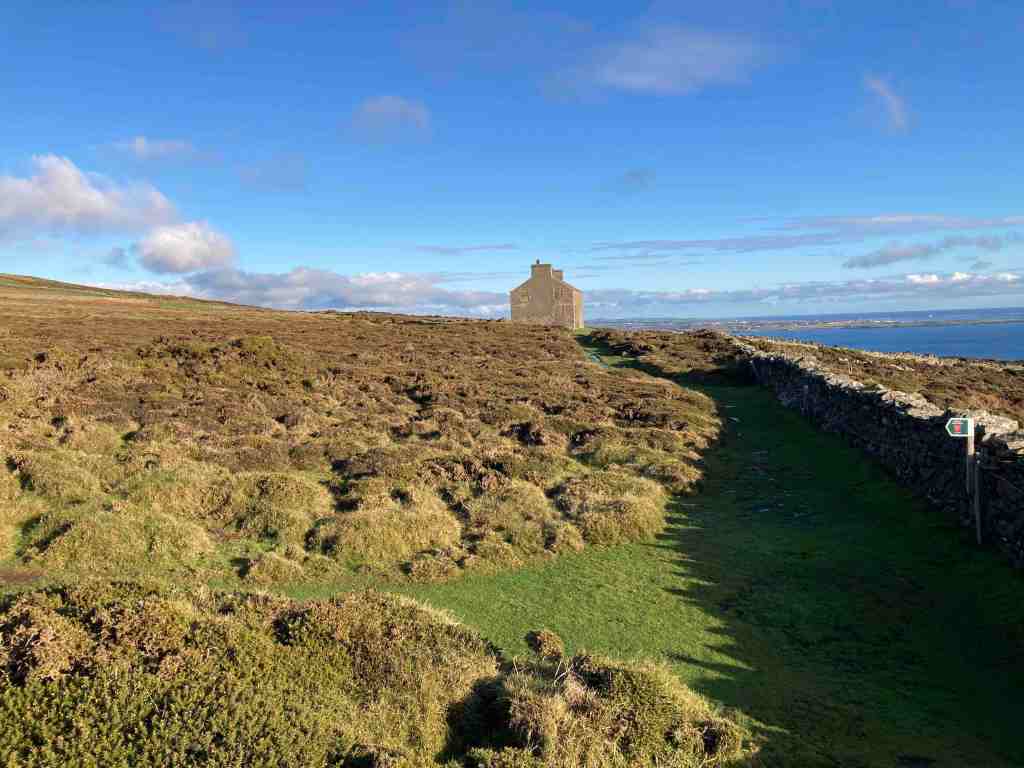
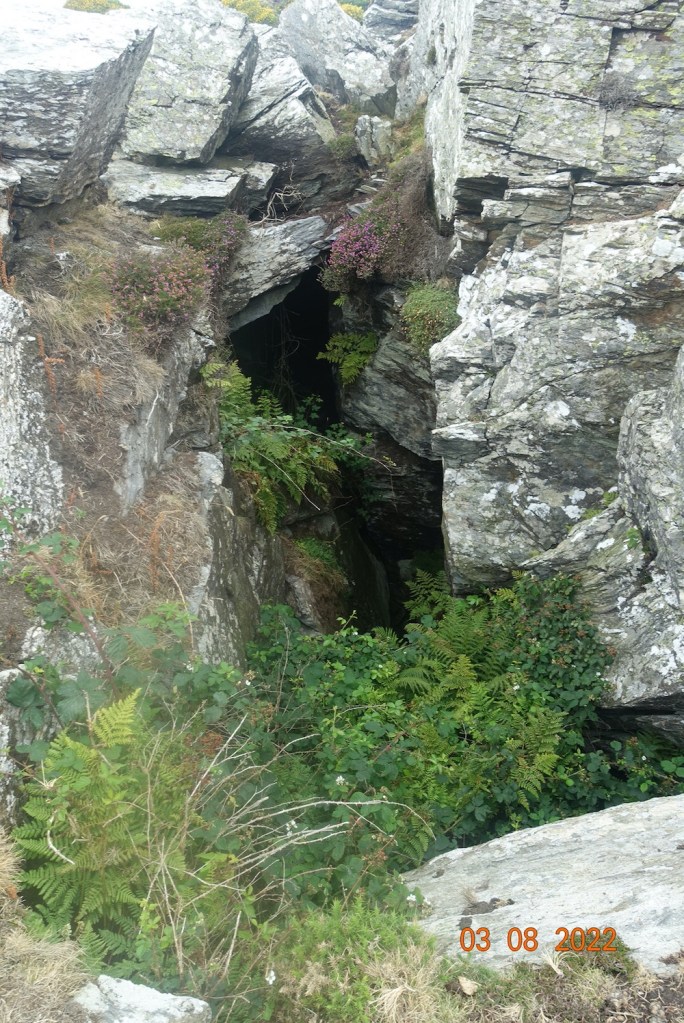
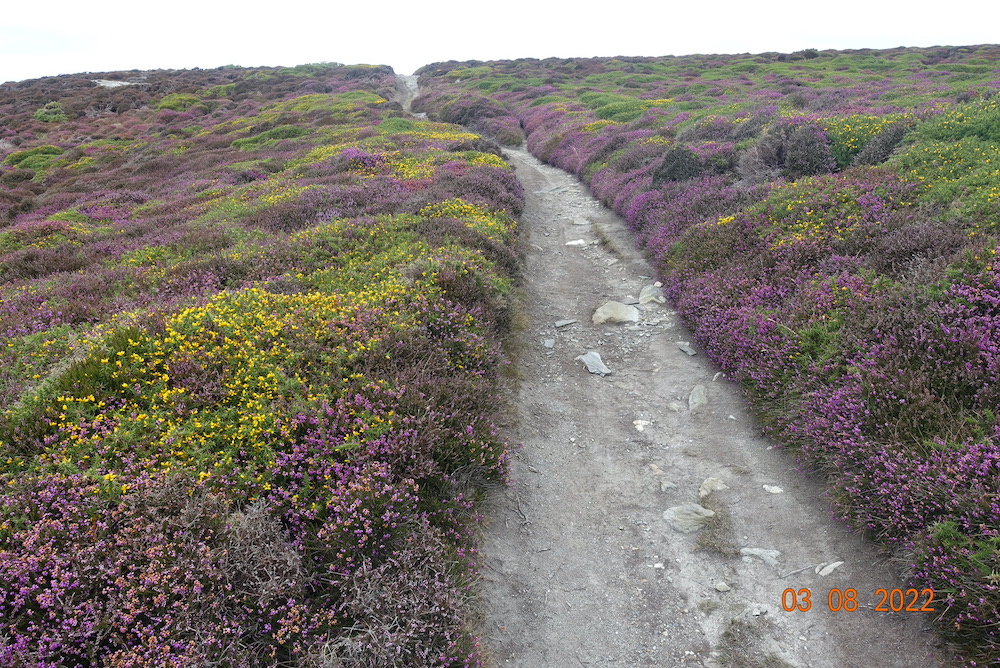
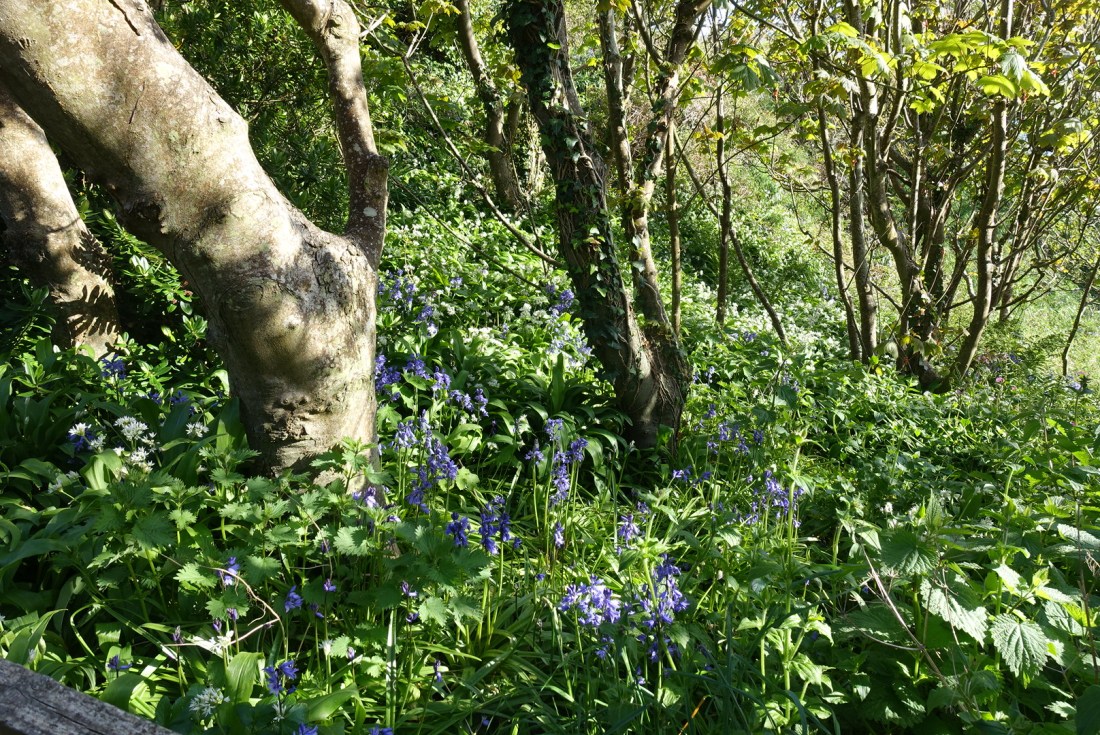
It took a little negotiating. The photos don’t show full amount of footpath under seige. The rocks and steps were slippery and in places there really was no foothold on dry ground, but I got through and remained surprisingly dry. Above the wall, the stream was still gushing down but at least it didn’t trouble me any more. I guessed that there would be more of this to come, but I was wrong. Yes, there were some very wet and boggy patches but where I had to cross streams, they were perfectly passable. In some ways, the narrow paths were the worst, as they were slippery and uneven. But, what does all this matter when you stop and take a look at what is around you. The light was stunning, giving me my own personal light show, as it lit up different sections of the countryside as I went past. Looking down at my feet, there were three varieties of fungus competing with the grasses, moss and ferns for space.

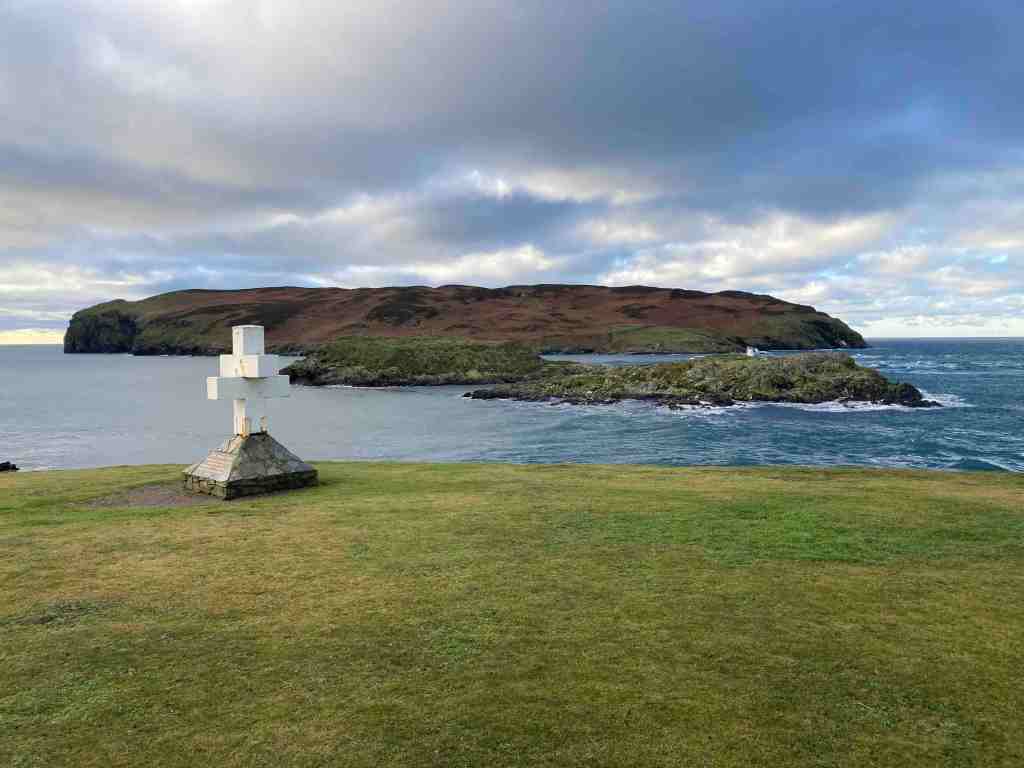
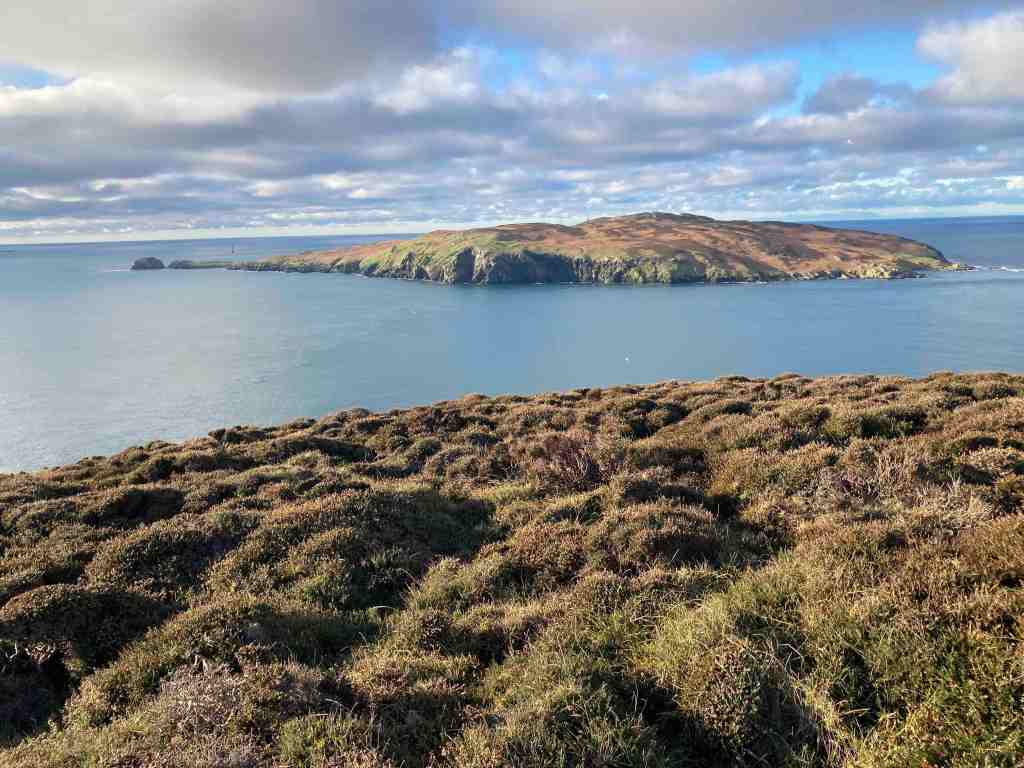
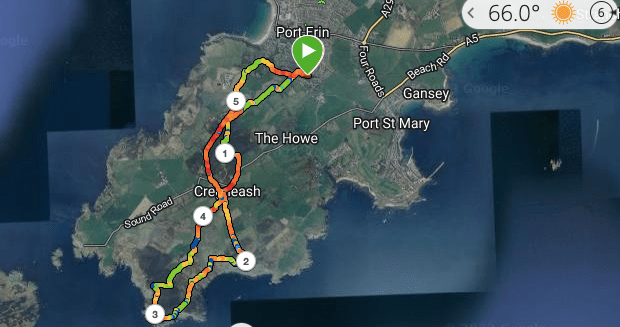
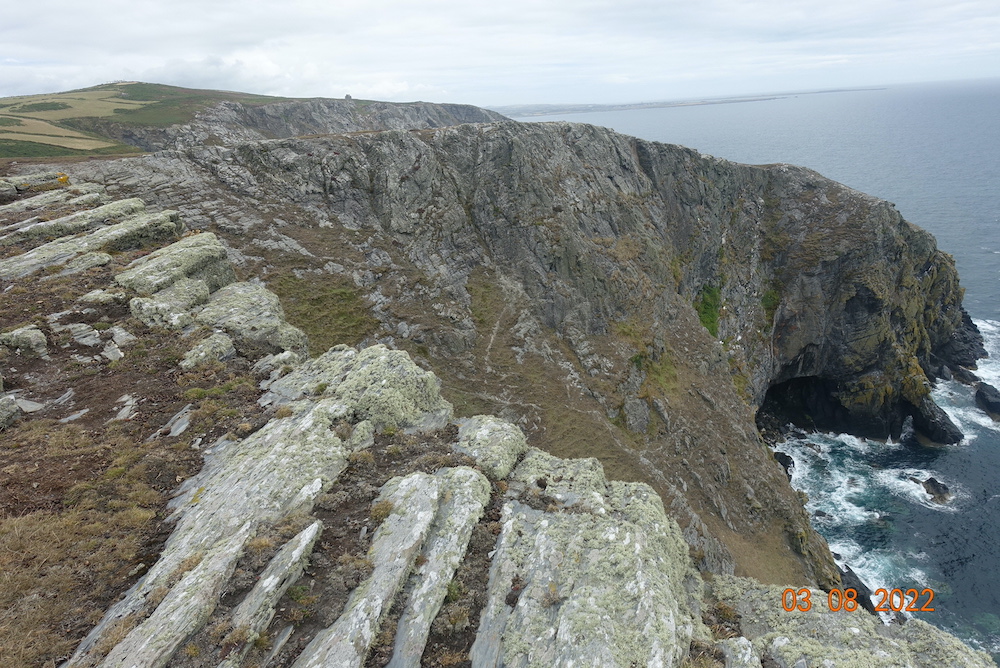
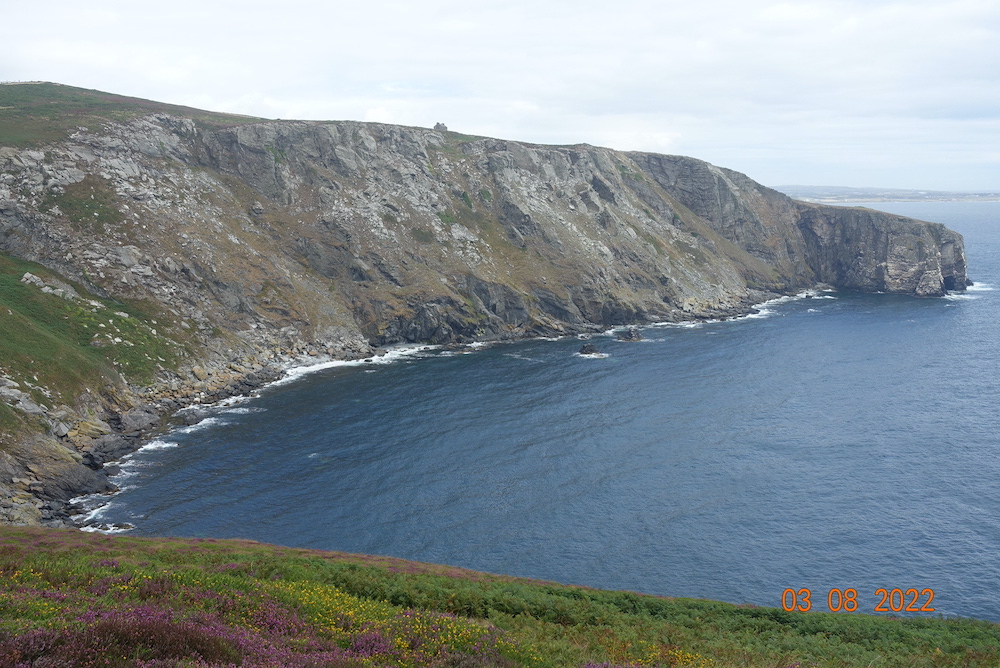
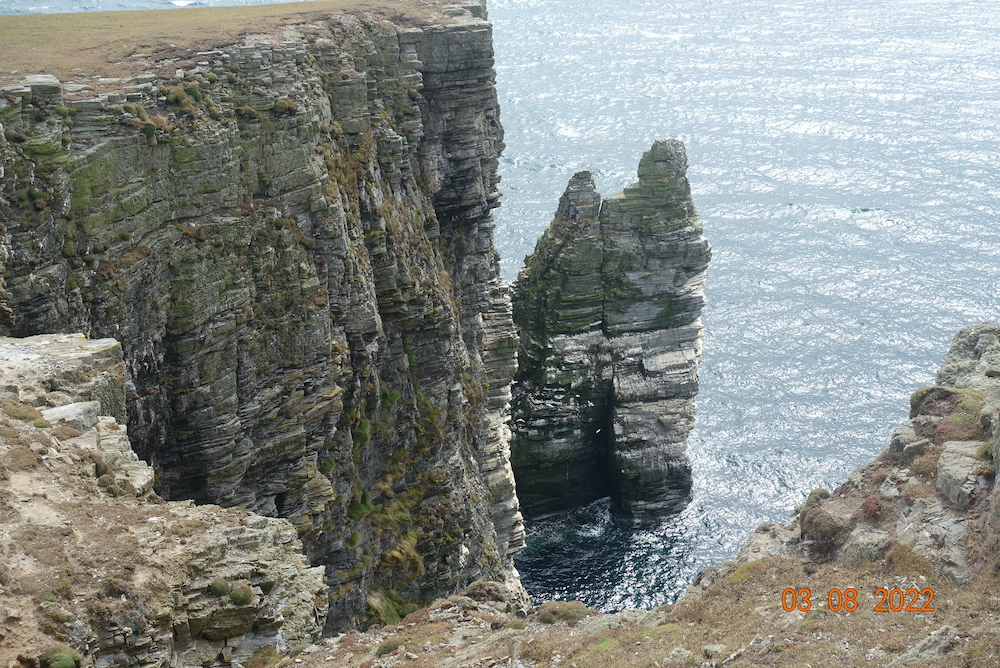
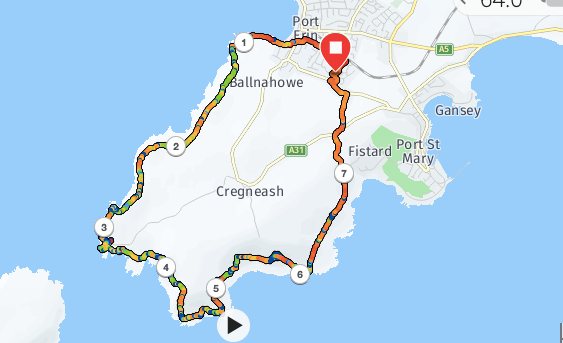
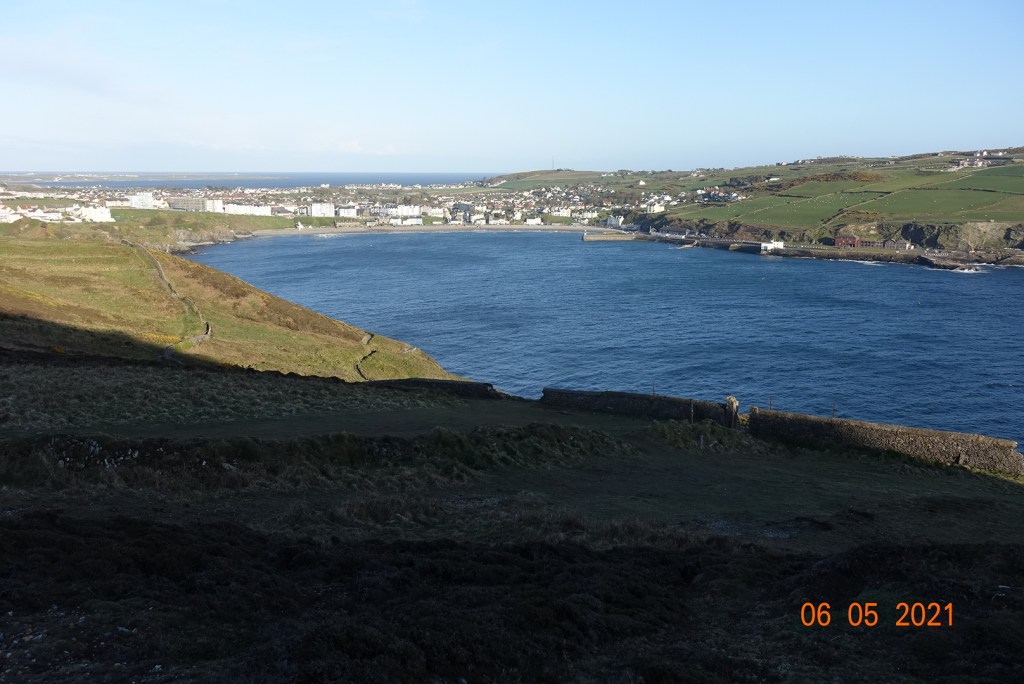
I arrived happily at the Sound, but didn’t stop until I reached the next headland, Spanish Head. The climb up wasn’t bad at all, the footholds not too muddy, but now the footpaths did become very muddy and awkward, with deep puddles that were unavoidable. And still, I had seen no-one to spoil my enjoyment of the countryside, and indeed this continued to be the case until I reached the Chasms Cafe (5 miles into the walk). People often walk from Cregneash and Port St Mary up to this very special place, so it was unsurprising that I met two couples at this point. I sat in the shelter and had my coffee. Looking out to sea I could just see Anglesey in the distance. The routes down from here have lovely views of the south from Port St Mary to Castletown and beyond, but the walking is not comparable with the terrain I had just been walking on. Given that I have a jippy left knee and sciatica in my right leg, I thought enough was enough and there really was not a lot to gain by continuing on past Port St Mary. I could have shortened the route home by going up through Glen Chass or across the golf course, but I satisfied myself that I wanted to see the village and then take the back route home.

Total distance: 8.5 miles; 1352 ft of ascent; 1434 ft descent.

I have such a lot of nice photos from this walk, I have created a slide show for you. I had intended to edit a couple of them, but my computer won’t let me, so you have the raw versions.

My left knee pain seems to have resolved itself, but if anyone has any home remedies for sciatica, which has been plaguing me for a week now, do let me know!

Port Erin in the summer sun

After another session of teaching, preparing my students for their final Psychology exam today, I had a stroll down to the beach, and continued on to Milner Tower.

It was a balmy evening and the TT guests were out in number enjoying the beach and the sunshine. The bands were playing on the beach and many people were sat on the wall drinking beer whilst they listened to it.

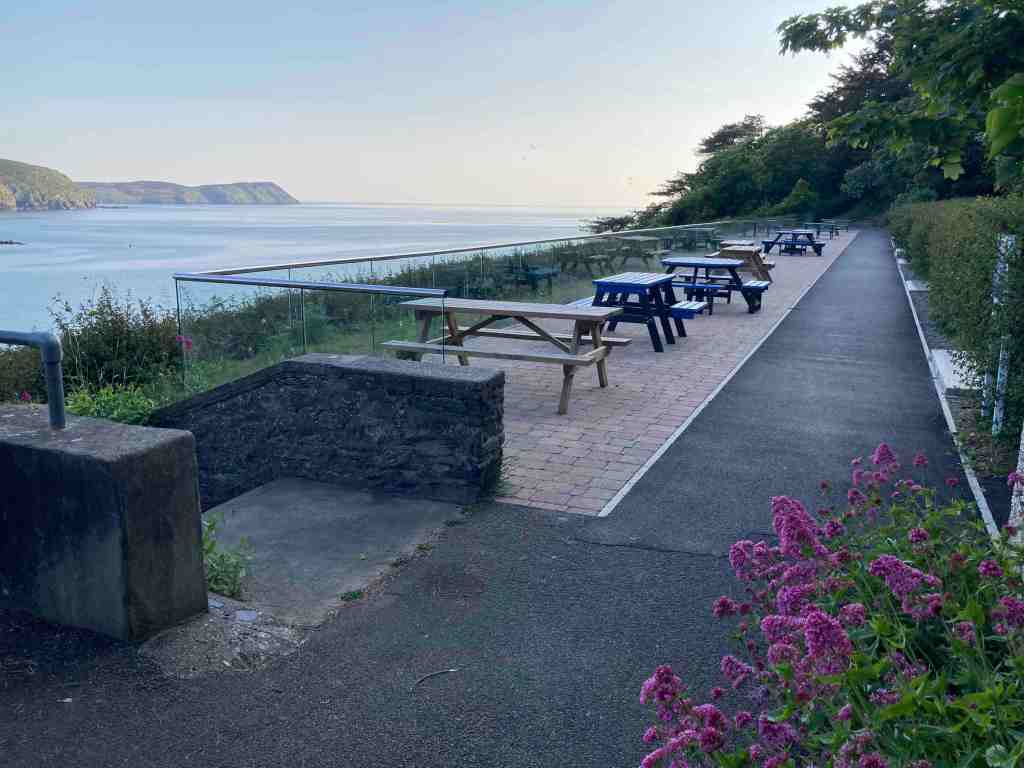
I walked up to where the marine biological station had been, to see what progress was being made on the development there. Absolutely nothing. I stayed a few minutes gazing out from the old sea wall looking for dolphins or basking sharks, but none were to be seen today. Instead, there were a number of small boats dotted around the bay. The tide was well out and I walked along the beach, the full distance as far as I could go, minding my way among the jellyfish, before climbing the steps onto the cliff path that meanders along the cliffs to Bradda Glen restaurant. I was surprised to see this was still open in the early evening, but I guess this is a good time of year to stay open later than usual with the influx of holiday-makers. Just beyond this point is where the commissioners have created a viewing platform with picnic area.

The light was so attractive tonight, making the scenery look so beauitful that I just had to carry on up to Milner Tower. It was also quiet up there, and there were hardly any walkers so I pretty much had the place to myself. I didn’t stop too long though as I hadn’t eaten, and I was after all, out for just an evening stroll.

That will be it for the next few days as I shall be busy working again. Roll on August when I shall get a proper break, although in 10 days I am off to Derbyshire to spend time with my children while I celebrate a big birthday!

Moors and coast around Port Erin

It has been fine, sunny and warm weather for a couple of weeks now, with no rain, and here have I been, holed up in my office, looking after my exam students. I was determined to get out this weekend, but as it is TT fortnight, I thought I would wait until later in the day, when it might also be a little cooler.

At 5pm out I strode, up the Golden Road to Meayll Hill. The path was unusually overgrown, which is odd given the lack of rainfall. It is not yet golden and I saw few wildflowers on this section of the path. I stopped every now and again to look back and admire the view of Bradda Head and The Carnanes, catching the odd glimpse between the hills of Niarbyl in the far distance.

The first section is unavoidably uphill but it is not steep. It is mostly grassy until it reaches a track where there is a house. Just past this, I was treated to the most beautiful song of a linnet, merrily chirping away on a tree just feet from where I was standing. I am now wondering if this was a chaffinch – not the usual habitat of a chaffinch, but it could just be. I have just tried listenting to recording of both linnets and chaffinches and the song wasn’t like either! Any ornathologists out there can let me know. There is a junction of paths here. To the left, the path contours around Meayll Hill to the Howe. Straight on and the path leads over the moors to the stone circle, devoid of colour right now, but by August and September when Southport U3A visit these should be ablaze with colour. I should have expected to see some bikers exploring this ancient monument, so, as I have been there many times before I gave it a miss. Indeed, there were more bikers at the very top so I took a detour and came into Cregneash from the northeastern side.
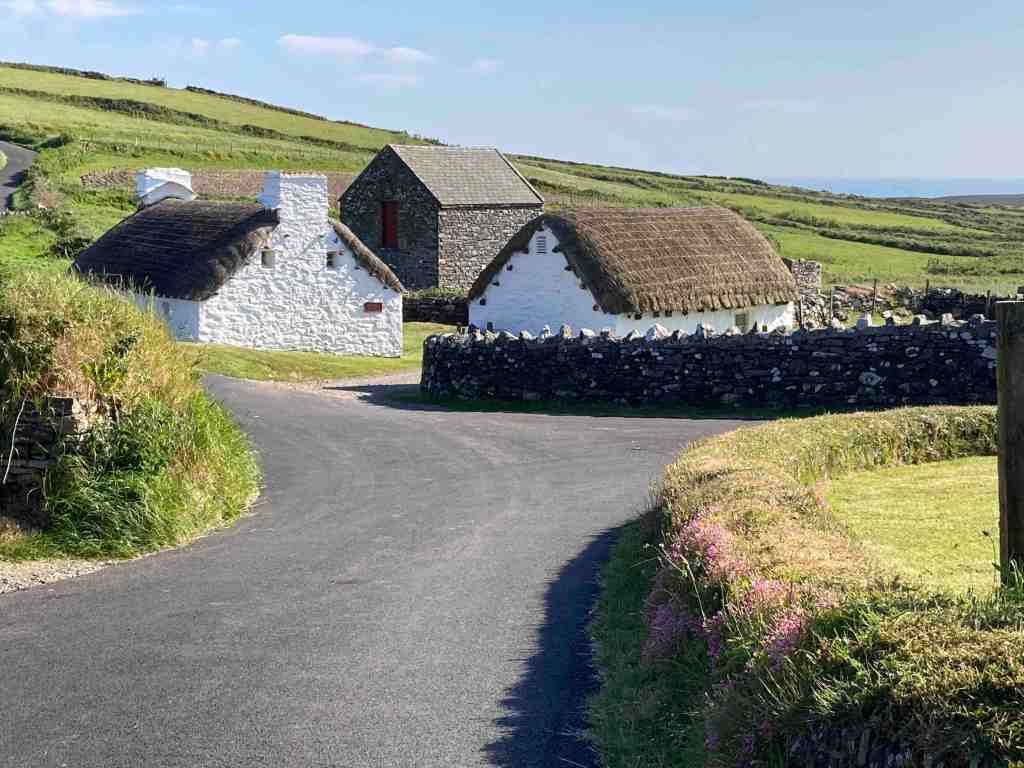
Cregneash looked very sleepy. The cafe and MWT trust shop were closed and there was no-one to be seen. I continued up the road that leads to the Chasms, one of my favourite views being from the vantage point at the top of the hill before the descent to the old cafe.

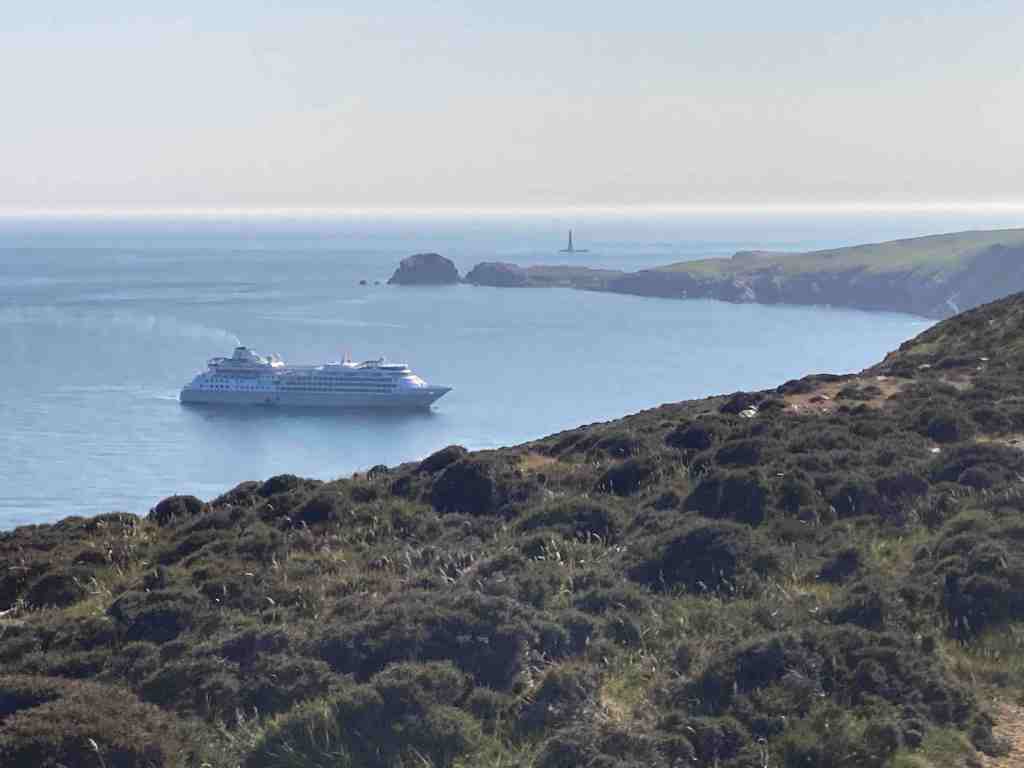
From here, I followed the cliff path to Spanish Head. As I reached the top of Black Head I was surprised to see a cruise ship sitting in the path of the Sound. Apart from a few sounds heralding from the ship, it was otherwise silent. The sun was glistening on the sea and there was a slight mist shrouding the Chicken rock and other distant views.

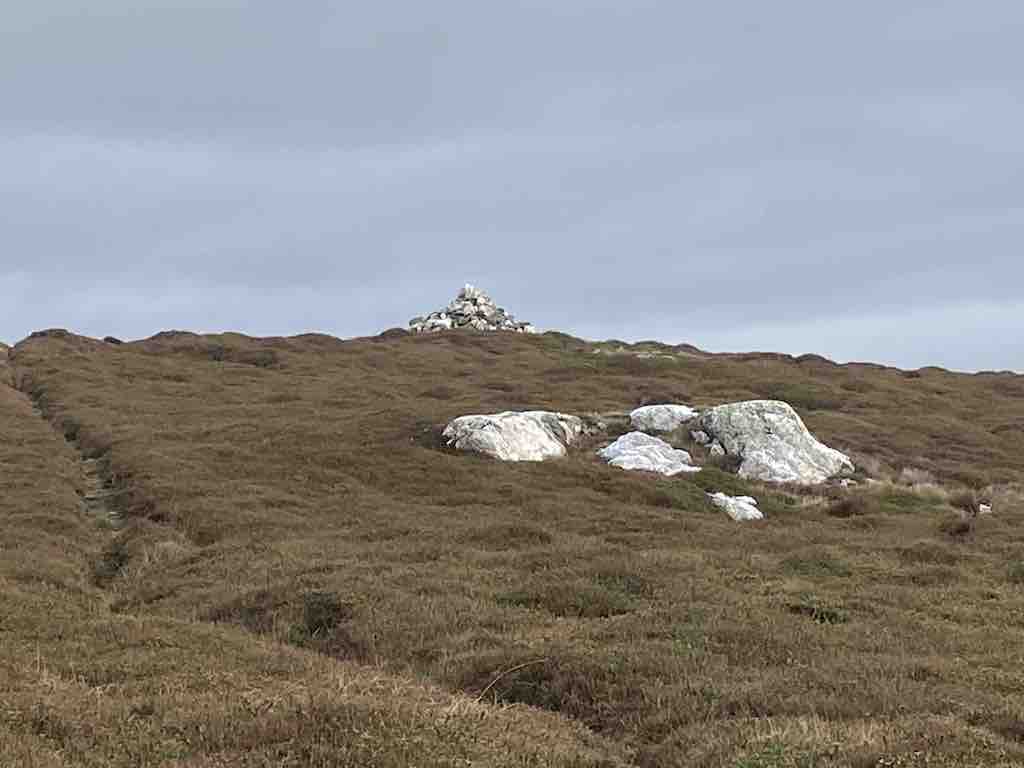
I was only going as far as the cairn in the next peak, that as far as I know has no name, as this was already about 3 miles. From here, I took a path over the moors back towards Cregneash. I have walked this many times before and usually it is very boggy where the path crosses a stream, but not today. The only muddy paths anywhere were on the farmer’s track leading back into Cregneash.

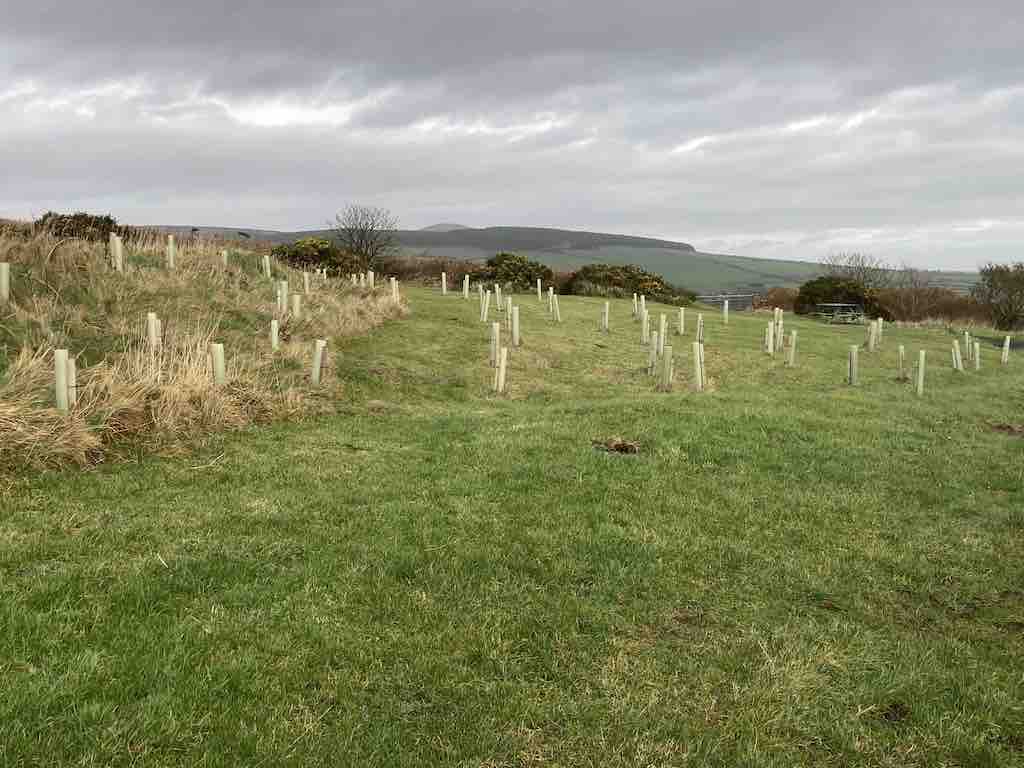
I followed the minor road back down to Port Erin and home. This is always a delightful road to walk down on a summer’s evening as the light falls on the village and makes it look even more attractive, showing off the beach in all its glory. However, I was surprised to see that a very small plantation has been planted half way down the road, just above the Ballaman mansion, which looks as if they are conifers. I am surprised the owners have been given permission to plant everygreens; I would have expected the commisioner to agree to only deciduous trees in that landscape, but what do I know. The trees were heavily covered up in wrapping so I may have been wrong.

Distance 5.75 miles; just under 1000ft of ascent/descent and a beautifully warm summer evening. What’s not to like?

Ambling and Rambling Around the Sound Coastpath

It was one of those days that was just right for walking, if a little breezy. At least it wasn’t boiling hot! It is a while since I have walked this route west to east (or roughly that) and I was really looking forward to it. I wasn’t disappointed. There are a few noticeable changes – well noticeable to me – such as quite a lot of erosion in places, some caused by weather, some caused my man, and some very definitely caused by rabbits. The heather, whilst still beautiful, was not quite as abundant as it has appeared in the past, and the bracken seems to be getting a stronghold in some areas and crowding out the heather. The gorse was variable with several areas without flowers. On the plus side, there were a lot of choughs, all busy arguing with themselves as only they know how to do.

I started out from home and walked along Athol Park to the top road overlooking Port Erin. This is one of my favourite views of the bay. It always looks so inviting, no matter what the weather. I followed the road to where the coastpath starts behind the delapidated Marine Biological Station, noticing that the stream that generally gushes out from the top of the cliff was completely silent today, testament to the very dry summer we are having. The seagulls seem to have already abandoned the cliff face here, where they used to nest in abundance. They must be anticipating their home being ravaged by builders and machinery once the development of the apartments begins. Today, there were only a couple of beleaguered herring gulls scattered on the site.

The path soon starts to climb uphill and this was the first point where I noticed that more rocks were exposed than I remember. Again, areas that are usually a bit muddy were dry and the wild flowers even seemed to be begging for rain. Otherwise, I didn’t see anything unusual on my walk round to the Sound. I was as delighted as ever when I reached the Valley of the Rocks with all its contorted shapes. A few minutes later I arrived at the Sound in time for a bowl of soup, which was accompanied with a roll, but the greedy seagulls took it when I wasn’t watching. I had been debating whether I wanted the bread anyway, so they did my a favour, and boy did they enjoy it and make a fuss! I am on a keep fit campaign, not much of a campaign really. I just want to lose a little weight and cutting out or down on bread and cheese are high on my list.

After lunch I spent a little time sitting on the rocks watching the seals. Several were lounging close by and others were peering at the visitors peering at them. This is such a beautiful spot to stand and stare, and you know how good I am at that. After that it was the steep climb up on to the top of Cronk Mooar and then on to Spanish Head. On the way, I met a couple watching some sheep who were having an argument. I was to see them later on in my walk – the couple that is, not the sheep, and we spent a very pleasant few minutes talking about our respective experiences of the island and comparing it with Germany, where they live. This section of path usually has the best gorse and heather, and add in the sage and the grasses, it makes for wonderful variation in colour. There are also interesting rock formations on this section of Spanish and Black Head, rather like limestone pavements, but I’m not sure they are made of limestone. If anyone knows what type of rock these are please let me know.

The last bit of uphill takes you to the Chasms and the Sugarloaf. Here I met another couple, also visitors, wanting to know where to go next. I think their decision was made by telling them there were toilets at Cregneash as they then headed up in that direction. I took the lower grassy path and made friends with a number of sheep, and picked up feathers for my granddaughter to paint. The vista on this side of the Sound is very different. On the north western side all you can see are hills, but from here you can see not only the hills but the terrain also gently rolling down to the sea and the flat areas of Castletown and Langness.

By the time I reached Glen Chass I had had enough. If you are doing this walk, you might want to continue down to Port St Mary and take one of the roads back to Port Erin. There are a number of different options, depending on how far you want to walk. You can go over the hill at Fistard, taking the path upwards from the golf course, follow the coastal path or as I did follow the road at Glen Chass to the Howe Road. I then followed the farmer’s track down to Truggan Road and then I was about home. However, if you turn left at the Howe road junction, you can take a footpath behind some houses on the right, going over fields and retaining the height and the wonderful views until you finally have to drop down on one of three footpaths leading to the Port Erin end of Truggan Road.

This walk was just under 8 miles, with a total ascent of 1463′ and a total descent of 1503ft. I took it slowly, to enjoy looking at all the wildflowers and other wildlife. I would allow 3.5 – 4 hrs of walking time for this beautiful coastal walk.

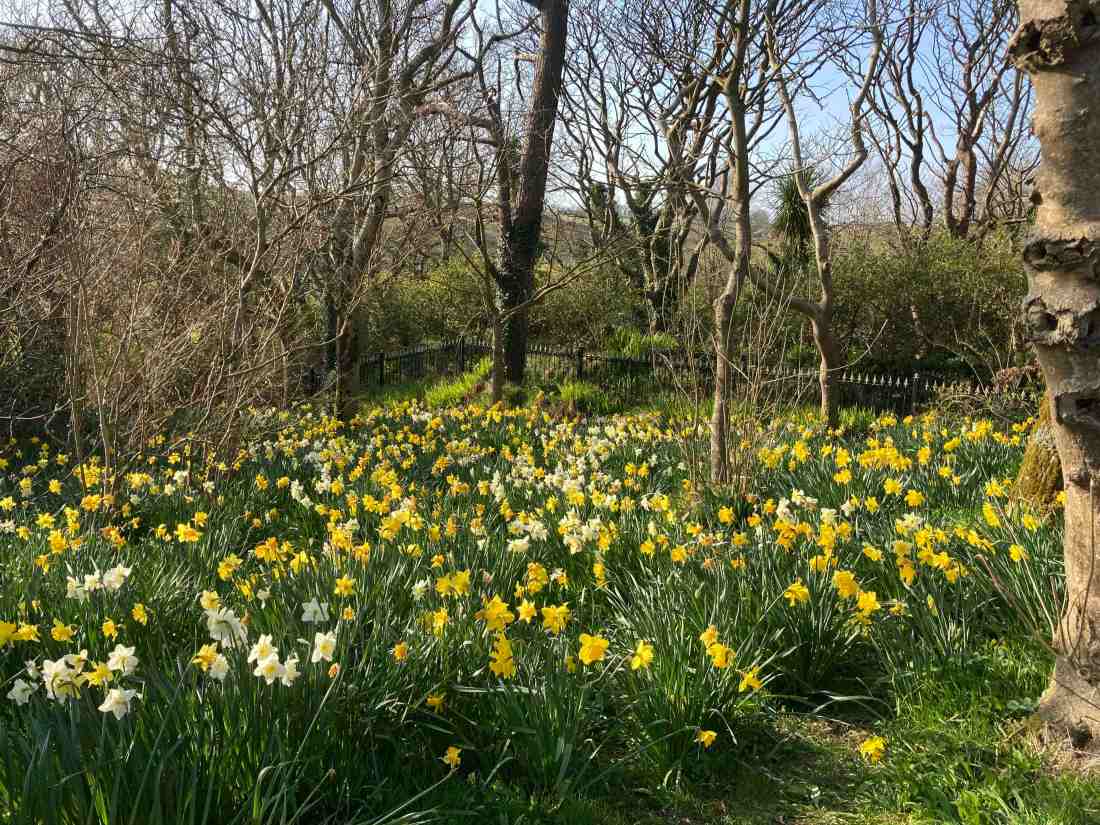
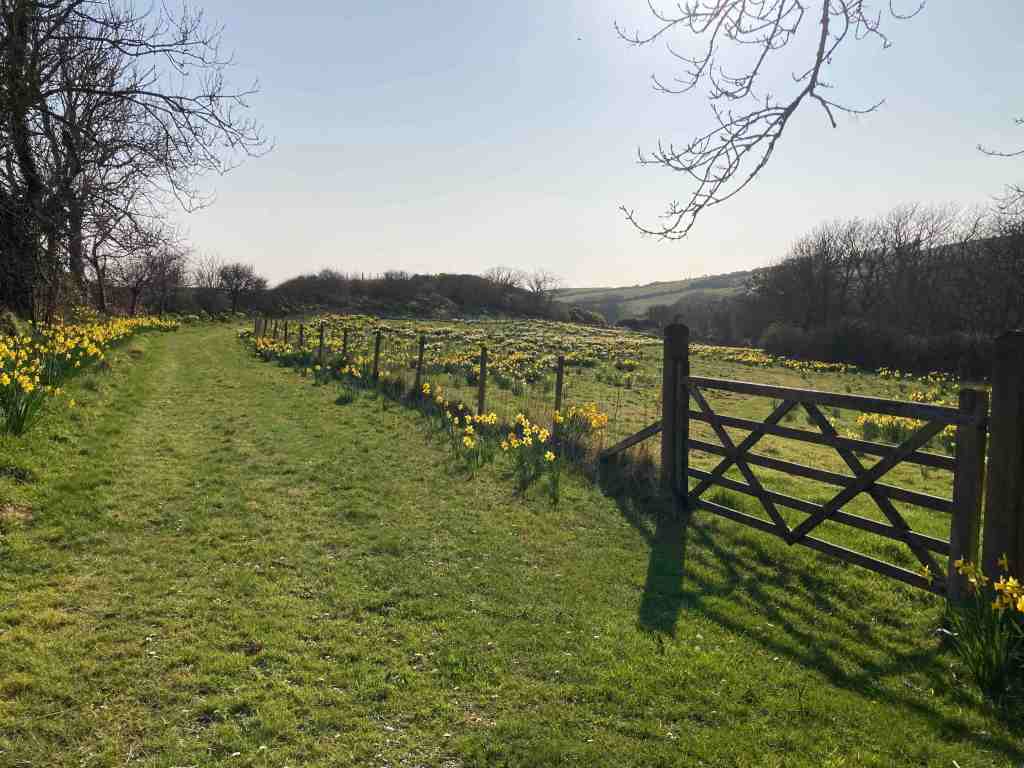
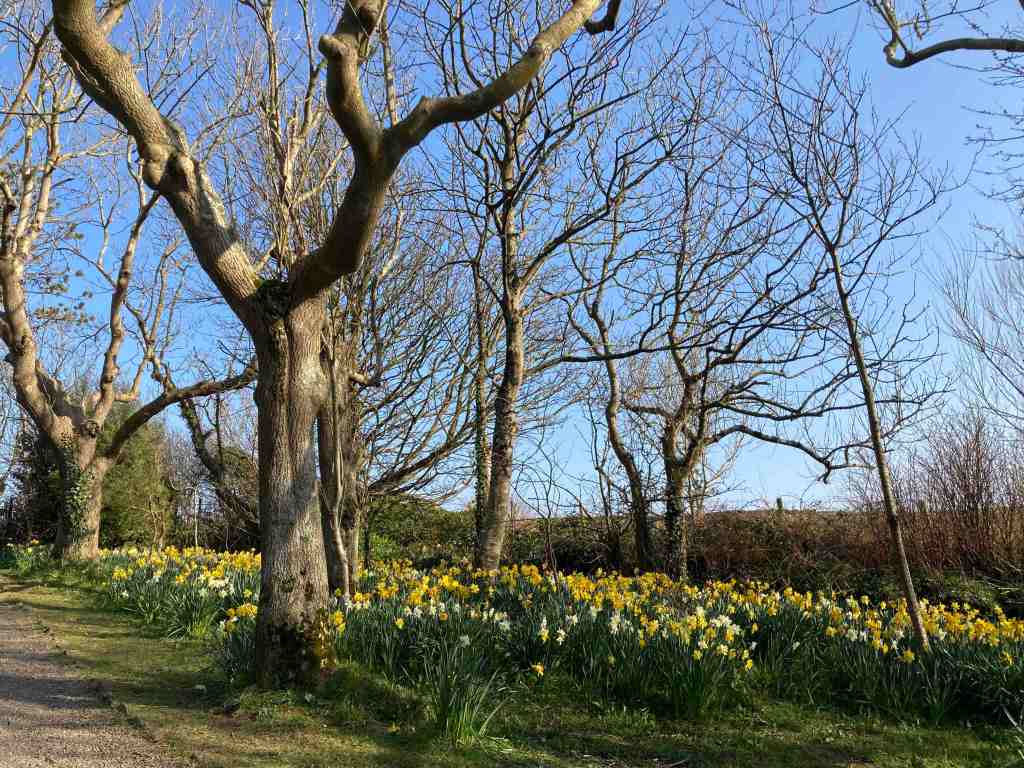
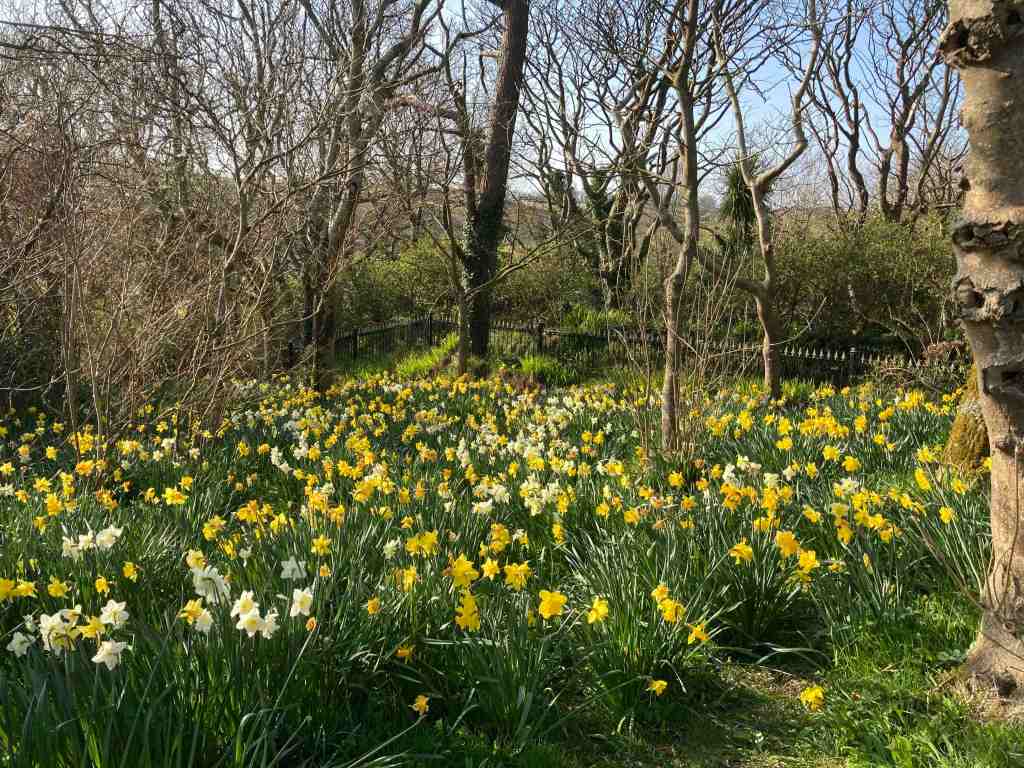
Daffodil Walk, Port Grenaugh & Port Erin, 26th /27th March.

March, and the daffodils are in full bloom, even beginning to go over. When I was young, the daffodils would never flower this early in the year. What a delightful way for spring to appear in a glow of yellow, especially on a wonderfully sunny weekend as this was.

Two of my children had come over to see me, one turning up unexpectedly and being a total surprise and an absolute joy. My second son was dropping hints from the time he arrived, such as ‘oh, there’s a plane just coming in from London’ and earlier in the week ‘ How many beds do you have?’ and I still didn’t twig. I got a wonderful surprise when Paul knocked on the door in the darkness and when I opened it, there he was greeting me. I shall remember that for a long time. The rest of them (I have 4 children) had kept that a secret since November and even the grandchildren hadn’t let on that my eldest son was also coming over. That made up for the massive disappointment of my daughter contracting covid (again!) the day before she was due to travel over. She has missed out on all the fun we have had in this brief visit 😦 . I shall make it up to her another time.

The three of us (my other son was hardly likely to come over from El Salvador for the weekend with his 1yr old son, so I knew there wouldn’t be any more surprises!) had a great time catching up and making fun of each other. On Saturday they treated me to a very nice Mother’s Day lunch at The Boatyard in Peel, then I drove them a very windy and convoluted route to Port Grenaugh, almost going in a complete circle at one point even though I should have known where I was going, to look at the daffodils and have a walk along the coast. We were blessed with wonderful weather this weekend, and even today we managed three mini-walks around the south in glorious sunshine, even if was a tad windy.

So, here are the photos in the form of a slideshow. They speak for themselves so I don’t need to write a description of the daffodils or the walk, or provide maps on this occasion, except I should say that the mound/earthworks is called Cronk Merrui, an iron age fort very close to Port Grenaugh. The house on the headland is now owned by the Department of Transport, which seems a somewhat exotic and expensive location for a government building, but what do I know.

New Year’s Eve ’21 walk around the Carnanes

This walk always reminds me why I live here. It is just a stone’s throw from my house and within minutes I am atop the Carnanes perusing wonderful vistas in all directions – that is, on a good day. Today, it was misty and a little windy but even so it still holds its magic for me.

I parked at the southern car park on the back road to Peel just above Port Erin. I immediately noticed that the Manx Woodland trust have planted more trees in the car park area. They have done a great job this year reforesting parts of the Carnanes. I walked up the road a little, crossed over onto the moorland. It was very quiet today, hardly any cars or people; in fact, I didn’t see a single person in the two hours I was out today. I had the hills, the sky and the views all to myself.

This is a great walk for an afternoon stroll after Christmas dinner. It is easy walking along paths that are well trodden, and if you have children there are heaps of cairns on hillocks for them to run off and explore while you gently pace yourself and take in the air. They are many different paths, and if you wish to can take the green road down to the sloc, then follow the cliff path back towards to Port Erin and do a circular walk of about 4-4.5 miles. That was not for me today. My walk was about 3 miles altogether, visiting the cairns on the Carnanes but not going as far as the highest point of Lhiatee Ny Beinee. I occasionally traipsed over the heather to reach a certain point and I used the lesser paths to reach my viewpoints. It is not especially sensible to veer off the paths too much as the gorse and heather are quite thick and not easy to traverse unless you have a particular reason to venture through it. And be aware that some of the paths go nowhere, and occasionally you may have to retrace your steps as you can see happened to me if you look at the map!

I find the outcrops of quartz and striations in the manx group rocks fascinating. I just wish I knew more about them, as this area is not well covered in the textbooks. For instance, towards the end of my walk I noticed that the rock structure must change as there were several natural springs that I crossed on the path that I hadn’t noticed before. Presumably the rain water filters through the top of the hills until it meets some impermeable rock about half way down. I shall have to make it my mission to find out during 2022.

So ends 2021. I have not been able to do as many walks this year as I would like for a variety of reasons, but I shall continue with my blog in 2022 and try and find some new places to show you. I haven’t done anything like enough walking in the north of the island and it has such different topography that is just as interesting as the coast and the hills.

I wish all my readers a very Happy New Year and I hope you all have opportunities to explore your own landscapes and to feel the same exhileration that I feel every time I am out in the countryside.

Heather Walk on the Western Cliffs 18/08/21

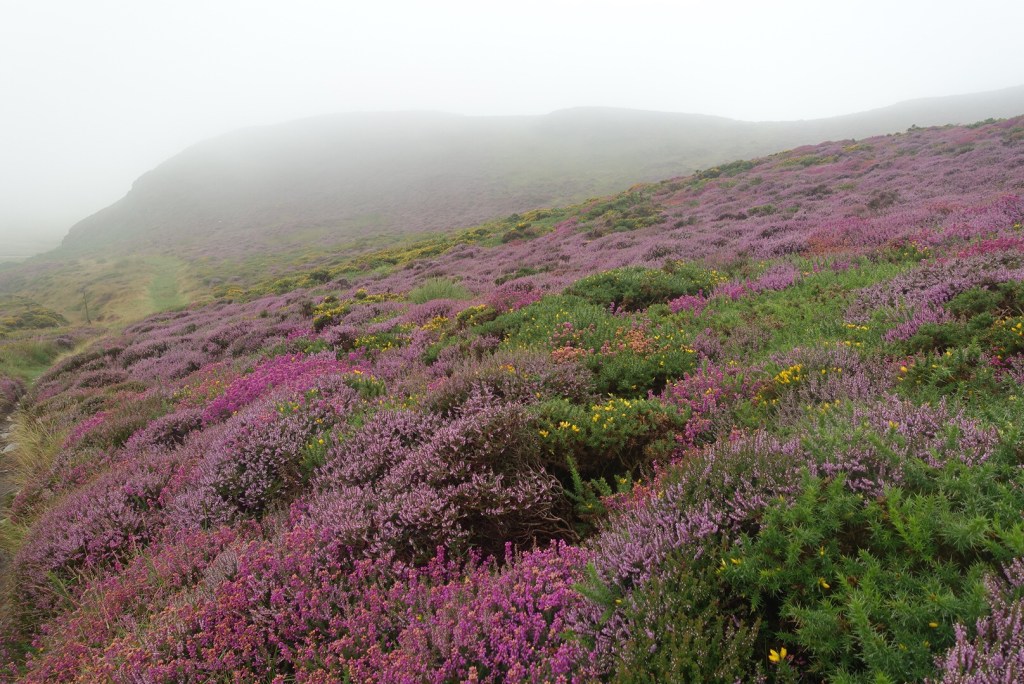
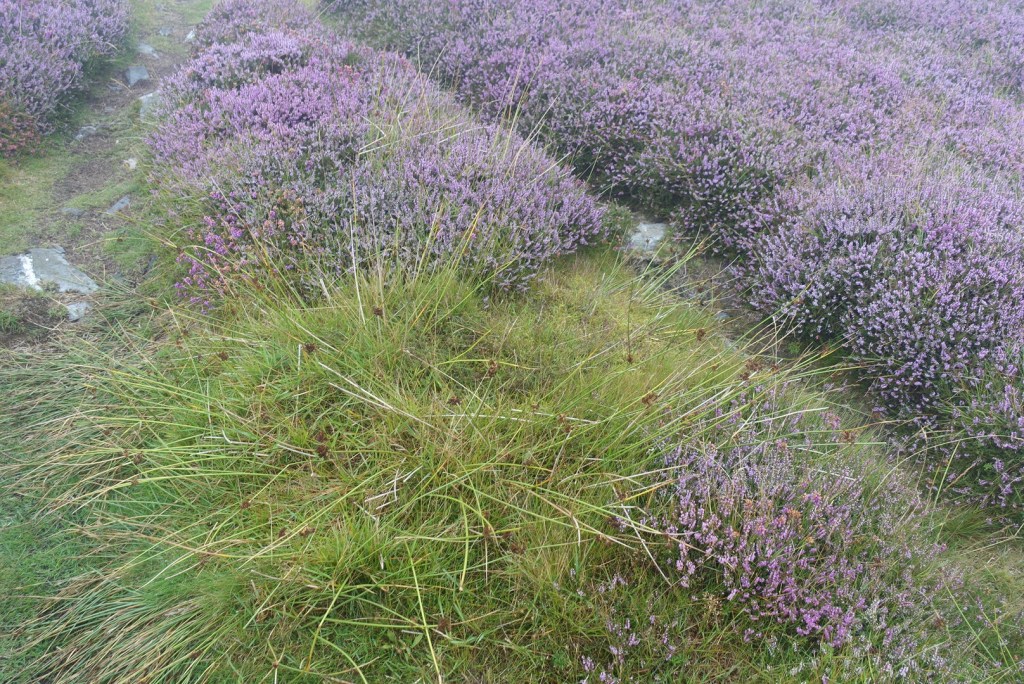
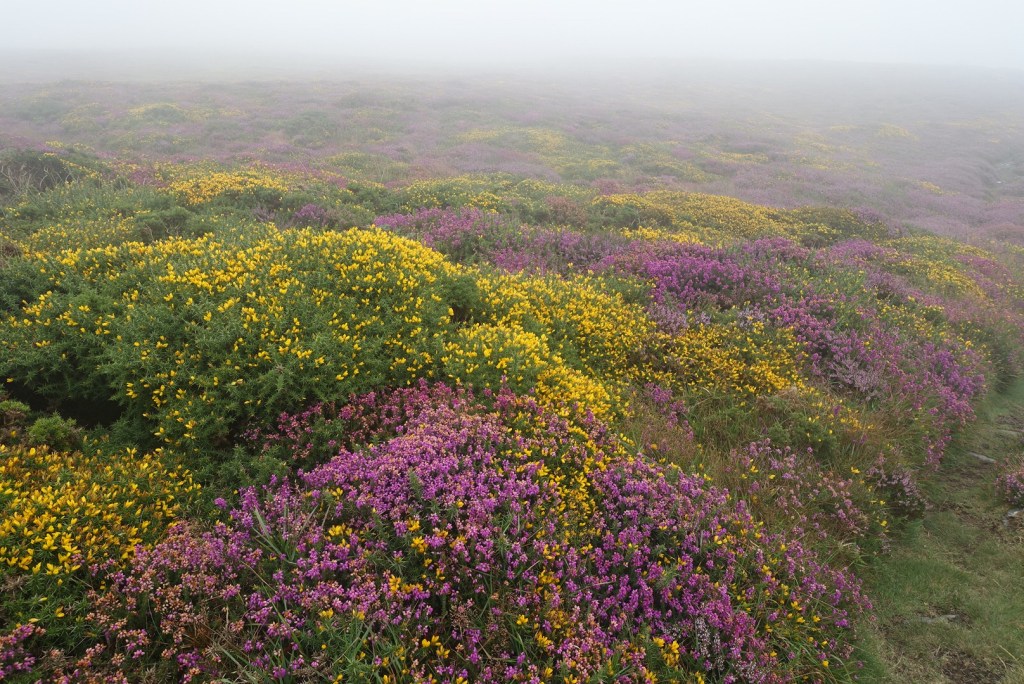
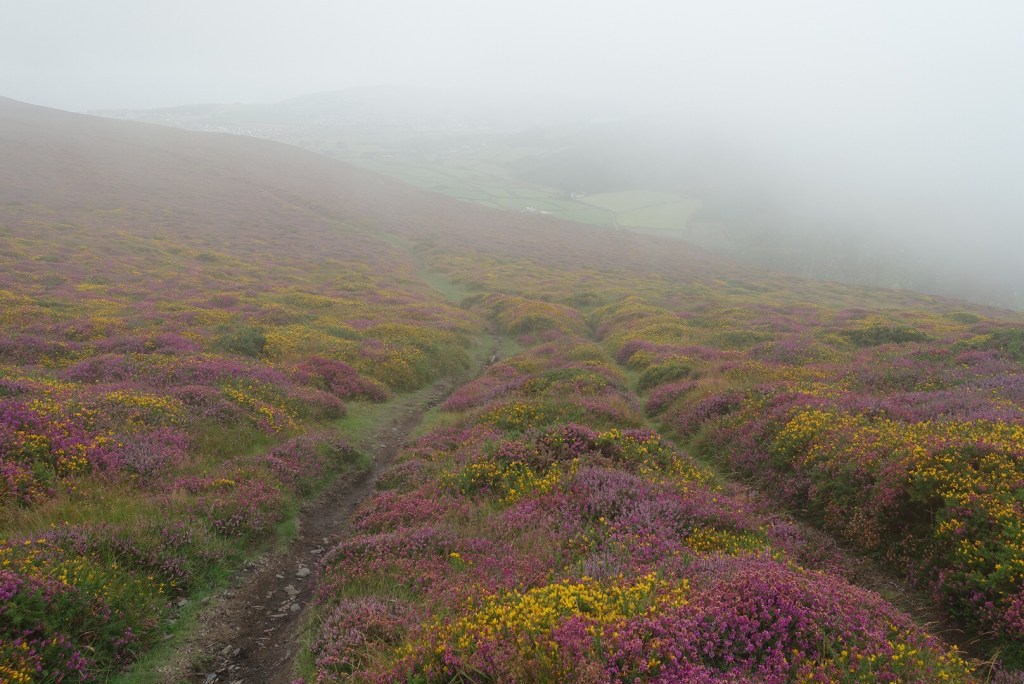
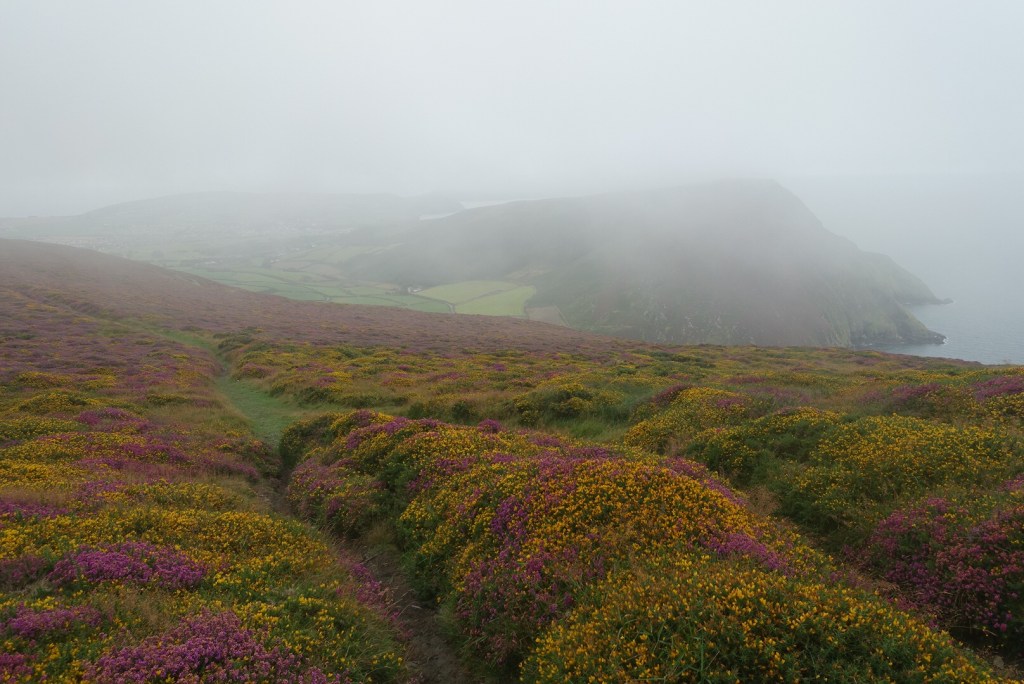
I make no apologies for there being a surfeit of photos mostly of purple heather and yellow gorse, as this was today’s mission. The Isle of Man boasts a kaleidoscope of spectacular colours at this time of year but you will see none better than on the walk from Cronk Ny Array Laa to Port Erin. I can see many of these from my house and can watch the terrain change from green to purple and yellow from my bedroom window.

However, it was one of those days starting in sunshine, quickly fading into soft clouds. Then the clouds would part, leaving you tantalised by a glimmer of sunshine, only to have it taken away just as quickly and be replaced by the thick veils of Mananan’s cloak, meaning that a large part of this walk was undertaken in fog, not great for photos. As you watch the slideshow below, it does eventually brighten up and offer up some views. 🙂

I had grabbed a lift to my starting point with my friend Janet, who was travelling to Peel to do her stint at the Wildlife Trust shop. She dropped me on the corner in thick fog. Undaunted, I made my way to the top of Cronk Ny Array Laa. I wondered if I might be a little late in the season for my photographs as a lot of the heather on the eastern side of the hill was going over from what I could see.

From here, it is a steady descent to The Slock. There are usually fine views of the south, but given the weather, imagination was necessary. I hadn’t gone far when I met a lady carrying a very large rucksack up the hill. It turns out she is Portuguese and was hiking around the island. We had a very interesting half an hour talking about her journey, bus times and tide timetables before we each continued on our respective ways.

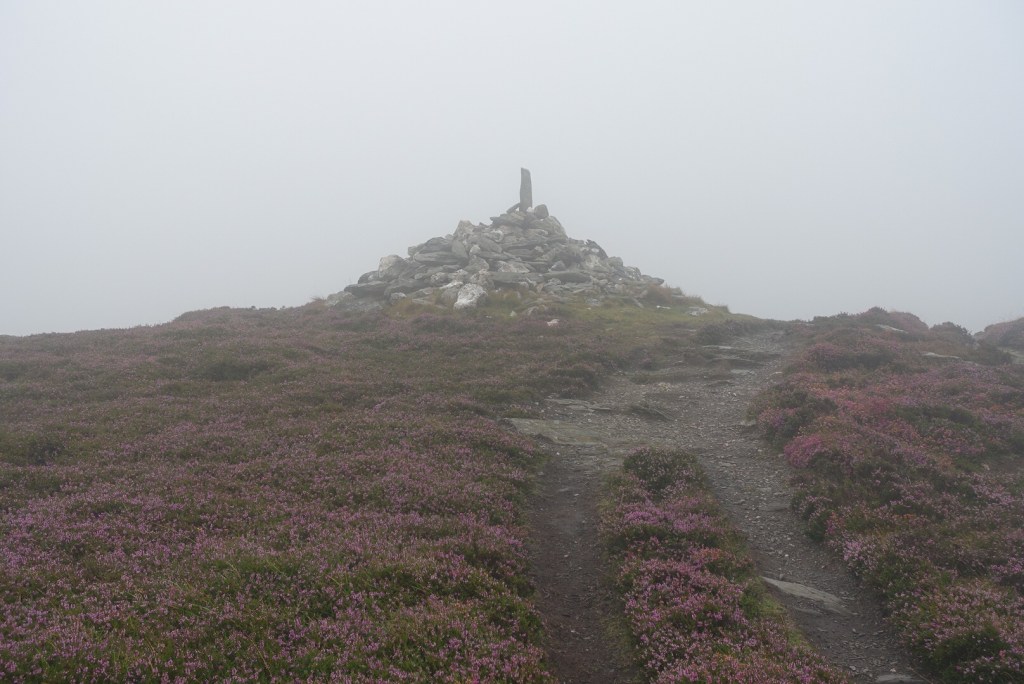
Just before The Slock, I found myself below the cloud line and I was able to enjoy the magnificent colours all around me. It was then a short climb up to Gob Ny Beinn. The cairn is slightly further along the ridge. I stopped here for a late late lunch in the… fog… before continuing down to Fleshwick. This is usually the most stunning section for colour but the mist had the better of it for most of the walk. Even so, it was beautiful and moody and so very quiet. All I could hear was the wind under my ear muffs. Yes, it is August, but it was cold enough to wear a t-shirt, thin jumper, light fleece and waterproof at times!

Mission accomplished and numerous photos in the bag, once at Fleshwick I debated with myself whether to bother with the climb up Bradda Hill. I wasn’t feeling great and I knew really my body had had enough, but if I am presented with a challenge that is achievable I am likely to do it. There was an alternative, low route home from Fleshwick, but it is less interesting, so the more challenging route won.

The route up to Bradda Hill is known as a fairly ferocious climb, though not difficult as long as you take your time. It is 500-600ft, but it is only the first 450ft that is quite steep. And there are plenty of stopping places. It is then an undulating walk along the cliffs to Port Erin. The scenery changes a lot. There are still significant patches of heather and gorse but not the unbroken expanses of the Carnanes or Cronk any Array Laa. It is easier to see the effect of farming too, as where there might be moorland is grassland. At this point, the clouds decided to relieve themselves of their moisture, so I packed away my phone and stepped out to make my way home.

It was a most enjoyable afternoon, but it took its toll on me. I had to go to bed and rest when I got in, and I haven’t been a lot better today. But ask me anytime, I’ll just keep going until I no longer can.

I will leave the photos to do the rest of the talking. If you can get out in the next few days you won’t be disappointed. The hills all around the island look spectacular.

Distance on the hills 6 miles + 1 mile into Port Erin; Ascent 1200 ft

MWT Wildflower Walk – Bradda Head

What else could you wish to do on a cool but sunny evening, other than walk along the cliffs, explore nature’s haven and watch the sun set?

A small group of nature lovers met at the Bradda Glen car park, wondering if we were at the right place, when our leader Andree Dubbledam appeared out of the blue, having confessed to falling asleep and almost missing the walk! Such is the laid-back attitude on the Isle of Man that nobody blinked an eye, half-suspecting that this could happen :-). We don’t have the famous manx idiom ‘Trai dy liooar’ for no good reason.

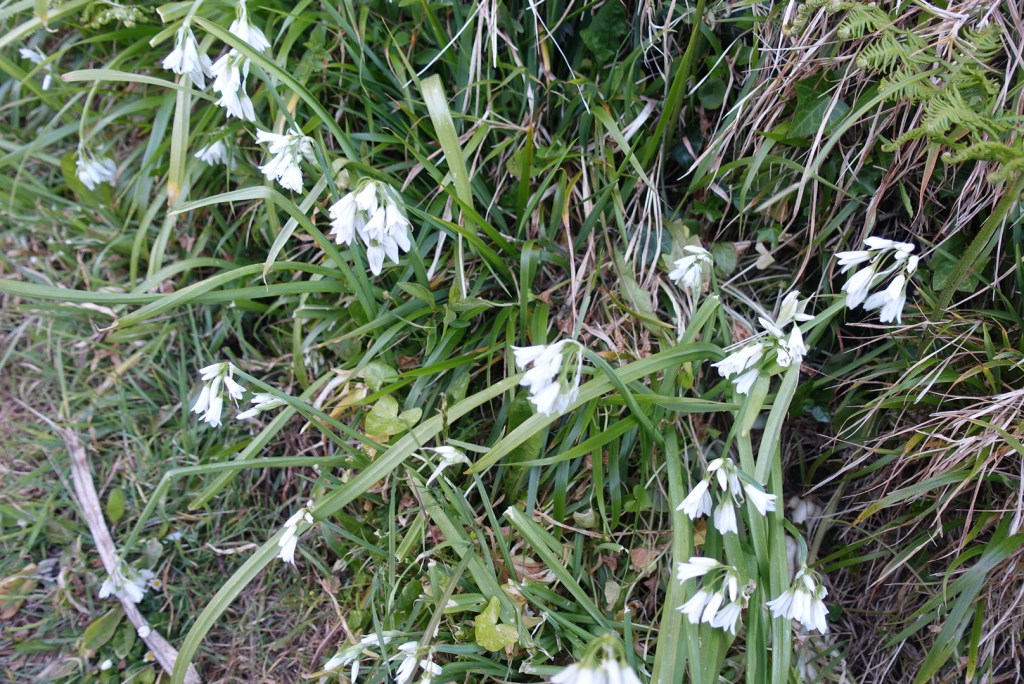
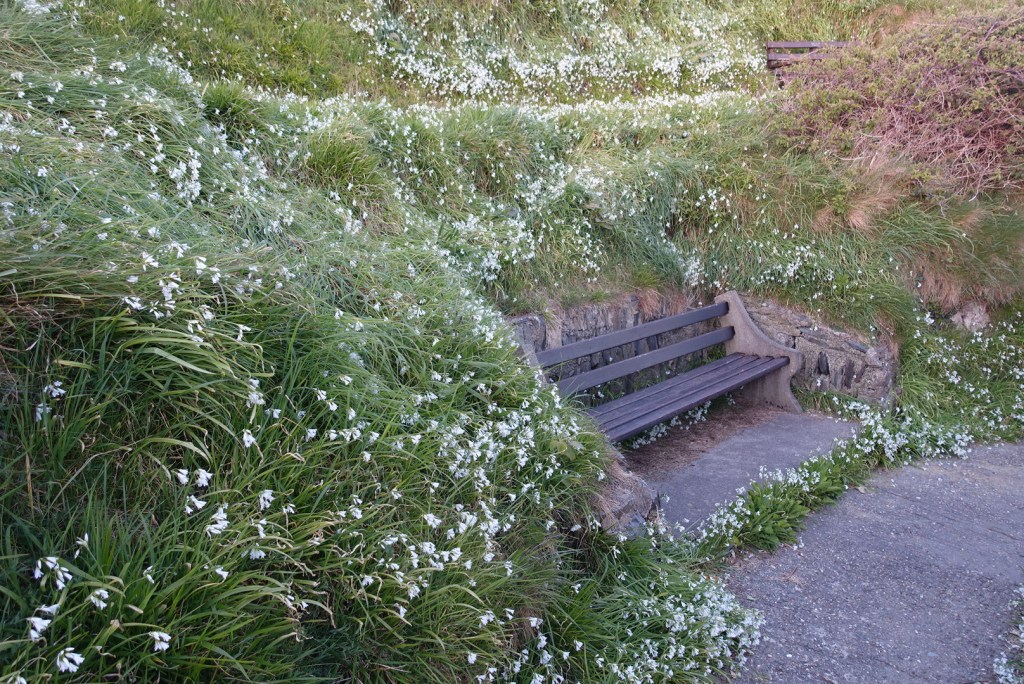
This was a very short walk, only about 1.5 miles in total, and started just steps away from the car park as Andree described how bluebells and ramsoms (wild garlic) colonise different types of terrain just yards away from each other, often on different sides of a path, and how the nutrients leech through the soil making this possible by changing the acidity of the soil. And how the pesky three cornered leek, being a very hardy comeover, and later stopover, is gradually denuding sites of their natural wildlife. It’s hard to be angry with it when it looks so beautiful, but then the bees really do like the bluebells. I didn’t know that the nectar sacs in each tiny flower bud on the bluebell refill every night so there is a constant supply for the birds.

The three-cornered leek

We also began to fall in love a little more with the sycamore trees. At this time of year the leaves were just coming into their lushious greenness, and if were to inspect the leaves you may well see aphids nestling in there, which will become food for the bluetits. Apparently they hibernate in the crevices of the sycamore and provide nourishment for birds during the winter months too.

Then there is the brilliant European Gorse in all its fine yellow, parading over the hills. You can’t miss it. It grows tall and bold, showing the world who’s boss. Occasionally, in between its wide shoulders you can spot samples of the less showy Manx Gorse, which is more compact and smaller. The Manx Gorse flowers later in the year from August to October, so you can expect to see one or other type of gorse flowering at most times during the year.

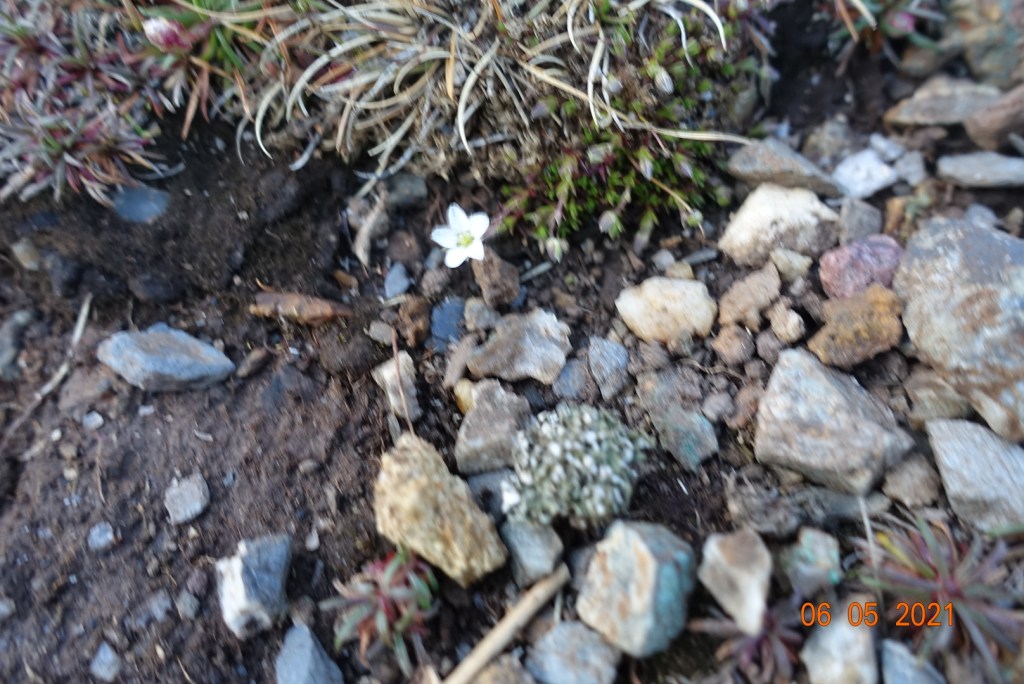
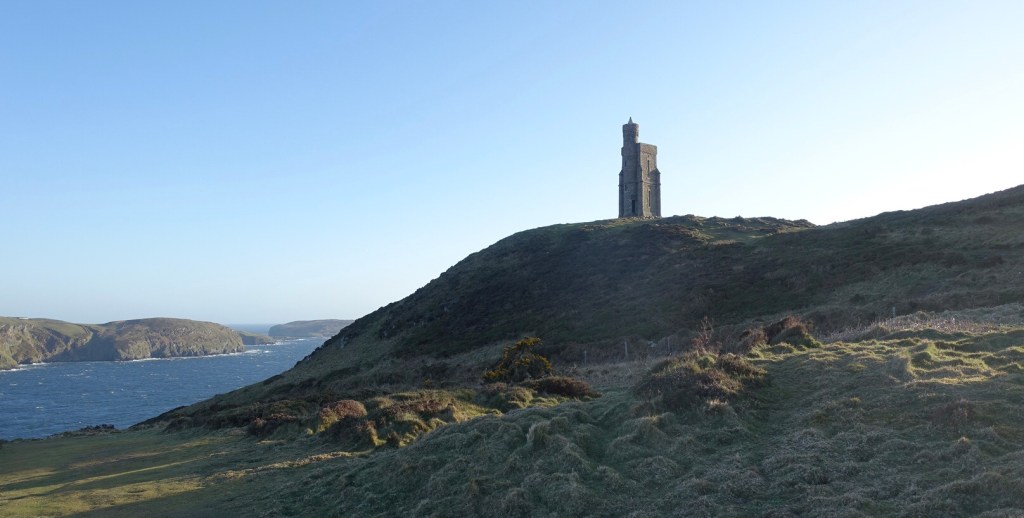
As we reached the mines area the turf is very very short and it’s hard to imagine that anything much grows here. How often have you stopped to look at what lies beneath your feet, or do you simply tread carefully on your way up to Milner Tower? Andree explained that the earth disturbed by the mine workings brings different elements to the surface that allows flora to grow that otherwise would not. One example of this is the dainty spring sandwort. Unless you are knee thigh to a grasshopper you will find yourself crouching down and searching amongst mosses and plantains to even notice this tiny flower, about half the size of your little fingernail, at best. You may be more familiar with the thyme and plantain, but even they were hard to spot. Hard to believe that some of these will become very noticeable plants as the summer comes along.

The self-conscious tiny spring sandwort

Beside one of the mine shafts we spent a few minutes (or rather Andree did) rummaging about in a very shallow muddy ditch looking for and failing to find any interesting specimens. He did point out a small hawthorn tree amongst the gorse and informed us that given a few centuries this area, if undisturbed, would revert to a natural small woodland.

At this point, shaded by the lofty Milner Tower, and wrapped around by an ever-present breeze, that was occasionally blusterous enough to lift us off our feet, the air turned very cool so rather than continue on along the cliff edge with the prospect of losing a group member off the side of the cliff, we turned inland to examine large tufts of grass. The main path is pretty much devoid of anything other than grass but to either side of it are these small hardened mounds with grass growing over them. One of two had very small areas of shaved earth and loose soil towards the top, which are an indicator of the living residents within. I’m sure you have heard of termite mounds; these are the manx equivalent and are the yellow meadow ants’ home. We didn’t see any because like any sensible creature if it gets cold you go inside, but we were assured that they would be there snuggling up, keeping warm and protecting their young.

The anthills are just a bit further down from here on either side of the path, though these could be some small anthills developing.

From here it was a short walk back to Bradda Glen, and for me a further walk back home along the cliff edge where I spied a number of other spring flowers that adorn the cliffs at this time of year, such as squill, sea campion, red campion, thift, primroses and the occasional brilliant white bluebell.

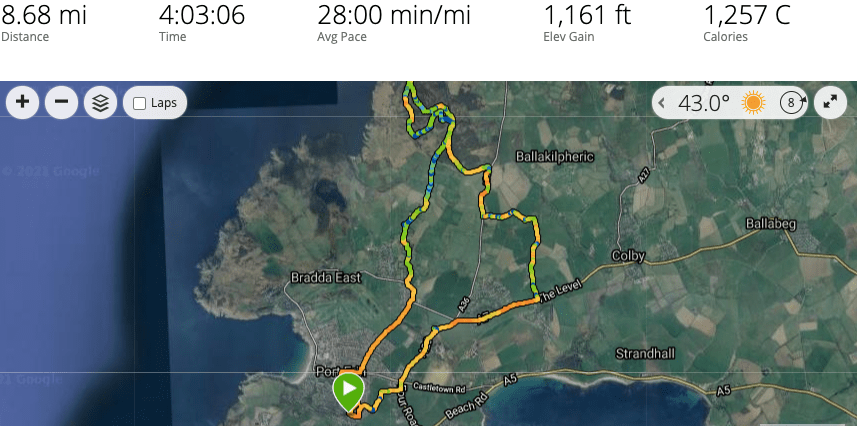
Around the Carnanes and Lhiatee ny Beinnee – 8.5 miles

I can see this group of hills from the back of my house and they are very inviting on bright sunny day. There are many options to start this walk from a number of different places and a number of different ways of reaching the tops. However, today, or actually yesterday as I write this, I chose to walk from home. I didn’t have a specific plan other than to reach the highest point on these delightful mounds of hummocks, which is Lhiatee ny Beinnee (White Hill, due to the quartz I imagine) at just under 1000ft. Of course, there are undulations along the way so your total climb will be more than this, and in places it is steep, especially if you start at Fleshwick.

My route took me along the outskirts of Port Erin to Ballabeg and up the quiet lane to Surby. I noticed what appears to be a well just to the side of the road on someone’s forecourt. From here, it is a green lane following a stream which is full of wildflowers in the spring and summer. Some traditional cottages can be seen on this path and as you climb out of the valley you are rewarded by tremendous views to the south. The lane eventually peters out into a footpath, which today, or yesterday, was looking a little sad as the gorse has been severely pruned leaving a mini wasteland compared to previously. This is only a short section and a stile and gate inform you that you are now on the lower edge of the moorland of the Carnanes.

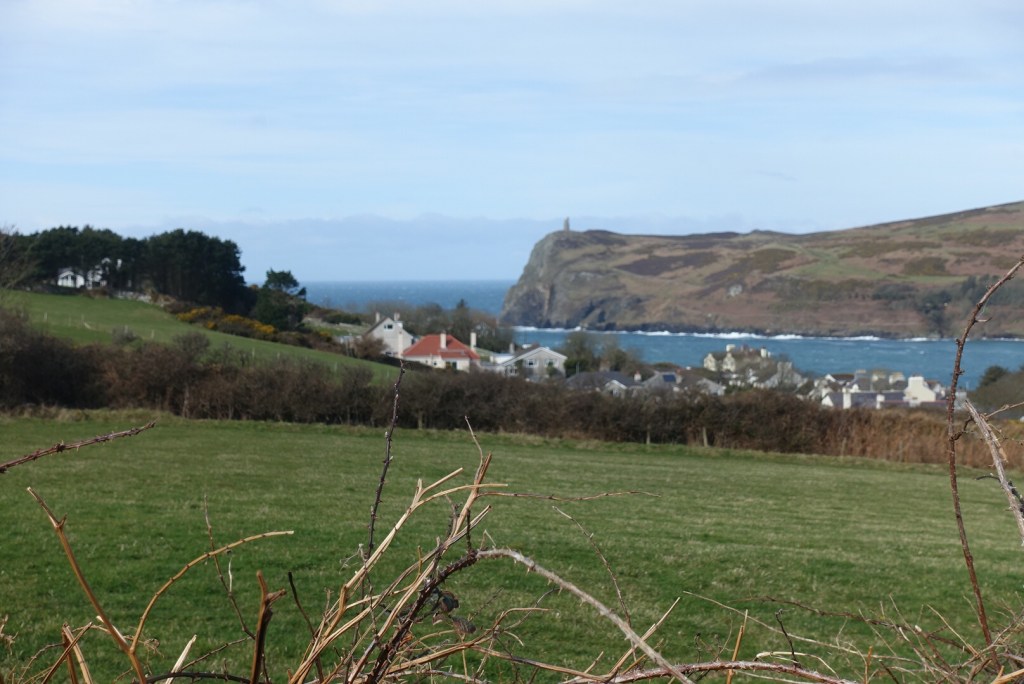
As you glance northwards it is impossible to avoid seeing the many cairns on top of the hillocks, many of which I have clambered up in the past, and some never until today. There is a good reason to stick to the paths between the cairns as I shall explain later, but for now take a look at the undergrowth in the photo to the right above and you may guess what’s coming. For now, I followed the northerly path which gradually veers to the west and gives you tremendous views of the Irish Sea and on a day with good visibility Ireland. Adjusting your eyes to the right it is possible to sea Scotland too, and Black Combe in the distance across the water to England in the opposite direction. Now you know why we have our three legs of man.

Can you spot Anglesey and Snowdonia in this photo?

I stopped for lunch (a sandwich of chicken, chutney, fresh sage and thyme – yummy) at a small cairn overlooking Bradda Hill towards Fleshwick Bay, Port Erin and Port St Mary. I could also see out way beyond Port St Mary and in the very far distance I could see Anglesey and Snowdonia. It was one of those days that provides exciting views on all directions. I had thought of heading south at this point, but instead I went as I had promised myself to the top of the big hill so that I could see Cronk Ny Array Laa looming out of the sea and a bit further along the shoreline, Niarbyl peeking out from under its cliffs and even Peel Hill in the far distance. This ‘detour’ meant that I had to return along the same path back to my lunch cairn. By an incredible stroke of coincidence I bumped into someone I met last summer on this very same part of the hill, so we had a socially-distanced chat for a few minutes. He was walking back to PSM via Port Erin if, as he said, his legs were up to it (i.e. the steep climb up to Bradda Hill).

I had already decided my route. The Bradda Hill circular is a regular walk for me, so this time, I decided to give that part of the coastal footpath a miss, and instead went craghopping from cairn to cairn around the Carnanes. Sounds great until you try to find a different path off it. I could see the main path only 50 metres away, only between me and it was thick gorse and heather. Any sane person would have retraced their steps, but this is me, and I waded through scratchy gorse sometimes 3ft deep. I did think at one point I had taken on more than I could chew, but I persevered and finally met the path. There were other walkers on this bit of path and I think they wondered what on earth I was doing!

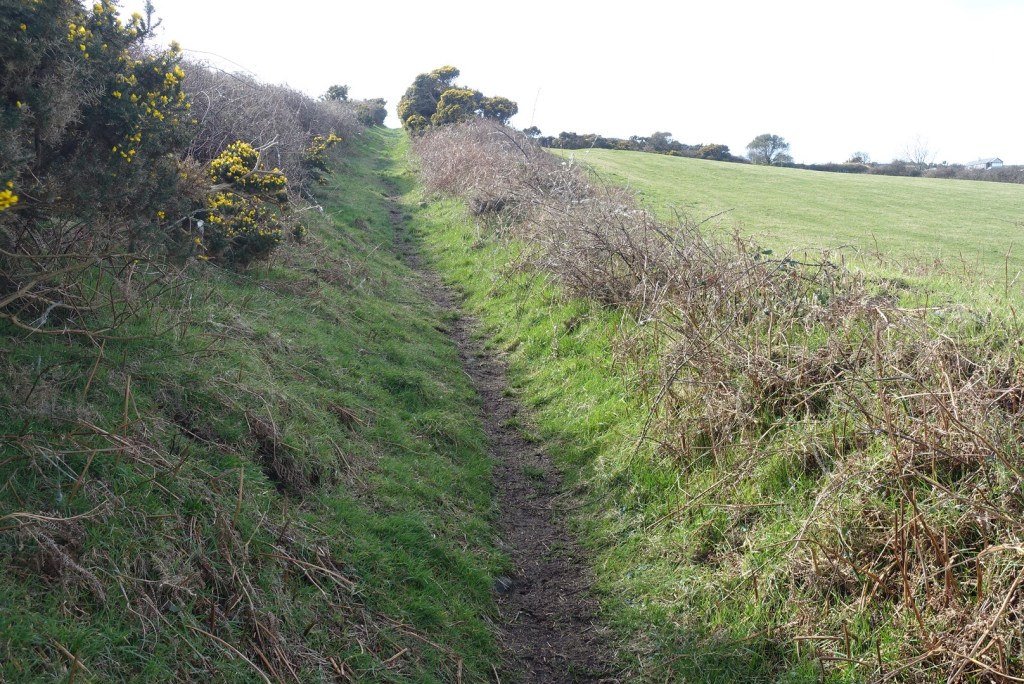
From here it was only about half a mile to the eastern edge of the moorland, still up high but grassy now rather than gorse and heather. I crossed the Sloc road that leads slightly downhill to a car park and picnic site with unbelievable views then carried on a hundred metres or so to take a path left into the farmed countryside. This was something of an obstacle course. The first stiled wall is about 5-6ft tall, with just two stones to clamber up with an equally deep drop on the other side, followed immediately another rickety wooden stile(!). At the end of the next field is a kissing gate which is about all you can do if you are wearing a ruckscack unless you are very skinny. Then after traversing a muddy field there is a high ladder stile to cross. Anyone would think they didn’t like walkers. At least the bikers won’t take this route. If you don’t like stiles or are quite short (!) consider the path the same distance in the other direction from the picnic site, which takes you pretty much in the same direction but starting further north.

On reaching the farm at Scholaby, it is then an easy walk down the lane for about a mile to The Level, passing cows posing for their photo and the old chimney that I can see from my house signifying mining from days long past, or if you fancy a longer route, you can turn left just after the farm and visit Colby Glen (worth a visit if you haven’t ever been) and get a bus back. I followed the main back road to the roundabout and had a rest at Ballachurry Nature Reserve before finishing my walk by crossing the fields behind the Ballahane Estate.

A great day out and I felt a sense of achievement when I got home, having successfully avoided TV and the incessant coverage of the very sad death of Prince Philip (RIP) for a number of hours.

If you use the data above for any reason, the time includes rest times and meal times. Actual walking time was 2hr 50mins.

Incidentally, you may or may not know that I started painting for the first time in lockdown. I have updated the recent Cregneash / Chasms post so that you can see my latest effort (no.5). Bit of a curate’s egg, but I’ll use the correct type of paper next time…

Port Erin, Glenn Chass, Port St Mary – 13th March 2021

Just when you think there is nothing more to say about a walk you have done many many times you get a pleasant surprise. That’s just what happened today. I have walked the back route up the golden road to Glenn Chass and Port St Mary many times, but only today did I discover something new.

It started out as usual, well almost as usual, with a minor socially-distanced stop to allow some other people to pass on the path. Then it was onwards and upwards along the golden road. It was a bright, breezy but cool day and it afforded some fine views of the valley between the Meayll Hill headland and the Bradda / Carnanes range of hills.

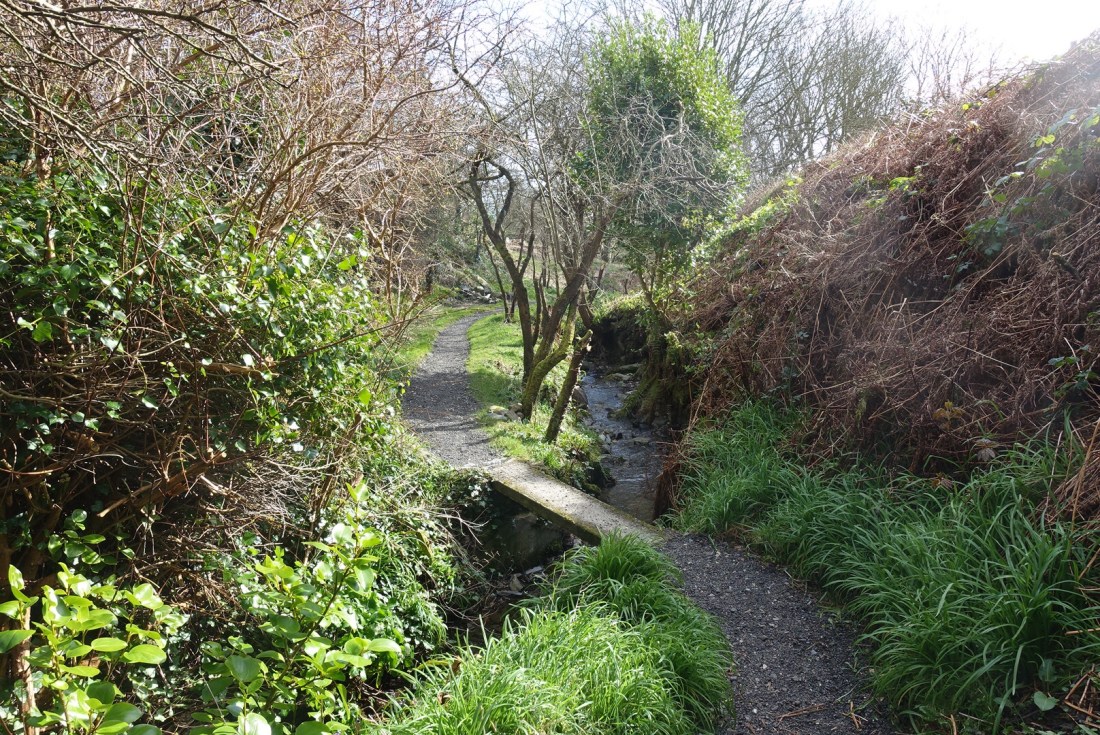
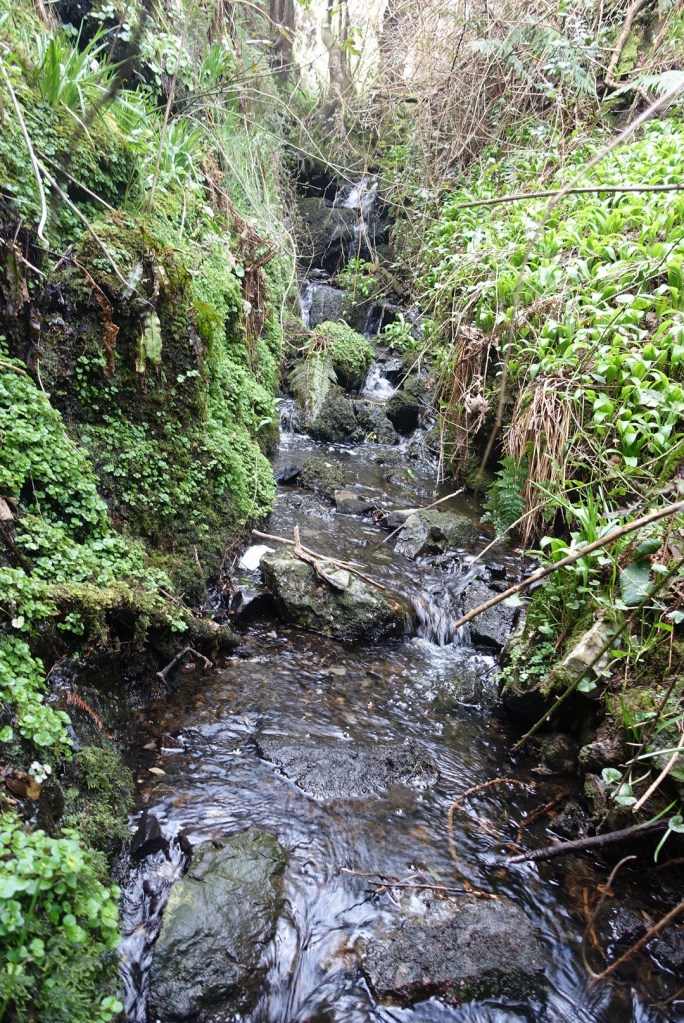
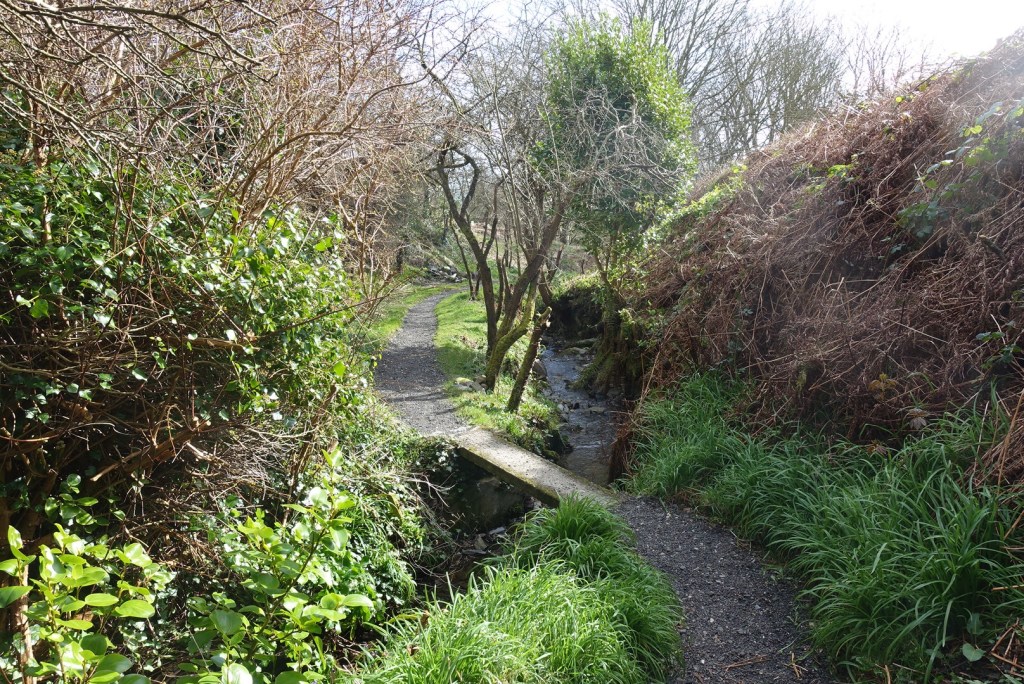
This path follows tracks across farmland, crossing over streamlets until you get to one of my favourite streams – yes, I know, who else has favourite streams. It flows off the moorland down through the edge of Port Erin and has a delightful bridge that you can only see if you scramble down the side of the stream. Today, there was quite a lot of water in the stream and I could hear gushing water from above, so true to form I found myself wading upstream to see what there was to see. I wasn’t really wearing suitable footwear so it was a matter of hopping from stone to stone and clinging on to vegetation in places. Just for the record, this sort of messing about is my idea of bliss! I didn’t manage to get very far, but I did see the source of the noise – a tiny waterfall cascading over some rocks. You will have to look very closely to see it!

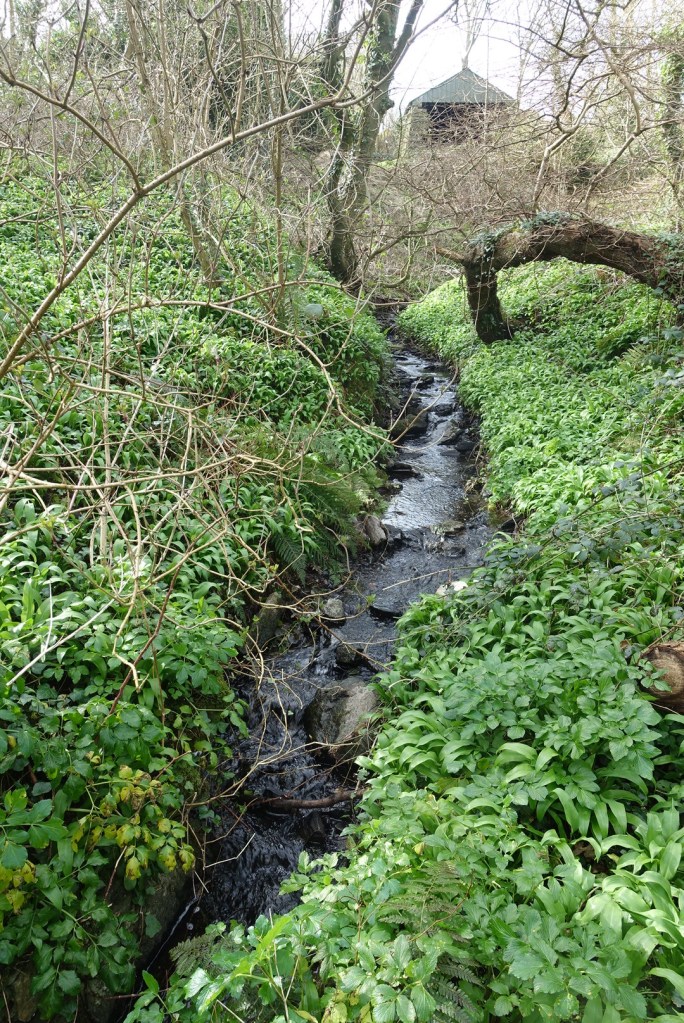
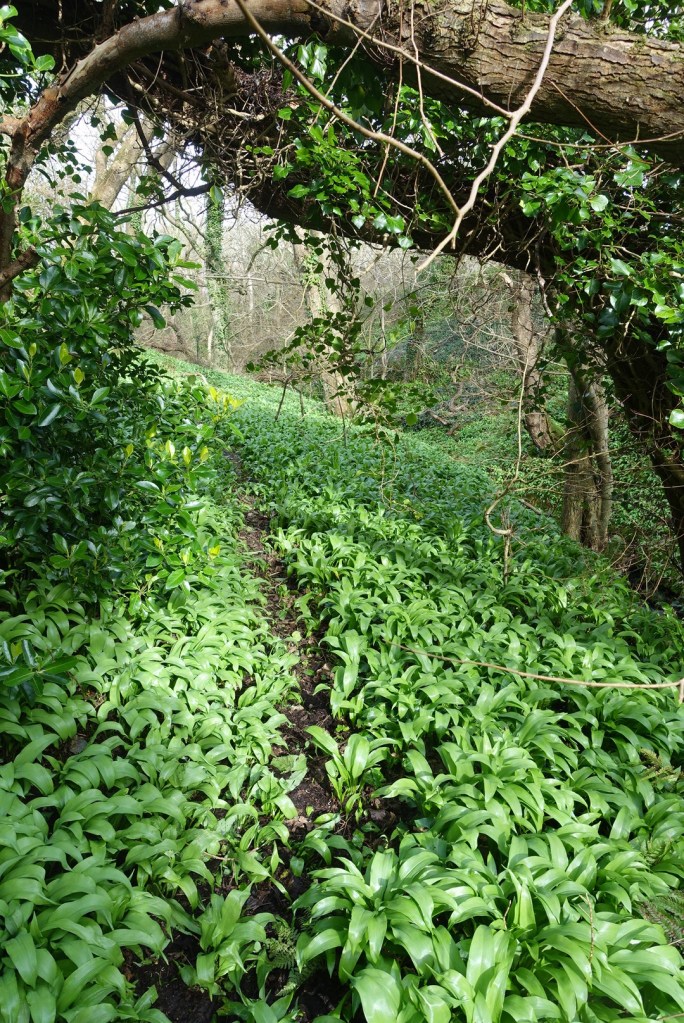
From here it was back to the path, only to be immediately diverted by a footpath going the other way, and then a made-made track following the stream in the opposite direction. No wading this time, just a curiosity to discover what might be round the next corner. And what was round the corner? Lots of wild garlic just beginning to sprout from the undergrowth and casting a heavenly smell. And looking up through the bare canopy of trees I could hear but not see a bird equally as happy as I to be enjoying the spring day.

After my detour I followed the main track to Glenn Chass to walk down the narrow stream let that feeds into Fistard Bay. Only now, this looks completely different from previous times I have been here. It is being managed, and a new footpath has been created so it is possible to do a circular route in this uppermost part of the Glen. Not that there is a lot to see. Some of the vegetation has been cleared but this will soon grow back and I look forward to seeing how it develops in the future.

The path joins the lane and continues down to the sea, looking rather different from its neighbour on the other side of the road.

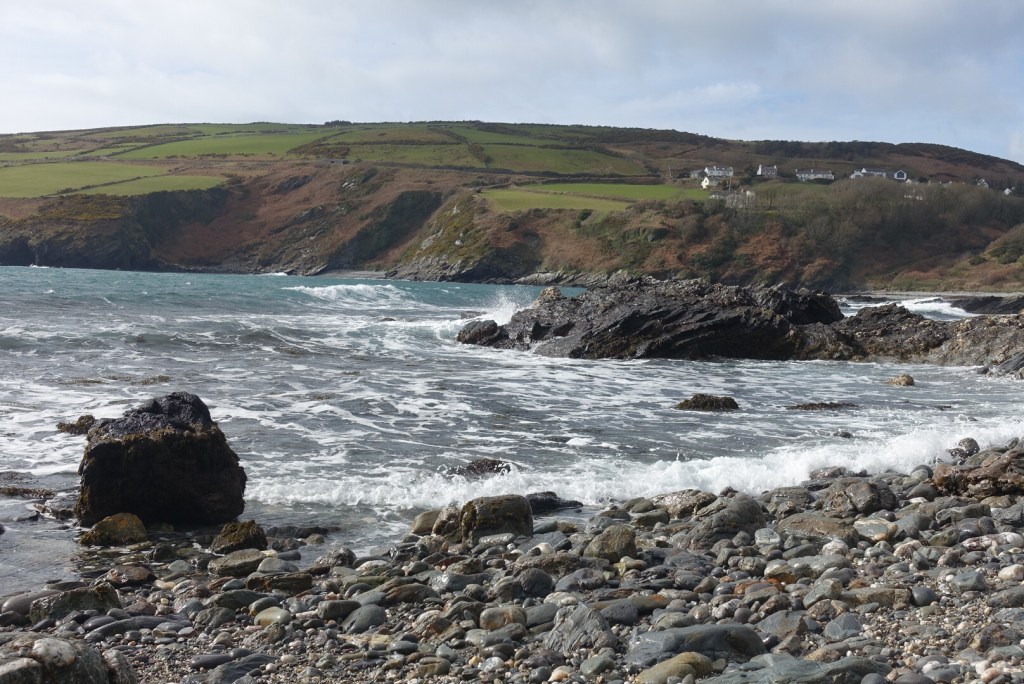
From here, I followed the coast path into Port St Mary. I didn’t deviate too much this time, only stopping to go down on the beach at the point where the golf course and footpath conjoin. I had missed high tide, which was a shame given it was a blustery day. Even so, the waves were having fun crashing against the rocks and the sunlight gave cool approval as it kissed the sea.

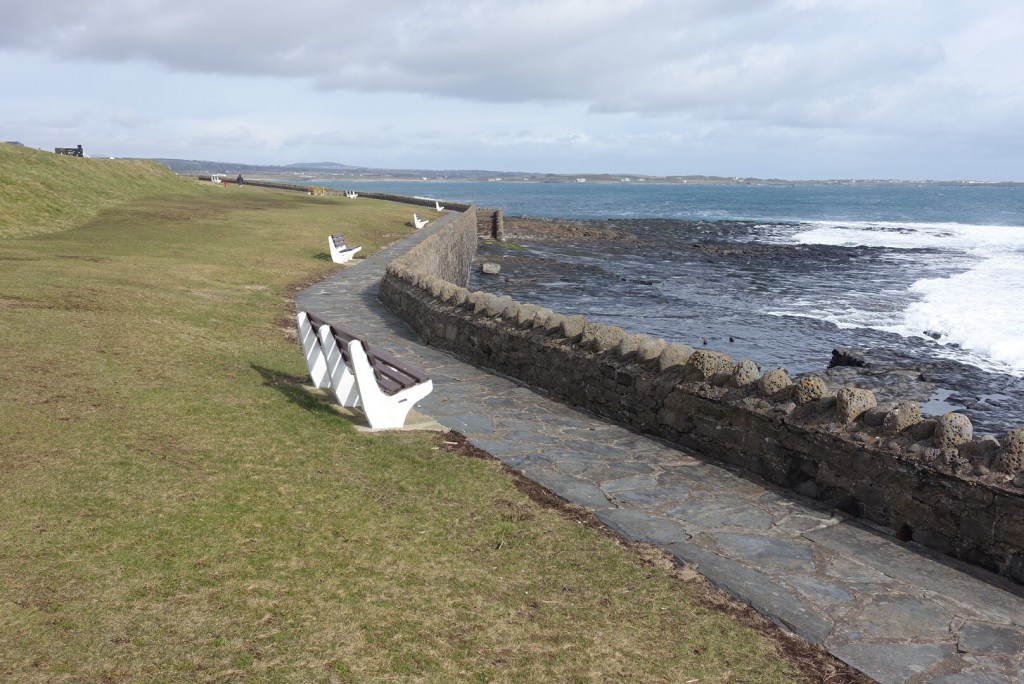
Up to this point, I had seen barely anyone but now in the town there were more people taking the air, or taking their dog for a walk. All stopped to allow others to pass, and many were wearing face coverings. Port St Mary had a peaceful air today and splendid views to the hills behind. Note how the benches look like seagulls looking out to sea for their prey. I reached the underway, but at this point had to leave the coast path as this is only one direction now and not the right direction for me, so I climbed up the cliff in front of the apartments, walked through the church grounds to the top road so that I could take the Truggan Road back to Port Erin. I may or may not have told you this before: Truggan Road can be translated as ‘the road to the swift stream’. How poetic is that, and very fitting for my adventurous afternoon.

This was a short walk of about 4 miles and about 650 ft of elevation in total. A most enjoyable way to spend a couple of hours.